Does everything happen for a reason?
The Bible does not teach that everything happens for a reason, as the saying is usually meant. Jesus rejected the idea that people killed in disasters were being punished, and Ecclesiastes says that “time and chance happen to them all.” The Bible does teach that God is present in everything and can bring good out of any event, even the worst. Christians can say that nothing is beyond God’s love without saying that God sent every tragedy for a purpose.
Again I saw that under the sun the race is not to the swift, nor the battle to the strong, nor bread to the wise, nor riches to the intelligent, nor favor to the skillful, but time and chance happen to them all.
Ecclesiastes 9:11, NRSVUE
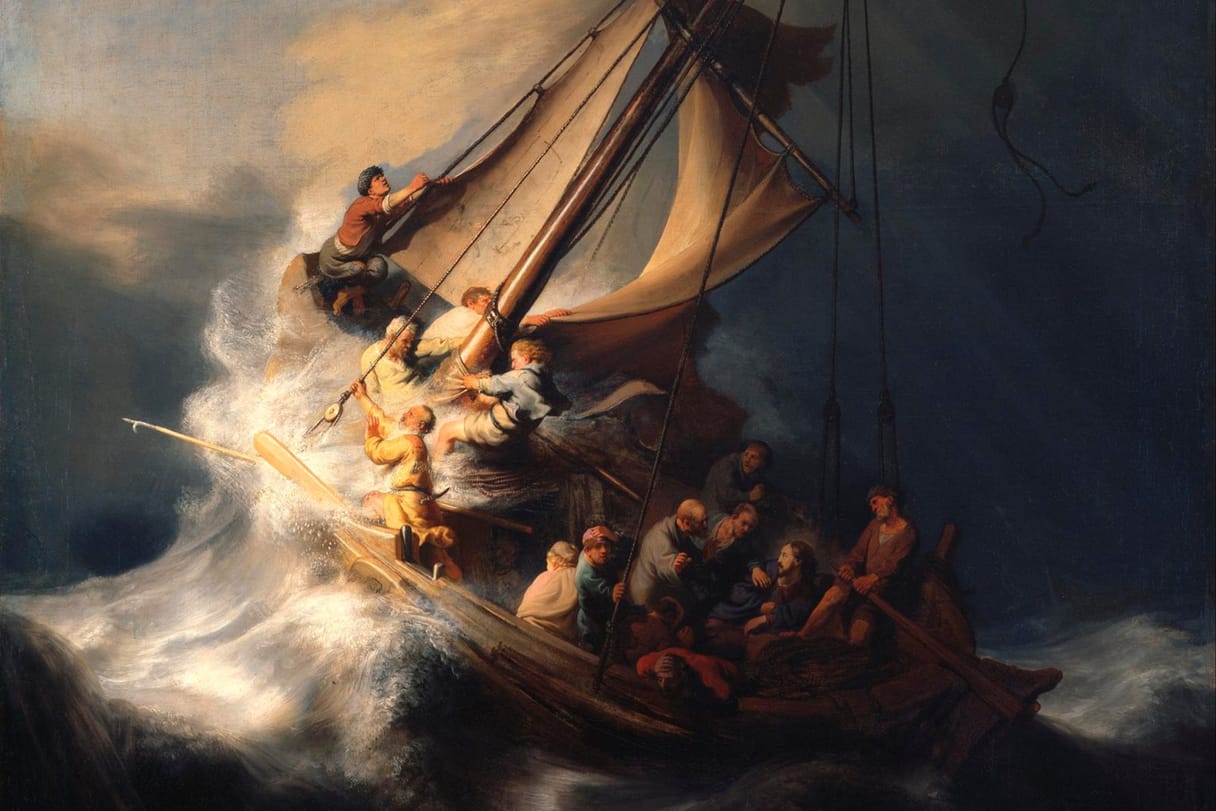
The Bible does not teach that everything happens for a reason, as the saying is usually meant. It promises something sturdier. God is present in every event, nothing can separate you from God’s love, and God is able to bring good out of even the worst things.
Most people who say “everything happens for a reason” are trying to comfort, and some who hear it are comforted. Others are wounded by it, especially after a death, a diagnosis, or a disaster, because it seems to say that God wanted the loss. If the saying has hurt you, Scripture gives you room to grieve without believing that God sent your sorrow on purpose.
What did Jesus say about tragedies?
Some people told Jesus about Galileans whom Pontius Pilate had killed while they were offering sacrifices. Jesus answered with another disaster from the news of his day:
Or those eighteen who were killed when the tower of Siloam fell on them—do you think that they were worse offenders than all the other people living in Jerusalem? No, I tell you, but unless you repent you will all perish just as they did.
Luke 13:4–5, NRSVUE
Jesus refused to explain the tragedy as punishment. He turned the question back to his listeners: life is fragile for everyone, so turn to God now.
In John’s Gospel, the disciples meet a man blind from birth and ask, “Rabbi, who sinned, this man or his parents, that he was born blind?” Jesus answers, “This man didn’t sin, nor did his parents, but that the works of God might be revealed in him” (John 9:1–3). Readers have long debated how to take the second half of that sentence. The first half is clear, because Jesus rejects the belief that suffering is a sign of someone’s sin. Then he acts, saying, “I must work the works of him who sent me while it is day” (John 9:4). Jesus answers the man’s suffering with mercy and healing.
Does the Bible say some things happen by chance?
Yes. The writer of Ecclesiastes looked at the world with open eyes:
Again I saw that under the sun the race is not to the swift, nor the battle to the strong, nor bread to the wise, nor riches to the intelligent, nor favor to the skillful, but time and chance happen to them all.
Ecclesiastes 9:11, NRSVUE
Jesus said that God “makes his sun to rise on the evil and the good, and sends rain on the just and the unjust” (Matthew 5:45). Weather does not sort people by merit. The book of Job makes the same point at length. Job’s friends insist his suffering must have a moral cause, and at the end God says to them, “you have not spoken of me the thing that is right, as my servant Job has” (Job 42:7).
What does Romans 8:28 mean?
The verse people quote most often is this one: “We know that all things work together for good for those who love God, for those who are called according to his purpose” (Romans 8:28). Some ancient manuscripts make God the subject of the verb, and many translations render the verse “in all things God works for good.” Either way, Paul promises that God works for good in all things, even in things that are not good in themselves.
The surrounding verses show what Paul has in mind. He has just written that “the whole creation groans and travails in pain together until now” (Romans 8:22). A few verses later he lists “oppression, or anguish, or persecution, or famine, or nakedness, or peril, or sword” (Romans 8:35), and concludes that none of them “will be able to separate us from God’s love which is in Christ Jesus our Lord” (Romans 8:38–39). Paul promises God’s faithfulness in the middle of suffering. For more, see What does Romans 8:28 mean?
Is God in control of everything?
Christians have answered this in more than one way, and the strongest traditional view deserves to be heard first. The Heidelberg Catechism, a sixteenth-century Reformed confession, teaches that all things, “health and sickness, prosperity and poverty… come to us not by chance but by his fatherly hand” (Q&A 27). Many Christians find deep comfort in that confession, because it assures them that nothing in their lives has slipped out of the hands of a loving Father.
Other Christians, drawing on Thomas Aquinas, make a distinction. God holds all things in being and directs the world toward good, and God also gives creatures real power to act. Aquinas wrote that God shares “the dignity of causality” with creatures (Summa Theologiae I, question 22, article 3). Things happen through natural causes and human freedom, and God does not will evil. In Aquinas’s words, God “neither wills evil to be done, nor wills it not to be done, but wills to permit evil to be done” (I, question 19, article 9).
What God does with evil is redeem it. Joseph told the brothers who sold him into slavery, “As for you, you meant evil against me, but God meant it for good” (Genesis 50:20). Aquinas quotes Augustine: God “would not allow any evil to exist in His works, unless His omnipotence and goodness were such as to bring good even out of evil” (Summa I, question 2, article 3). Christians can hope that God brings good out of harm without believing that God caused the harm to produce the good. For the larger question, see Why does God allow suffering?
The Christian East has gone further. After the Indian Ocean tsunami of December 2004 killed more than 200,000 people, the Orthodox theologian David Bentley Hart wrote The Doors of the Sea: Where Was God in the Tsunami? (2005). Hart argued that Christians are not obliged to see such a disaster as part of a divine plan, because the New Testament treats suffering and death as enemies that Christ came to defeat. Paul calls death “the last enemy that will be abolished” (1 Corinthians 15:26).
What should I say to someone who is grieving?
Be slow to explain. Paul tells Christians, “Weep with those who weep” (Romans 12:15). At the grave of his friend Lazarus, “Jesus wept” (John 11:35), even though in John’s story he goes on to raise Lazarus. Scripture promises that “the LORD is near to those who have a broken heart, and saves those who have a crushed spirit” (Psalm 34:18), and Lamentations says that God “does not afflict willingly, nor grieve the children of men” (Lamentations 3:33). Often the most helpful gift is to stay near and pray.
If you are the one grieving, you do not have to find the reason. You can bring your anger and confusion to God, as the psalmists did (see Is it wrong to question God?). A prayer from the old service of night prayer called Compline, as the Book of Common Prayer gives it, says: “Keep watch, dear Lord, with those who work, or watch, or weep this night,” and asks God to “soothe the suffering, pity the afflicted.”
What do the mainline churches teach?
The mainline churches confess in the Apostles’ and Nicene Creeds that God is the “maker of heaven and earth,” and they leave room for the different answers described above. The Presbyterian Church (U.S.A.) includes the Heidelberg Catechism, with its strong confession of God’s “fatherly hand,” in its Book of Confessions. The United Methodist Church, following John Wesley, teaches that God’s grace goes before every person and works with human freedom. Lutherans confess with Martin Luther’s Small Catechism that God the Creator daily provides everything needed for life.
All of these traditions agree on the hope that matters most. Julian of Norwich, the fourteenth-century English mystic, wondered why God had allowed sin and suffering at all, and heard in reply: “all shall be well, and all shall be well, and all manner of thing shall be well” (Revelations of Divine Love, chapter 27). Julian’s words leave many losses unexplained, and still they promise that God will have the last word, and that the last word will be love (see Does God love me?). You can rest in that promise tonight, even before you understand anything else.
Common questions
Is “everything happens for a reason” in the Bible?
No, the saying does not appear in the Bible. People often connect it with Romans 8:28, which says that “all things work together for good for those who love God.” That verse promises that God works for good in every circumstance; it does not say that every circumstance is good or was sent on purpose.
Does God cause bad things to happen?
Christian teaching distinguishes between what God wills and what God permits. Thomas Aquinas wrote that God “neither wills evil to be done, nor wills it not to be done, but wills to permit evil to be done.” Jesus denied that the victims of a collapsing tower were being punished, and Lamentations says that God “does not afflict willingly, nor grieve the children of men.”
Does God have a plan for my life?
God’s purpose for every person is love and life with God. The first letter to Timothy says that God “desires all people to be saved and come to full knowledge of the truth.” That purpose holds through good times and bad, but it does not mean every detail of your life, including every loss, was arranged in advance as a lesson.
What should I say instead of “everything happens for a reason”?
Often the best words are few: I am so sorry, I am here, and I am praying for you. Paul tells Christians to “weep with those who weep.” At the end of the book of Job, God rebukes Job’s friends, who had spent their speeches explaining his suffering.
Sources
- Luke 13:1–5 (WEB)
- John 9:1–3 (WEB)
- Ecclesiastes 9:11 (WEB)
- Romans 8:28 (WEB)
- Genesis 50:20 (WEB)
- Thomas Aquinas, Summa Theologiae I, q. 19, a. 9: Whether God wills evils
- Thomas Aquinas, Summa Theologiae I, q. 22: The providence of God
- Thomas Aquinas, Summa Theologiae I, q. 2, a. 3 (quoting Augustine, Enchiridion 11)
- Heidelberg Catechism, Q&A 27
- Book of Common Prayer (1979), An Order for Compline
- David Bentley Hart, The Doors of the Sea: Where Was God in the Tsunami? (Wikipedia)
- Julian of Norwich, Revelations of Divine Love, chapter 27