Romans 8:28 in context
Romans 8:28 says that for those who love God, “all things work together for good.” Paul wrote it in a chapter about suffering, groaning, and hope (Romans 8:18–39). Some ancient manuscripts read “God makes all things work together,” and many translations say “in all things God works for good.” The verse does not say every tragedy is good. It says God is at work in every situation, bringing about the good of making us like Christ.
We know that all things work together for good for those who love God, who are called according to his purpose.
Romans 8:28, NRSVUE
Romans 8:28 is a promise for people who are hurting. If you have clung to it in a hard season, or if someone has quoted it to you at a moment when it stung, the verse deserves a slow and gentle reading. Paul wrote it in a chapter full of groaning and hope, and it promises that God is at work for good in everything you go through, even the things that are not good at all.
What does Romans 8:28 say?
We know that all things work together for good for those who love God, who are called according to his purpose.
Romans 8:28, NRSVUE
Some ancient manuscripts add the Greek words ho theos, “God,” to this verse. The difference matters for how the verse is read, because in those manuscripts the subject of the sentence is God.
What is the context of Romans 8:28?
Romans 8 is one of the great chapters of the Bible. It begins with “There is therefore now no condemnation to those who are in Christ Jesus” (Romans 8:1) and ends with the promise that nothing can separate us from God’s love. In between, Paul writes frankly about pain. He speaks of “the sufferings of this present time” (Romans 8:18) and describes all creation groaning:
We know that the whole creation has been groaning together as it suffers together the pains of labor, and not only the creation, but we ourselves, who have the first fruits of the Spirit, groan inwardly while we wait for adoption, the redemption of our bodies.
Romans 8:22–23, NRSVUE
The verses immediately before Romans 8:28 are about prayer when we are too weak to pray:
Likewise the Spirit helps us in our weakness, for we do not know how to pray as we ought, but that very Spirit intercedes with groanings too deep for words. And God, who searches hearts, knows what is the mind of the Spirit, because the Spirit intercedes for the saints according to the will of God.
Romans 8:26–27, NRSVUE
So Romans 8:28 comes right after Paul admits that Christians sometimes do not know what to pray. The “all things” that work together for good include the times when we are groaning and confused, with the Holy Spirit praying for us. For more on the Spirit, see What is the Holy Spirit?
After Romans 8:28, Paul lists the worst things that can happen: “oppression, or anguish, or persecution, or famine, or nakedness, or peril, or sword” (Romans 8:35). He calls none of them good, and he says that none of them can separate us from the love of God in Christ.
Do “all things work together,” or does God work in all things?
The Greek manuscripts of Romans differ at this verse. In some, the sentence has no named subject, so it reads naturally as “all things work together for good,” the wording of the King James Version and the NRSVUE. In others, the word ho theos (God) appears after the verb, so that God is the one who works. The verb is synergei, a relative of the English word “synergy”; it means “works together” or “works with.”
Translations therefore differ:
- King James Version: “And we know that all things work together for good to them that love God.”
- Revised Standard Version: “We know that in everything God works for good with those who love him.”
- New International Version: “And we know that in all things God works for the good of those who love him.”
The difference is important. “All things work together for good” can sound like a law of nature, as if events sort themselves out. Paul did not believe that events have a will of their own. In context Paul clearly means that God is the one at work, since the same sentence speaks of God’s “purpose,” and the RSV even suggests that God works “with” those who love him. Many Bibles print the other reading in a footnote so that readers can see both options.
Does Romans 8:28 mean that bad things are good?
Paul does not say that all things are good. He says that God works in all things for good. A cancer diagnosis, a death, or an act of cruelty remains evil, and Paul’s own chapter groans over such things.
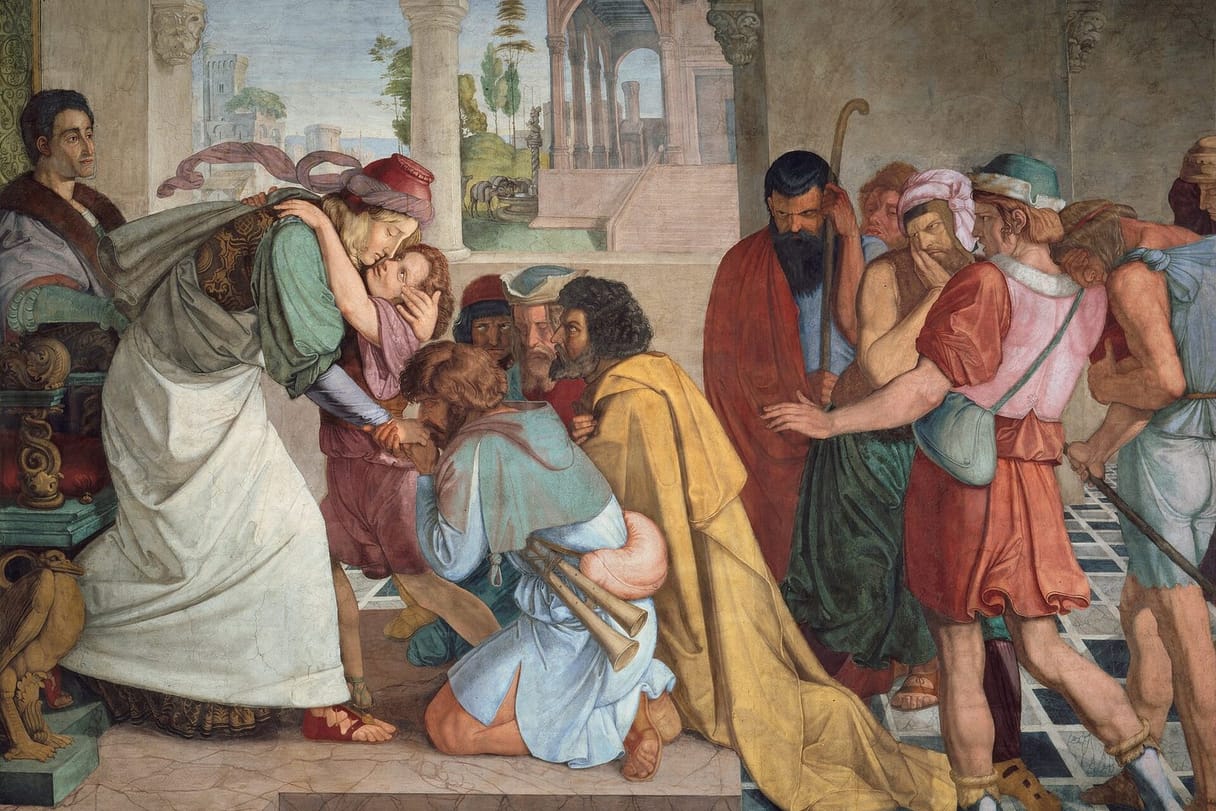
The Bible’s clearest picture of Romans 8:28 is the story of Joseph. His brothers sold him into slavery, and years later he told them:
Even though you intended to do harm to me, God intended it for good, in order to preserve a numerous people, as he is doing today.
Genesis 50:20, NRSVUE
Joseph does not pretend that his brothers did him a favor. He names their evil intent, and he names God’s good purpose working through it. Augustine of Hippo put the same truth this way: God would never permit evil “if He were not so omnipotent and good that He can bring good even out of evil” (Enchiridion 11). For more on the hard question behind this verse, see Why does God allow suffering? and Does everything happen for a reason?
What is “the good” in Romans 8:28?
Paul defines it in the next verse. God’s purpose for those he calls is that they be “conformed to the image of his Son, that he might be the firstborn among many brothers” (Romans 8:29). The good that God works toward is that we become like Christ and share his life and glory. The Eastern Orthodox tradition calls this goal theosis, a person’s gradual transformation by sharing in God’s own life. Athanasius of Alexandria put it in one line in the fourth century: the Son of God “was made man that we might be made God” (On the Incarnation 54).
That good is deeper than comfort, success, or getting what you hoped for. Romans 8:28 does not promise that a lost job will lead to a better one, though sometimes it does. It promises that God can use even the loss to make you more like Christ, more loving and more free.
Who are “those who love God, who are called according to his purpose”?
Paul is writing to the Christians in Rome, and he means them, and every Christian. “Called” is Paul’s ordinary word for Christians as people whom God has summoned into his family (Romans 8:30). Christians have argued for centuries about what Romans 8:29–30 teaches about predestination. Paul’s own aim in the passage is assurance: he wants frightened believers to know that God has not lost hold of them. He continues, “If God is for us, who can be against us?” (Romans 8:31). For more on that assurance, see Can you lose your salvation?
How should Christians use Romans 8:28?
Use it as a promise to hold on to. It makes a poor explanation to hand to grieving people. When Job’s friends first came to him, they sat with him on the ground for seven days “and no one spoke a word to him, for they saw that his grief was very great” (Job 2:13). Their silence was the best thing they did. Romans 8:28 is usually best spoken later, as hope, by someone who has first shared the pain.
For yourself, Romans 8:28 can be a prayer in the dark: “God, I cannot see how this could work for good, but I trust that you are at work in it.” Paul ends the chapter with words that can carry you when the verse feels too hard:
For I am convinced that neither death, nor life, nor angels, nor rulers, nor things present, nor things to come, nor powers, nor height, nor depth, nor anything else in all creation will be able to separate us from the love of God in Christ Jesus our Lord.
Romans 8:38–39, NRSVUE
For another promise often read apart from its hard setting, see What does Jeremiah 29:11 mean?
Julian of Norwich, an English anchoress of the fourteenth century, often wondered why God had not prevented sin from the beginning. In her Revelations of Divine Love she records the answer Christ gave her: “all shall be well, and all shall be well, and all manner of thing shall be well” (chapter 27, in Grace Warrack’s edition). Like Romans 8:28, those words still call pain by its name, and they trust that God’s love will have the last word over it.
Common questions
Does Romans 8:28 mean everything happens for a reason?
Not in the sense that God sends every tragedy for a purpose. Paul says God works in all things for good, which means God can bring good even out of evil. The evil itself remains evil, and Paul grieves over it in the same chapter.
Why do translations of Romans 8:28 differ?
The Greek manuscripts differ. Some read “all things work together for good,” and others add “God” as the subject, so that God works all things together for good. The NRSVUE gives both readings, and translations such as the RSV and NIV make God the subject.
What is “the good” in Romans 8:28?
The next verse defines it: God’s purpose is for us “to be conformed to the image of his Son” (Romans 8:29). The good Paul promises is becoming like Christ and sharing his glory, which is greater than comfort or success.
Should I quote Romans 8:28 to someone who is grieving?
Usually not right away. In fresh grief the verse can sound like a claim that the loss was good. Stay with the person first, as Job’s friends did for seven days before they began to talk, and let the promise come later, as hope.
Sources
- Romans 8:18–39 (WEB)
- Romans 8:28 (KJV)
- Romans 8:28 (RSV)
- Romans 8:28 (NIV)
- Bible Hub: Greek text of Romans 8:28
- Genesis 50:19–21 (WEB)
- Augustine, Enchiridion, chapter 11
- Job 2:11–13 (WEB)
- Athanasius, On the Incarnation of the Word, ch. 54
- Julian of Norwich, Revelations of Divine Love, ch. 27, ed. Grace Warrack (Project Gutenberg)