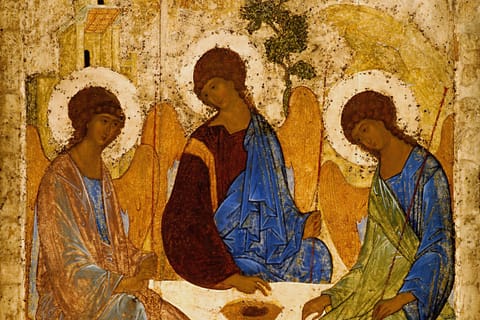
Angels
Christian churches teach that angels are real: spiritual beings created by God to worship God and to carry out God’s work, including the care of human beings. The word angel means “messenger.” Jesus said that children’s angels “always see the face of my Father” (Matthew 18:10), the basis for belief in guardian angels. Western churches keep the feast of Saint Michael and All Angels on September 29, and the Orthodox churches honor the angels on November 8. People do not become angels when they die; they remain themselves, held in God’s love.
For he will put his angels in charge of you, to guard you in all your ways.
Christian churches teach that angels are real, and that God surrounds the world with help. People often come to this question at a tender moment: a parent praying over a sleeping child, someone who walked away from an accident and felt protected, someone grieving who hopes that a loved one is safe. Scripture speaks gently to each of these hopes, and it always points past the angels to the God who sends them.
Lutherans, Anglicans, and other Western churches keep the feast of Saint Michael and All Angels every September 29, and the old collect for the day, as the Book of Common Prayer prints it, asks that, “as your holy angels always serve and worship you in heaven, so by your appointment they may help and defend us here on earth.” Christians hold this belief in different ways. Most understand angels as real spiritual beings, and some read the angels of Scripture as images of God’s own presence and care.
What does the word “angel” mean?
The Hebrew word mal’akh and the Greek word angelos both mean “messenger.” The same words describe human messengers: the prophet Malachi’s name means “my messenger,” and Mark’s Gospel applies the word to John the Baptist (Mark 1:2). So the word names the work angels do. By nature they are spirits, and they are called angels because God sends them.
In Scripture, angels do three kinds of work. They worship God, as the seraphim do in Isaiah’s vision and the “multitude of the heavenly army” does at Jesus’ birth (Luke 2:13–14). They bring God’s messages. And they care for God’s people:
Aren’t they all serving spirits, sent out to do service for the sake of those who will inherit salvation?
Many angels in the Bible look like ordinary people. Abraham at first took his three visitors for travelers and fed them (Genesis 18), and the Letter to the Hebrews tells Christians to welcome strangers, “for in doing so, some have entertained angels without knowing it” (Hebrews 13:2). The Bible’s teaching about angels leads straight into hospitality. The stranger at your table or the newcomer in the back pew may be bringing you something from God.
Who are Gabriel and Michael?
Apart from Abaddon, “the angel of the abyss” in Revelation 9:11, Gabriel and Michael are the only angels named in the books that Protestant Bibles include. Gabriel explains visions to the prophet Daniel (Daniel 8:16) and announces the births of John the Baptist and of Jesus. To Zechariah he says, “I am Gabriel, who stands in the presence of God. I was sent to speak to you and to bring you this good news” (Luke 1:19), and six months later “the angel Gabriel was sent from God to a city of Galilee named Nazareth” (Luke 1:26).
Again and again in the Gospels, the first thing an angel says is “Don’t be afraid.” Gabriel says it to Zechariah and to Mary (Luke 1:13, 30), an angel says it to the shepherds at Bethlehem (Luke 2:10), and an angel says it to the women at the empty tomb (Matthew 28:5). The messengers of God come to frightened people with good news.
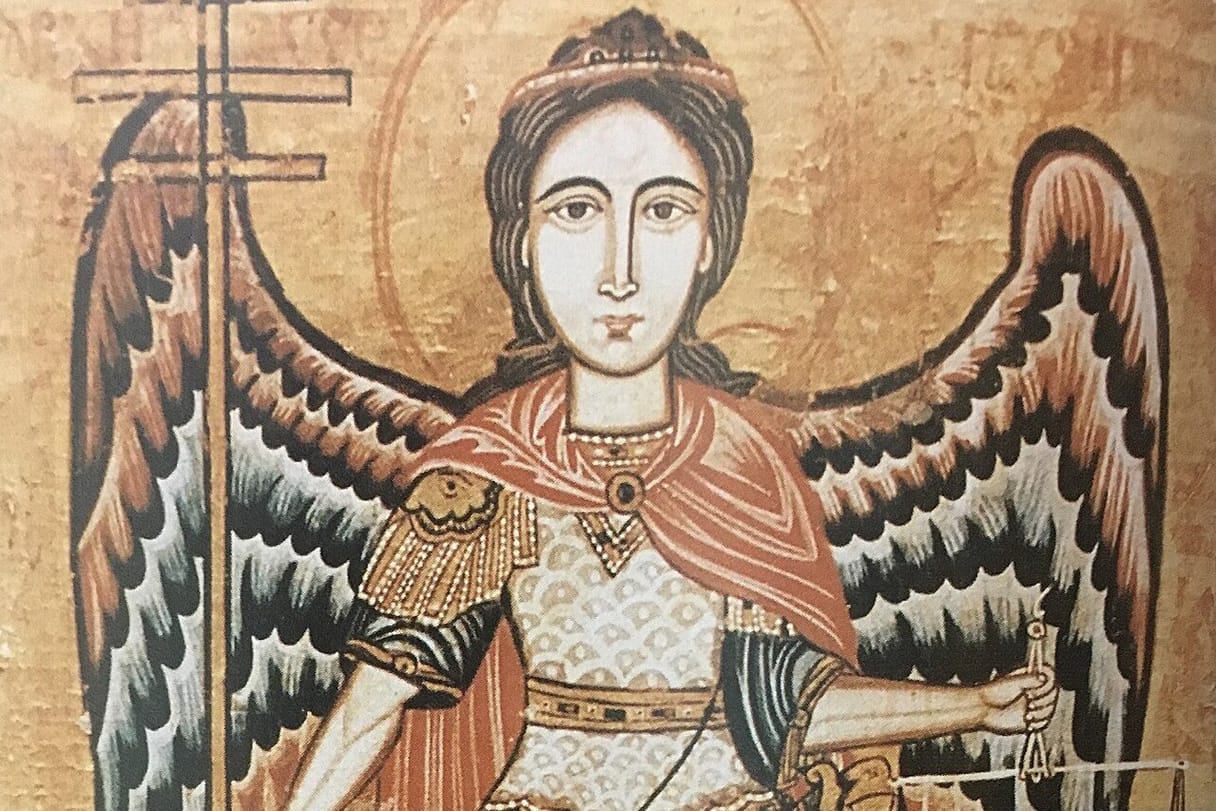
Michael appears in Daniel as “the great prince who stands for the children of your people” (Daniel 12:1). The Letter of Jude calls him “the archangel” (Jude 1:9), and in Revelation “Michael and his angels made war on the dragon” (Revelation 12:7). Christian art has shown him ever since as the warrior who defeats evil.
A third angel, Raphael, appears in the book of Tobit, where he travels with the young Tobias as his guide and says, “I am Raphael, one of the seven holy angels” (Tobit 12:15). The Orthodox churches count Tobit as Scripture. Protestant Bibles either leave it out or print it among the Apocrypha, which the Church of England’s Thirty-Nine Articles say the church reads “for example of life and instruction of manners.”
Do we have guardian angels?
Belief in guardian angels rests above all on a saying of Jesus about children:
See that you don’t despise one of these little ones, for I tell you that in heaven their angels always see the face of my Father who is in heaven.
Psalm 91 promises, “he will put his angels in charge of you, to guard you in all your ways” (Psalm 91:11), and another psalm says, “The LORD’s angel encamps around those who fear him, and delivers them” (Psalm 34:7). When the apostle Peter, freed from prison, knocked at the door of a house where Christians were praying for him, they assumed at first that “It is his angel” (Acts 12:15).
Basil the Great, the fourth-century bishop of Caesarea in Cappadocia, taught that an angel stands beside each believer as a protector and shepherd, leading that person to life (Against Eunomius 3.1). Orthodox prayer books include a prayer to the guardian angel among the evening prayers, and Lutheran children have long learned to ask for an angel’s care at bedtime. If you are afraid for someone you love, these verses invite you to place that person in God’s keeping, where they are seen even when you cannot be with them.
Belief in guardian angels comes with no promise that nothing bad will happen. Faithful people and innocent children suffer and die, and the Bible does not pretend otherwise (see Why does God allow suffering?). What Matthew 18:10 promises is that the smallest and most easily overlooked people are known in God’s presence. If you have lost someone you prayed for, that promise still holds for them.
Do people become angels when they die?
The Bible does not teach that people become angels when they die. Films and sympathy cards often say so, and the hope behind the idea, that a loved one is safe with God, is a good and Christian hope. Scripture holds out something even larger. Jesus said that those raised from the dead “are like the angels” in that they do not marry and “can’t die any more” (Luke 20:35–36). He compares them to angels in those two respects, and they remain human beings.
The Letter to the Hebrews names the angels and the faithful dead side by side: the heavenly Jerusalem holds “innumerable multitudes of angels” and also “the spirits of just men made perfect” (Hebrews 12:22–23). Christian hope is that the faithful departed remain themselves, held in God’s love and awaiting the resurrection of the body (see What happens when you die?). The person you miss is still the person you knew, and in the communion of saints they join the angels in praising God.
What do the churches teach about angels?
The churches name angels most often in worship. Lutheran, Presbyterian, Methodist, and Episcopal communion services all sing “Holy, holy, holy,” the song of the seraphim in Isaiah 6:3, joining the praise of the angels. In the Orthodox Divine Liturgy, the Cherubic Hymn says that the congregation mystically represents the cherubim, and it asks worshipers to lay aside all earthly cares as they sing with the angels. Western churches keep the feast of Saint Michael and All Angels on September 29, and the Orthodox churches keep the Synaxis (gathering) of the Archangel Michael and the other “bodiless powers” on November 8 (see The church year).
Scripture sets one firm limit: angels are servants of God and may not be worshiped. When John fell down before an angel in Revelation, the angel said, “You must not do that! I am a fellow bondservant with you … Worship God” (Revelation 22:9). Paul warned the Colossians against “worshiping of the angels” (Colossians 2:18).
Within that limit, Christians hold a range of views. Orthodox Christians honor the angels in many feasts and dedicate every Monday to them in their weekly round of prayer. Many mainline Christians believe in angels as Scripture describes them without claiming to know much more. Others note that “the angel of the LORD” in several stories speaks as God, as in the burning bush (Exodus 3:2–6), and read the angels of Scripture as the Bible’s way of describing God’s own presence and care. Every one of these readings agrees that God stays close to his people. For the fallen angels of Christian tradition, see Is Satan real? and Are demons real?
Martin Luther gave families a short prayer for the end of each day in his Small Catechism. It is a good prayer for anyone who is afraid of the night, or afraid for someone else:
I thank Thee, my Heavenly Father, through Jesus Christ, Thy dear Son, that Thou hast graciously kept me this day, and I pray Thee to forgive me all my sins, where I have done wrong, and graciously keep me this night. For into Thy hands I commend myself, my body and soul, and all things. Let Thy holy angel be with me, that the Wicked Foe may have no power over me. Amen.
Martin Luther, Small Catechism (1529), Evening Prayer
Common questions
Can I pray to my guardian angel?
Orthodox Christians often ask their guardian angels for help and protection, as they ask the saints to pray for them, and Orthodox prayer books include prayers to the guardian angel. Most Protestant churches direct prayer to God alone, and they ask God to send the angels to help. Every tradition agrees that angels must never be worshiped, because in Revelation 22:9 an angel tells John, “Worship God.”
Do angels have wings?
Some do in the Bible. Isaiah saw seraphim with six wings, and Ezekiel described cherubim with four. Many angels in Scripture, though, appear as ordinary people, which is why Hebrews 13:2 says some have “entertained angels without knowing it.” The winged babies of Renaissance paintings come from classical art; the Bible does not describe them.
How many archangels are there?
The Bible uses the word “archangel,” meaning chief angel, only twice, and names only Michael as one. The book of Tobit, which the Orthodox churches count as Scripture and many Protestant Bibles print among the Apocrypha, has Raphael call himself “one of the seven holy angels.” Orthodox tradition names seven archangels, led by Michael and Gabriel, and honors them together on November 8.
Are angels and demons the same kind of being?
Much Christian tradition, East and West, holds that demons are angels who rebelled against God. John of Damascus, the eighth-century Orthodox teacher, wrote that the devil was created good, as one of the angels, and became evil by his own free choice. Many mainline Christians speak more cautiously about the details, while agreeing that God’s power is far greater than any evil.
Sources
- Matthew 18:10 (WEB)
- Psalm 91:11–12 (WEB)
- Hebrews 1:14 (WEB)
- Luke 1:19 and 1:26 (WEB)
- Daniel 12:1 (WEB)
- Luke 20:35–36 (WEB)
- Hebrews 12:22–23 (WEB)
- Tobit 12:15 (WEB)
- Book of Common Prayer (1979), Collects for Holy Days, Saint Michael and All Angels
- Psalm 34:7 (WEB)
- Isaiah 6:1–3 (WEB)
- John of Damascus, An Exact Exposition of the Orthodox Faith, Book II, chapter 4 (New Advent)
- Martin Luther, Small Catechism, Daily Prayers (BookOfConcord.org)