Wealth, generosity, and the common good
Scripture treats wealth as a gift from God, held in trust for God’s purposes and for the neighbor. Christians may own property and prosper, as Abraham and Joseph of Arimathea did. The Bible also warns that riches can capture the heart: Jesus told of a rich man who built bigger barns but was “not rich toward God” (Luke 12:21). Those who have plenty are called to be “ready to distribute, willing to share” (1 Timothy 6:18).
Charge those who are rich in this present age that they not be arrogant, nor have their hope set on the uncertainty of riches, but on the living God, who richly provides us with everything to enjoy

Scripture treats wealth as a gift from God, held in trust for God’s purposes and for the good of the neighbor. Christians may own property, work hard, and prosper. Abraham “was very rich in livestock, in silver, and in gold” (Genesis 13:2), and the man who buried Jesus was “a rich man from Arimathaea named Joseph, who himself was also Jesus’ disciple” (Matthew 27:57). The Bible also warns, again and again, that riches can take hold of the heart, and it calls those who have plenty to share it so that no one lacks. The church has long called this the common good.
You may be asking because you have more than you need and wonder what God asks of you. You may be struggling and wonder whether God favors the comfortable. Scripture tells you both that what you have comes from God and is meant to bless more than one household.
Is it a sin to be rich?
The law of Moses reminded Israel where prosperity comes from. When the people grew wealthy in the land, Moses warned them against saying, “My power and the might of my hand has gotten me this wealth” (Deuteronomy 8:17). They were to remember the Lord, “for it is he who gives you power to get wealth” (Deuteronomy 8:18). Wealth is a gift, and a gift points back to its giver.
The danger Scripture names lives in the heart. “The love of money is a root of all kinds of evil” (1 Timothy 6:10), and Jesus warned, “You can’t serve both God and Mammon” (Matthew 6:24), using an Aramaic word for wealth. A proverb puts the wise prayer into words: “Give me neither poverty nor riches. Feed me with the food that is needful for me” (Proverbs 30:8). For Jesus’s hard sayings about the rich and his care for the poor, see The poor in the Bible.
What does the parable of the rich fool teach?
A man once asked Jesus to make his brother divide an inheritance. Jesus answered with a warning, “Beware! Keep yourselves from covetousness, for a man’s life doesn’t consist of the abundance of the things which he possesses” (Luke 12:15), and then with a story about a farmer whose land produced more than his barns could hold:
He said, ‘This is what I will do. I will pull down my barns, build bigger ones, and there I will store all my grain and my goods. I will tell my soul, “Soul, you have many goods laid up for many years. Take your ease, eat, drink, and be merry.”’ But God said to him, ‘You foolish one, tonight your soul is required of you. The things which you have prepared—whose will they be?’ So is he who lays up treasure for himself, and is not rich toward God.
The farmer’s good harvest was a blessing. His folly was that he spoke only to himself. He made his plans with no thought of God, who gave the rain, or of his neighbors, who could have eaten his surplus. Jesus goes on to tell his disciples to “give gifts to the needy,” because “where your treasure is, there will your heart be also” (Luke 12:33–34).
In the fourth century, Basil the Great, bishop of Caesarea in Cappadocia, preached a famous sermon on this parable. “Who is a man of greed?” he asked. “Someone who does not rest content with what is sufficient.” Then he told his congregation, “The bread which you hold back belongs to the hungry; the coat, which you guard in your locked storage-chests, belongs to the naked.” The Orthodox Church honors Basil as one of its Three Holy Hierarchs, and Christians of every tradition still quote his sermon.
What does 1 Timothy 6 say to the rich?
The First Letter to Timothy speaks to wealthy believers directly and without contempt:
Charge those who are rich in this present age that they not be arrogant, nor have their hope set on the uncertainty of riches, but on the living God, who richly provides us with everything to enjoy; that they do good, that they be rich in good works, that they be ready to distribute, willing to share; laying up in store for themselves a good foundation against the time to come, that they may lay hold of eternal life.
The letter calls God the one “who richly provides us with everything to enjoy,” so the enjoyment of God’s gifts is good. It asks the rich to hope in God, who outlasts every fortune, and to become rich in good works.
How did the early church share its wealth?
Luke describes the first believers in Jerusalem after Pentecost:
The multitude of those who believed were of one heart and soul. Not one of them claimed that anything of the things which he possessed was his own, but they had all things in common. … For neither was there among them any who lacked, for as many as were owners of lands or houses sold them, and brought the proceeds of the things that were sold, and laid them at the apostles’ feet; and distribution was made to each, according as anyone had need.
Paul taught a similar principle when he gathered money from his Greek churches for the poor in Jerusalem. He asked for gifts “for equality,” so that one church’s abundance would supply another’s need (2 Corinthians 8:13–14). He reached back to the manna in the wilderness: “He who gathered much had nothing left over, and he who gathered little had no lack” (2 Corinthians 8:15). In the Exodus story, the manna that people tried to hoard overnight “bred worms and became foul” (Exodus 16:20). God’s gifts keep their sweetness when they keep moving.
What did John Wesley teach about money?
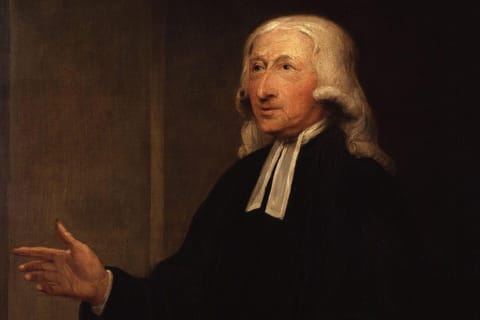
John Wesley, the Anglican priest whose preaching gave rise to Methodism, called money “an excellent gift of God, answering the noblest ends.” In his sermon “The Use of Money,” he gave three rules. “Gain all you can,” he said, but “without hurting either yourself or your neighbour, in soul or body.” “Save all you can” meant spending nothing “merely to gratify the desire of the flesh, the desire of the eye, or the pride of life.” Then “give all you can.” Wesley told his hearers first to provide for themselves and their households, then to “do good to them that are of the household of faith,” and then to “do good unto all men.” Gaining and saving without giving, he warned, was no better than throwing money into the sea. For more on Methodist teaching, see What do Methodists believe?, and for proportional giving to the church, see Do Christians have to tithe?
What do the mainline churches teach about wealth and wages?
Scripture ties generosity to fair pay. The law required employers to pay a poor worker before sundown, “for he is poor and sets his heart on it” (Deuteronomy 24:15), and the Letter of James warns that “the wages of the laborers who mowed your fields, which you have kept back by fraud, cry out” (James 5:4).
The mainline churches carry these teachings into economic life. The United Methodist Social Principles begin from the confession that “all we are and all that we possess, belong to God,” and they call for “fair and equitable compensation, sometimes referred to as a living wage.” They “reject religious teachings that view the accumulation of wealth as a sign of God’s favor.” The Evangelical Lutheran Church in America’s 1999 social statement Sufficient, Sustainable Livelihood for All commits the church to “compensate all people we call or employ at an amount sufficient for them to live in dignity.”
Christians of good faith disagree about which economic policies serve the common good best. They share the conviction that wealth is held in trust, that workers deserve a fair wage, and that generosity is part of following Christ, whose great commandment joins love of God to love of neighbor; see the greatest commandment.
When King David gathered gifts for the house of God, he prayed words that many churches still say when the offering is brought forward: “For all things come from you, and we have given you of your own” (1 Chronicles 29:14). Whatever you have, much or little, you can hold it with that same open hand, and find in giving a way of thanking God.
Common questions
Is it a sin to be rich?
Christians may be wealthy and faithful. Abraham was “very rich” (Genesis 13:2), and Joseph of Arimathea was “a rich man” who was also Jesus’s disciple (Matthew 27:57). Scripture warns that “the love of money is a root of all kinds of evil” (1 Timothy 6:10), and it asks those with wealth to put their hope in God and to share generously.
What is the parable of the rich fool about?
In Luke 12:16–21, a rich farmer has such a large harvest that he decides to tear down his barns and build bigger ones, then rest and enjoy himself for years. God tells him that his life will be required of him that very night. Jesus concludes that the same is true of anyone who “lays up treasure for himself, and is not rich toward God.”
What does “gain all you can, save all you can, give all you can” mean?
The three rules come from John Wesley’s sermon “The Use of Money.” Wesley taught Christians to earn honestly and diligently without hurting themselves or their neighbors, to live without waste or luxury, and then to give generously, after providing for their own households. He warned that earning and saving without giving would leave a person no better off spiritually.
Does the Bible teach that God rewards faith with wealth?
Scripture does not promise riches as a reward for faith, and Jesus himself had “nowhere to lay his head.” The United Methodist Social Principles reject religious teachings that treat the accumulation of wealth as a sign of God’s favor. The Bible does promise that God provides for those who seek God’s kingdom, and it calls the faithful to be content with enough.
What does the Bible say about fair wages?
The law of Moses required employers to pay workers the same day, “for he is poor and sets his heart on it” (Deuteronomy 24:15). The Letter of James warns that wages kept back by fraud “cry out” to the Lord (James 5:4). The United Methodist Church and the Evangelical Lutheran Church in America both teach that workers should be paid enough to live in dignity.
Sources
- Luke 12:13–34 (WEB)
- 1 Timothy 6:6–19 (WEB)
- Acts 4:32–35 (WEB)
- 2 Corinthians 8:13–15 (WEB)
- Exodus 16:16–20 (WEB)
- Deuteronomy 24:14–15 and James 5:4 (WEB)
- Basil the Great, Homily on “I will pull down my barns,” §7, trans. Peter Gilbert
- John Wesley, Sermon 50, The Use of Money (CCEL)
- United Methodist Social Principles: The Economic Community
- ELCA social statement, Sufficient, Sustainable Livelihood for All (1999)
- 1 Chronicles 29:14 (WEB)