Tithing and generosity
The New Testament never commands Christians to tithe, or give exactly ten percent of their income. It calls for generous, proportional, cheerful giving: “Each of you must give as you have made up your mind, not regretfully or under compulsion, for God loves a cheerful giver” (2 Corinthians 9:7). Many churches still hold up the tithe as a goal. Mainline churches generally encourage proportional giving: a set share of income that grows over time toward a tenth or beyond.
Each of you must give as you have made up your mind, not regretfully or under compulsion, for God loves a cheerful giver.
2 Corinthians 9:7, NRSVUE
Christians are called to give generously, in proportion to what they have and with a glad heart, and many churches hold up the tithe, a tenth of income, as a goal worth growing toward. If you are asking because you feel guilty or afraid, whether about giving enough or about affording to give at all, Scripture answers with an invitation. The New Testament never commands Christians to give exactly ten percent, and it teaches that everything you have already comes from God, who gave first.
What is a tithe in the Bible?
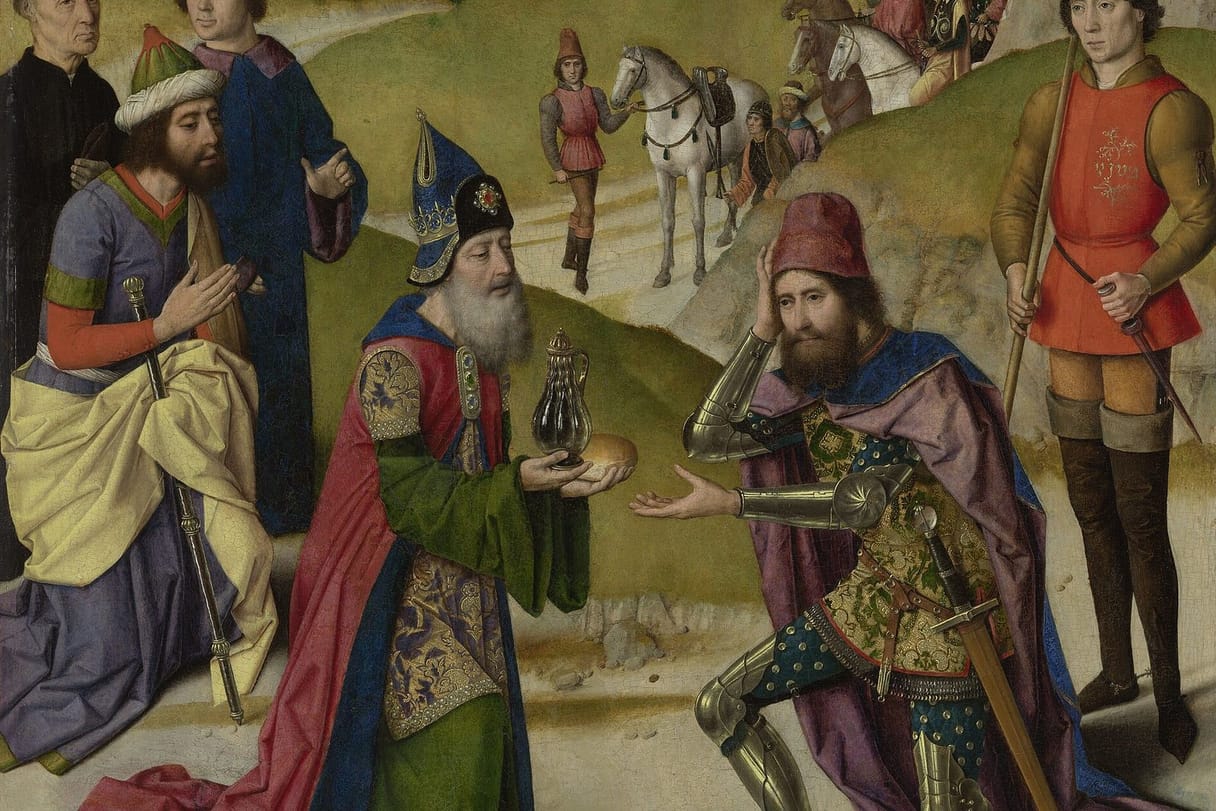
A tithe is a tenth. The practice is older than the law of Moses. After a battle, Abram gave the priest-king Melchizedek “a tenth of all” (Genesis 14:20), and Jacob vowed, “Of all that you will give me I will surely give a tenth to you” (Genesis 28:22).
The law of Moses made the tithe part of Israel’s worship and economy. “All the tithe of the land, whether of the seed of the land or of the fruit of the trees, is the LORD’s” (Leviticus 27:30). The tithe supported the Levites, who had no land of their own and served at the sanctuary (Numbers 18:21).
Deuteronomy describes the tithe as a feast and as a safety net. Israelites were to bring a tenth of their grain, wine, and oil to the sanctuary and eat it there: “you shall rejoice, you and your household” (Deuteronomy 14:26). Every third year the tithe stayed in the towns, so that the Levites, “the foreigner living among you, the fatherless, and the widow” could come and “eat and be satisfied” (Deuteronomy 14:28–29). The tithes of ancient Israel were paid in crops and animals, in a farming economy without wages or income tax.
What does Malachi 3:10 mean?
Malachi 3:10 is the verse most often quoted in sermons about tithing. The prophet spoke to Jerusalem after the exile, probably in the fifth century BCE, when the rebuilt Temple was poorly supported. In Malachi 3:8–10, God accuses the people of robbing him “in tithes and offerings,” tells them to bring the whole tithe into the storehouse so that there may be food in God’s house, and promises in return to open the windows of heaven and pour out a blessing.
Malachi speaks to “this whole nation,” and the storehouse was the Temple’s storeroom for grain that fed the priests and Levites. The promised blessing is a good harvest; the next verse says God will “rebuke the devourer,” the pests that eat the crops, so that the vines will not be barren (Malachi 3:11). Christians rightly hear in the passage a call to trust God with their money. The verse was addressed to the nation and its Temple, and it does not promise individual wealth in return for a donation.
Did Jesus teach tithing?
Jesus mentioned tithing once, while rebuking religious leaders:
“Woe to you, scribes and Pharisees, hypocrites! For you tithe mint, dill, and cumin and have neglected the weightier matters of the law: justice and mercy and faith. It is these you ought to have practiced without neglecting the others.
Matthew 23:23, NRSVUE
Jesus spoke to Jews who lived under the law of Moses, and he did not tell them to stop tithing. He placed the tithe beneath “justice and mercy and faith.” In another parable a Pharisee boasts to God, “I give tithes of all that I get,” and Jesus says that the tax collector who asked only for mercy was the one who went home justified (Luke 18:9–14).
The giver Jesus praised most gave far more than a tenth. He watched a poor widow put two small copper coins into the Temple treasury and said, “she, out of her poverty, gave all that she had to live on” (Mark 12:44).
What does the New Testament teach about giving?
The New Testament never repeats the tithe as a command for Christians. It teaches regular, proportional, and cheerful giving. Paul told the Corinthians, “On the first day of every week, let each one of you save as he may prosper” (1 Corinthians 16:2). He praised the poor churches of Macedonia, who gave “according to their power, … yes and beyond their power” (2 Corinthians 8:3).
Paul’s fullest teaching on giving comes in 2 Corinthians 9:
The point is this: the one who sows sparingly will also reap sparingly, and the one who sows bountifully will also reap bountifully. Each of you must give as you have made up your mind, not regretfully or under compulsion, for God loves a cheerful giver.
2 Corinthians 9:6–7, NRSVUE
Paul grounded Christian generosity in the gift of Christ himself: “though he was rich, yet for your sakes he became poor, that you through his poverty might become rich” (2 Corinthians 8:9).
The early church understood the gospel as asking more than the tithe. Irenaeus of Lyons, writing around 180 CE, said that Christ replaced “the law enjoining the giving of tithes” with the call “to share all our possessions with the poor” (Against Heresies 4.13.3). In Irenaeus’s view, the grace of Christ raised the standard of giving.
What is proportional giving?
Proportional giving means deciding to give a set percentage of your income and raising that percentage over time. The principle is old: “Every man shall give as he is able, according to the LORD your God’s blessing which he has given you” (Deuteronomy 16:17). Paul says the same: “it is acceptable according to what you have, not according to what you don’t have” (2 Corinthians 8:12).
A household that gives two percent this year might aim for three next year, and so on toward the tithe. A household with more than it needs might give well beyond ten percent. Proportional giving makes generosity a deliberate act of faith, so that giving comes first in the budget and grows as trust in God grows.
What do the mainline churches teach about tithing?
Mainline churches generally present the tithe as a goal and a discipline of gratitude, and they encourage proportional giving toward it. United Methodists promise, when they join a congregation, to “faithfully participate in its ministries by their prayers, their presence, their gifts, their service, and their witness,” and John Wesley taught early Methodists to “gain all you can,” to “save all you can,” and then to “give all you can” (Sermon 50, “The Use of Money”). The Episcopal Church’s General Convention has affirmed the tithe since 1982, and in 2018 it resolved to “continue to embrace the biblical tithe of 10% as a standard for faithful generosity” (Resolution 2018-B028).
Some other churches teach that the tithe remains a binding command for every Christian, usually citing Malachi 3:10 and Jesus’s words in Matthew 23:23. Those who hold that view take Scripture’s warnings about money seriously, and their discipline has made many congregations generous.
However much you give, Scripture asks you to give from a glad heart and to remember the poor; see what the Bible says about the poor. Giving belongs with worship and prayer in the life of a congregation; see is it a sin to not go to church? Generosity is a response to grace and never a way to earn it; see faith and works.
When the people of Israel brought their gifts for the Temple, King David prayed over them, and his words can be your prayer whenever you give, whether the gift is large or small:
But who am I, and what is my people, that we should be able to offer so willingly as this? For all things come from you, and we have given you of your own.
Common questions
Is it a sin not to tithe?
Christian giving is a response to grace, and the mainline churches invite it as a discipline of gratitude without setting ten percent as a law. Scripture does warn against greed and against holding back what we could share, and United Methodists promise when they join a church to support it with “their gifts” along with their prayers, presence, service, and witness. The question to bring to God is whether your giving reflects gratitude and generosity in proportion to what you have.
Should I tithe on my gross or net income?
The Bible does not say, because the tithes of ancient Israel were a tenth of crops and flocks, paid long before anyone had a paycheck or income tax. Christians answer the question in different ways, and either is a reasonable starting point. The New Testament principle is to give “according to what you have” (2 Corinthians 8:12), with the aim of growing in generosity.
Does my tithe have to go to my church?
The tithe in the law of Moses supported the Levites who served at the sanctuary and fed the poor, the foreigner, the orphan, and the widow. Many Christians give their main offering to their parish, which supports worship, pastoral care, and outreach, and give to other charities as well. Mainline churches generally encourage proportional giving to the ministry of your own congregation, with other gifts beyond it.
What if I can’t afford to tithe?
Give what you can, cheerfully and gladly. Paul wrote that a gift “is acceptable according to what you have, not according to what you don’t have” (2 Corinthians 8:12), and Jesus praised a poor widow whose gift was tiny. Scripture also says that providing for your own family is a sacred duty (1 Timothy 5:8).
Sources
- Malachi 3:8–11 (WEB)
- Matthew 23:23 (WEB)
- 2 Corinthians 8:1–15 and 9:6–8 (WEB)
- Deuteronomy 14:22–29 (WEB)
- Genesis 14:18–20 (WEB)
- Mark 12:41–44 (WEB)
- Irenaeus, Against Heresies, Book IV, Chapter 13 (New Advent)
- Episcopal Church General Convention, Resolution 1982-A116, Affirm the Tithe As the Standard of Giving
- Episcopal Church General Convention, Resolution 2018-B028, Support Transformational Giving and the Biblical Tithe
- John Wesley, Sermon 50, The Use of Money (CCEL)
- United Methodist Book of Discipline, ¶ 217, Membership Vows