IVF and Christian ethics
IVF is not a sin in the teaching of the mainline Protestant churches. The ELCA, the PC(USA), the United Methodist Church, and the Episcopal Church permit in vitro fertilization. Some Christians object to IVF because it often leaves embryos frozen or discarded. Christians who use IVF should take the embryos’ worth seriously, and couples facing infertility deserve compassion from every Christian.
He settles the barren woman in her home as a joyful mother of children. Praise the LORD!
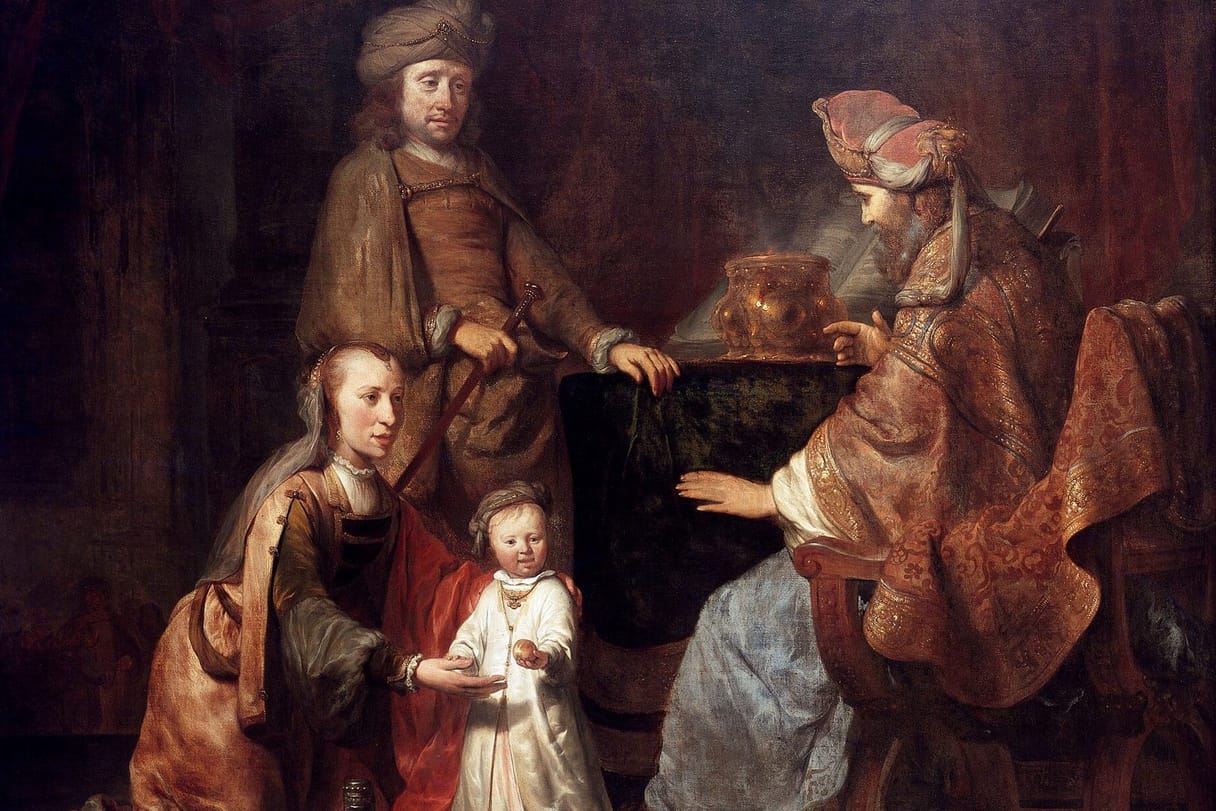
If you are considering in vitro fertilization (IVF), you may be living with the long grief of infertility, month after month of hope and disappointment, and perhaps wondering whether wanting a child this way is right before God. Scripture honors that longing. It tells the stories of Sarah, Rachel, Hannah, and Elizabeth with tenderness, and it counts every child a gift from God. The Evangelical Lutheran Church in America (ELCA), the Presbyterian Church (U.S.A.), the United Methodist Church, and the Episcopal Church permit IVF. The hardest question it raises concerns the embryos that are created but never transferred to the womb, and Christians weigh that question with care. Some Christians, including many evangelicals and the Russian Orthodox Church, object to IVF as it is usually practiced, out of reverence for embryos.
What is IVF?
In IVF, doctors stimulate a woman’s ovaries to release several eggs, collect them, and fertilize them with sperm in a laboratory. One or more of the resulting embryos is placed in the woman’s womb a few days later. Embryos that are not transferred are often frozen for later use. The first child conceived by IVF, Louise Brown, was born in England in 1978. Since then, millions of children around the world have been born through it.
What does the Bible say about infertility?
The Bible never mentions IVF. It speaks often, though, of the grief of wanting a child. Sarah laughed at the promise of a son because she “had passed the age of childbearing” (Genesis 18:11–12). Rachel cried to her husband Jacob, “Give me children, or else I will die” (Genesis 30:1). Hannah wept at the shrine of Shiloh while her husband asked her, “Am I not better to you than ten sons?” (1 Samuel 1:8). Then she prayed:
She was in bitterness of soul, and prayed to the LORD, weeping bitterly. She vowed a vow, and said, “LORD of Armies, if you will indeed look at the affliction of your servant and remember me, and not forget your servant, but will give to your servant a boy, then I will give him to the LORD all the days of his life, and no razor shall come on his head.”
Hannah’s son was the prophet Samuel. When she brought him to the shrine, she said, “I prayed for this child, and the LORD has given me my petition which I asked of him” (1 Samuel 1:27). In the New Testament, Elizabeth conceived John the Baptist in old age and thanked God “to take away my reproach among men” (Luke 1:25).
The stories of Sarah, Rachel, Hannah, and Elizabeth show that infertility is a real sorrow, and they never treat it as a punishment. Luke calls Elizabeth and her husband Zechariah “righteous before God” long before their son was born (Luke 1:6). The Psalms praise God for giving children to women who had none:
He settles the barren woman in her home as a joyful mother of children. Praise the LORD!
If you are facing infertility, your longing for a child is a holy longing, and your grief belongs in prayer. For more on unanswered prayer, see why doesn’t God answer prayer?, and for the wider question of grief and loss, see why does God allow suffering?
What do the mainline churches teach about IVF?
None of these four churches forbids IVF, and two of them have addressed it directly. The Episcopal Church’s General Convention in 1982 gave “approval to usage of so-called ‘in vitro’ fertilization for the purpose of providing children in a marriage,” and in 2003 it supported couples who choose to donate leftover embryos to medical research, provided the embryos were not created for research.
The United Methodist Church’s Book of Resolutions likewise supports research on leftover IVF embryos under strict conditions. It also states: “A human embryo, even at its earliest stages, commands our reverence and makes a serious moral claim on us.” The ELCA and the PC(USA) have no social statement devoted to IVF and do not forbid it.
Why do some Christians object to IVF?
Christians who object to IVF usually start from the embryo. If a human person begins at conception, then creating embryos that will be frozen indefinitely or discarded is a grave wrong. Some also hold that a child should come into being only through the sexual union of husband and wife.
The Russian Orthodox Church’s social teaching of 2000, The Basis of the Social Concept, calls IVF “morally inadmissible” when it involves “the production, conservation and purposeful destruction of ‘spare’ embryos.” Christians on both sides of the question can agree that a child is a gift and not something anyone is owed: “children are a heritage of the LORD” (Psalm 127:3).
Many evangelical Christians share these concerns; in June 2024 the Southern Baptist Convention called on its members to use reproductive technologies only in ways consistent with the dignity of the human embryo. Christians who hold these views are moved by reverence for life.
What about unused embryos?
IVF usually creates more embryos than a couple will transfer, because many embryos do not develop and many transfers do not lead to pregnancy. The embryos left over are frozen. A couple later faces four main choices: use them in another pregnancy, donate them to another couple, donate them to research, or allow them to be thawed and to die.
Christians disagree about the moral status of an early embryo. Many evangelicals and Orthodox Christians hold that it is a human person from the moment of conception, often citing the psalm “You knit me together in my mother’s womb” (Psalm 139:13). Many mainline theologians hold that an embryo of a few cells is human life that deserves deep respect, though not yet a person in the full sense, and Jewish tradition has long treated the earliest stage of pregnancy differently from later stages. The Episcopal and United Methodist resolutions are consistent with this middle view. For the related debate about abortion, see what does the Bible say about abortion?
Couples who take embryos seriously can reduce the problem. They can ask their clinic to fertilize only as many eggs as they are prepared to use, transfer one embryo at a time, and decide in advance, with prayer and counsel, what they will do with any embryos left over. For the related question of contraception, see is birth control a sin?
Whether IVF brings you a child, or you decide against it, or treatment does not succeed, God’s love for you is the same, and your family is whole in God’s sight. The God who heard Hannah weeping at Shiloh hears you too. When your own words run out, Paul promises that the Spirit prays within you “with groanings which can’t be uttered” (Romans 8:26).
Common questions
Does the Bible mention IVF?
The Bible does not mention IVF, which was first used successfully in 1978. Scripture speaks often about the longing for children, through the stories of Sarah, Rachel, Hannah, and Elizabeth, and it teaches that every human life comes from God. Christians weigh IVF by those teachings and by the church’s moral tradition.
Why do some Christians think IVF is wrong?
Some Christians, including many evangelicals and Orthodox Christians, regard an embryo as a human person from conception, so they object to creating embryos that will be frozen indefinitely or discarded. Some also believe a child should come into being only through the sexual union of husband and wife. Their concern comes from reverence for life and deserves respect.
What should we do with our frozen embryos?
Couples with frozen embryos usually choose among using them in later pregnancies, donating them to another couple, donating them to research, or allowing them to be thawed. Christians disagree about which choices are right, and the decision deserves prayer and counsel from a pastor you trust. Many couples find it helps to decide before treatment how many embryos to create.
Is infertility a punishment from God?
God meets infertility with compassion. The Bible describes Sarah, Rachel, Hannah, and Elizabeth as faithful women who longed for children for years, and Luke calls Elizabeth and her husband righteous before God. Infertility is a medical condition and a source of real grief, and God is present in that grief.
Sources
- 1 Samuel 1:1–28 (WEB)
- Genesis 18:11–12; 21:1–2 (WEB)
- Genesis 30:1 (WEB)
- Psalm 113:9 (WEB)
- Psalm 139:13 (WEB)
- Luke 1:25 (WEB)
- General Convention Resolution 1982-A067, Approve Use of “In Vitro” Fertilization
- General Convention Resolution 2003-A014, Support Human Embryonic Stem Cell Research
- United Methodist Book of Resolutions 8006, Ethics of Embryonic Stem Cell Research
- What Do Protestants Believe about In Vitro Fertilization? It’s Complicated (Canopy Forum, 2024)
- Psalm 127:3 (WEB)
- Russian Church reexamining stance on IVF (OrthoChristian, 2021), quoting The Basis of the Social Concept (2000)