The authors of the Bible
Many human authors wrote the Bible over many centuries, from the time of Israel's kings to the early second century CE. They include prophets, priests, royal scribes, poets, wisdom teachers, apostles, and later editors who gathered older material. Some books name their authors; many do not. Christians believe God inspired these human writers and still speaks through their words, which is why the church calls their work the Word of God.
Long ago God spoke to our ancestors in many and various ways by the prophets,
Hebrews 1:1, NRSVUE
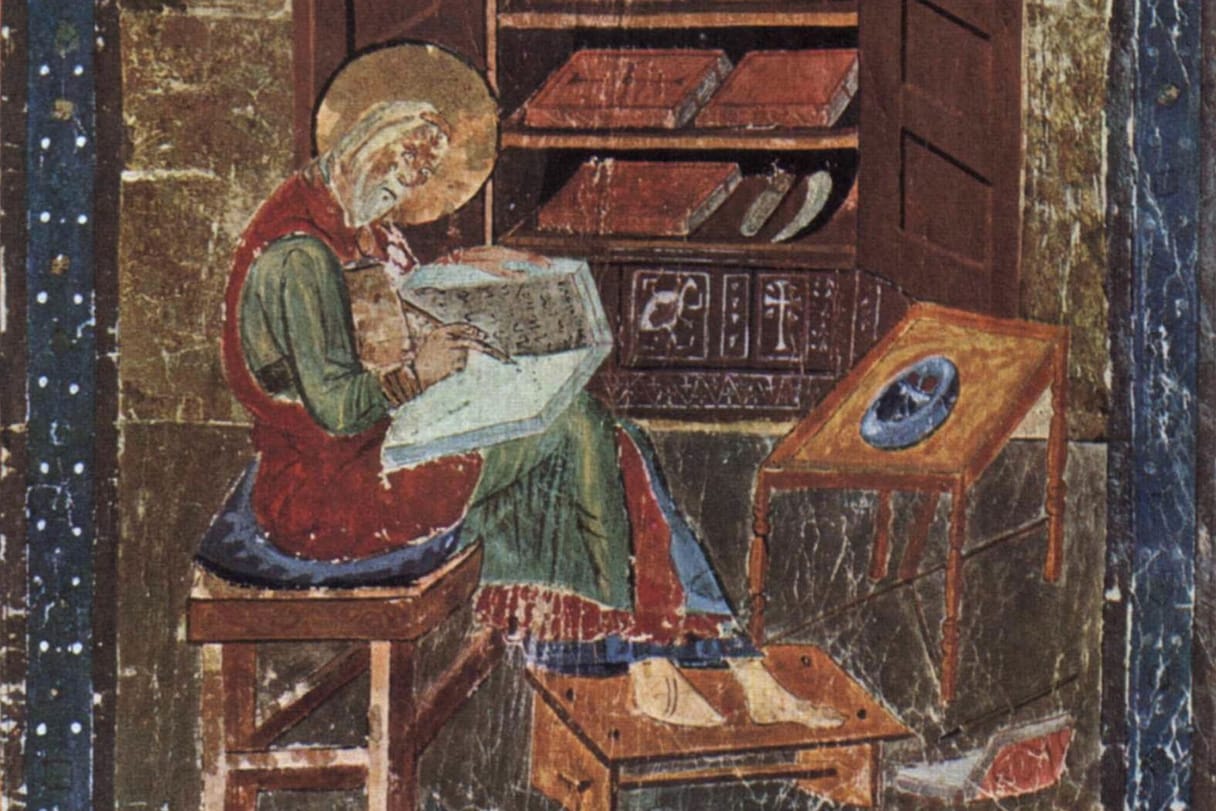
If you have learned that the Bible had many human authors, you may wonder what that means for its holiness. The church has always received those human voices as the very means God chose to speak. The Letter to the Hebrews describes God speaking through many human voices: “Long ago God spoke to our ancestors in many and various ways by the prophets” (Hebrews 1:1). The Bible is a library, written in Hebrew, Aramaic, and Greek over many centuries, and it carries the marks of the many hands and ages that produced it. Christians believe the Holy Spirit was at work through all of them.
Did Moses write the first five books of the Bible?
For many centuries, Jews and Christians credited Moses with the Torah, the first five books of the Bible (Genesis, Exodus, Leviticus, Numbers, Deuteronomy), and many believers still hold that view out of reverence for Scripture. The books themselves do not name an author, and some passages look back on Moses from a later time. Deuteronomy describes his death and burial and adds that “no man knows where his tomb is to this day” (Deuteronomy 34:5–6). It then says, “Since then, there has not arisen a prophet in Israel like Moses” (Deuteronomy 34:10).
Modern scholars have concluded that the Torah was woven together from several earlier sources over a long period. In the late nineteenth century, the German scholar Julius Wellhausen gave the classic form of this idea, the “documentary hypothesis,” which named four sources by initials: J, E, D, and P. Scholars today argue about the details and many have abandoned the classic four-source model, but most still agree that Deuteronomy was a separate source and that the Torah grew over centuries.
Jewish scholarship has reached similar conclusions. The introduction to Etz Hayim, the Torah commentary used in Conservative synagogues, says the Torah did not reach its present form until after the Babylonian exile, in the sixth or fifth century BCE.
Who wrote the rest of the Old Testament?
The historical books, from Joshua through 2 Kings, were shaped by editors who looked back on Israel’s history after the fall of the northern kingdom and of Jerusalem. Chronicles, Ezra, and Nehemiah were written after the exile, in the Persian period or soon after.
The prophetic books preserve the words of real prophets, often collected and expanded by their followers. Jeremiah dictated his oracles to a scribe: “Baruch wrote from the mouth of Jeremiah all the LORD’s words, which he had spoken to him, on a scroll of a book” (Jeremiah 36:4). The Book of Isaiah gathers the work of more than one prophet. Chapters 1–39 contain much from Isaiah of Jerusalem in the eighth century BCE, while chapters 40–55 address the exiles in Babylon two centuries later. Scholars call the author of those later chapters Second Isaiah.
The Psalms come from many poets and many centuries, and some carry headings such as “A Psalm by David.” Proverbs, Job, and Ecclesiastes come from Israel’s wisdom teachers. The Book of Daniel, set in the sixth century BCE, was completed in the 160s BCE, during the persecution of the Jews by the Syrian king Antiochus IV.
Who wrote the New Testament?
The earliest books of the New Testament are letters by the Apostle Paul, written in the 50s CE. Scholars agree that Paul wrote seven of them: Romans, 1 and 2 Corinthians, Galatians, Philippians, 1 Thessalonians, and Philemon. Paul often dictated to a secretary. One of them signs off near the end of Romans: “I, Tertius, who write the letter, greet you in the Lord” (Romans 16:22). Paul sometimes added a line himself: “See with what large letters I write to you with my own hand” (Galatians 6:11).
Six more letters carry Paul’s name: Ephesians, Colossians, 2 Thessalonians, 1 and 2 Timothy, and Titus. Many scholars think some or all of these were written after Paul’s death by followers writing in his name, a common practice in the ancient world. Scholars still disagree about several of them.
The four Gospels do not name their authors. The names Matthew, Mark, Luke, and John were attached to them by the second century. Most scholars date Mark to around 70 CE and the others to the following decades. See Who wrote the Gospels? for the full story.
The other New Testament books come from a range of early Christian leaders. Hebrews is anonymous. The letters of James, Peter, and Jude carry the names of leaders of the first generation, and the three letters of John were traditionally credited to the apostle John. Scholars debate how many of these were written by those men themselves. Revelation was written by a Christian prophet named John on the island of Patmos (Revelation 1:9), most likely in the 90s CE.
If people wrote the Bible, how is it the Word of God?
The church has always held divine inspiration and human authorship together. The Second Letter of Peter says that prophecy came when “holy men of God spoke, being moved by the Holy Spirit” (2 Peter 1:21). The people spoke, and the Spirit moved them. The Nicene Creed says the same of the Spirit, who “has spoken through the Prophets.”
Christians call the Bible the Word of God for two reasons: God inspired its human authors, and God still speaks to people through it when it is read and preached.
The many hands behind the Bible are part of its gift. God chose to speak through prophets and poets, through scribes and editors, and through apostles writing to real churches with real problems. A God who spoke through a secretary like Tertius and through the unnamed prophet who comforted the exiles can speak to you in your own ordinary life. The Second Letter to Timothy calls Scripture “God-breathed” and “profitable for teaching” (2 Timothy 3:16). For how the church holds Scripture’s truth together with its human history, see Is the Bible true, and is it the Word of God?
Why does it matter who wrote the Bible?
Knowing who wrote a book, and when, helps you hear it rightly. Isaiah 40 sounds different once you know it was written to exiles who had lost their temple and their land. Daniel’s visions of beasts make sense as encouragement to Jews suffering under Antiochus IV. Paul’s letters read differently once you know they answer questions from particular congregations in Corinth, Galatia, and Rome.
Knowing that history helps prayerful reading, because it lets you hear what a passage meant to its first hearers before you ask what it means for you. For more on reading Scripture this way, see Should we read the Bible as literal fact? and Why do Catholic Bibles have more books?
Orthodox Christians often begin their prayers by asking the Spirit who spoke through the prophets to come to them:
O heavenly King, the Comforter, Spirit of Truth, who art in all places and fillest all things; Treasury of good things and Giver of life: Come and take up thine abode in us, and cleanse us from every stain; and save our souls, O Good One.
Prayer to the Holy Spirit, in Isabel F. Hapgood, Service Book of the Holy Orthodox-Catholic Apostolic Church (1906)
Common questions
Did God write the Bible?
Christians believe God is the Bible's ultimate source, and human beings did the writing. Christians call the Bible the Word of God because, as the Second Letter to Timothy says, Scripture is “God-breathed,” and because God still speaks through it. The authors wrote in Hebrew, Aramaic, and Greek, each in the style of their own time and place.
Who wrote the book of Genesis?
Jewish and Christian tradition credited Moses with Genesis and the other four books of the Torah, and many believers still hold that view. Most scholars today think the Torah was compiled from several earlier sources and reached its present form after the Babylonian exile, in the sixth or fifth century BCE. The book itself never names its author.
How long did it take to write the Bible?
The writing and editing of the Bible stretched across many centuries. The oldest parts may go back to Israel's early monarchy, around 1000 BCE or somewhat later, and the latest New Testament writings come from the early second century CE. Scholars debate the dates of many individual books.
Who decided which books went into the Bible?
No single person decided. Jewish communities gradually settled the Hebrew Scriptures, and Christian churches settled the New Testament through centuries of use in worship and teaching. Catholic, Orthodox, and Protestant Bibles still differ over a handful of Old Testament books.
Sources
- Deuteronomy 34:5–10 (WEB)
- Jeremiah 36:4 (WEB)
- Romans 16:22 (WEB)
- Galatians 6:11 (WEB)
- Hebrews 1:1–2 (WEB)
- 2 Peter 1:20–21; 2 Timothy 3:16 (WEB)
- Hillel Halkin on the Etz Hayim commentary's introduction, Commentary, April 2003
- Documentary hypothesis (Wikipedia)
- Authorship of the Pauline epistles (Wikipedia)
- Book of Daniel (Wikipedia)
- Isabel F. Hapgood, Service Book of the Holy Orthodox-Catholic Apostolic (Greco-Russian) Church (1906), Internet Archive