Talking about faith and politics with family
Christians can talk about faith and politics with family by listening before speaking, assuming the best about one another, and remembering that the people at the table belong to Christ before they belong to any side. Scripture asks believers to be “swift to hear, slow to speak, and slow to anger” (James 1:19) and to live at peace “as much as it is up to you” (Romans 12:18). Some conversations can wait, and some boundaries protect love.
If it is possible, as much as it is up to you, be at peace with all men.
Christians can talk about faith and politics with family as followers of Christ, listening before they speak and remembering that the people at the table belong to God before they belong to any side. Perhaps you dread the holiday meal because your father and your sister cannot share a room once the news comes up. Perhaps the family group chat went silent after a fight, or a parent you love now sees the world in a way you no longer recognize. That sorrow is real, and Scripture meets it with more hope than you might expect.
What does the Bible say about arguing with family?
The Bible knows family conflict well, from Jacob and Esau to the brothers of Joseph. Its wisdom books speak to the dinner table directly: “Better is a dry morsel with quietness, than a house full of feasting with strife” (Proverbs 17:1). The Letter of James gives counsel that fits every family gathering, “let every man be swift to hear, slow to speak, and slow to anger” (James 1:19), and James means every person. Proverbs adds that “A gentle answer turns away wrath, but a harsh word stirs up anger” (Proverbs 15:1).
Paul knew that peace does not always lie in your hands:
If it is possible, as much as it is up to you, be at peace with all men.
Paul’s two qualifications are a mercy. Peace with some people is beyond reach for now, and part of it depends on them. Your own speech, your own listening, and your own prayer are up to you, and God gives grace for each.
Why did Jesus choose disciples who disagreed?
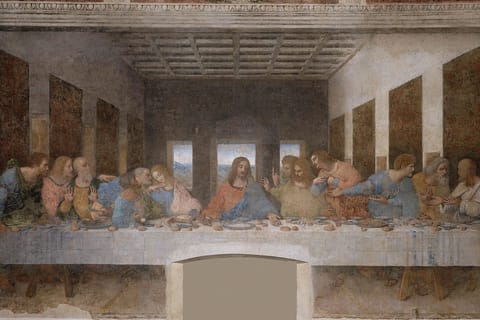
Among the twelve apostles were “Matthew the tax collector” and “Simon the Zealot” (Matthew 10:3–4). Tax collectors worked for the ruling powers, Rome and the Herodian kings who governed under Rome, and their neighbors often despised them as collaborators. Simon’s title marked him as zealous, probably for God and for Israel’s law; many scholars think the rebel party later called the Zealots arose only during the war with Rome in the 60s CE. Even so, the two men would have seen their nation’s plight very differently. Jesus called them both, and they shared his table.
Jesus did not ask Matthew and Simon to settle their differences before following him. He asked them to follow him, and following him made them brothers. Paul describes the unity Christ gives:
with all lowliness and humility, with patience, bearing with one another in love, being eager to keep the unity of the Spirit in the bond of peace.
Unity, in Paul’s words, is the Spirit’s gift, kept by patience. Christians can belong to one another without agreeing about everything.
How can I talk about politics with family without fighting?
Gregory of Nazianzus, preaching in Constantinople around 380, lived through an age when Christians quarreled endlessly over doctrine in markets and homes. He lamented that “every dinner party” was “worried to death with silly talk and boredom,” and that “every festival” was “made unfestive and full of dejection.” Serious subjects, he taught, belong “not before every audience, nor at all times, nor on all points; but on certain occasions, and before certain persons, and within certain limits” (Oration 27.2–3). His counsel about doctrine fits political arguments just as well. A holiday meal does not need to become a debate.
When a conversation does begin, ask before you answer. Proverbs warns, “He who answers before he hears, that is folly and shame to him” (Proverbs 18:13). Ask what worries your relative most, what they hope for their grandchildren, and what experience shaped their view. Behind many political opinions stand loves that Christians share, such as love for children, care for the poor, and gratitude for one’s country. Naming the love beneath an opinion often softens a conversation that facts alone would harden.
The monks of the Egyptian desert prized restraint in speech. Their collected sayings record that Abba Agathon carried a stone in his mouth for three years until he learned to keep silent. Few people need a stone. A short prayer on the way to dinner can serve the same purpose: “Set a watch, LORD, before my mouth. Keep the door of my lips” (Psalm 141:3).
What do the mainline churches teach about disagreement?
Each of the mainline churches carries teaching that helps a divided family. Martin Luther’s Small Catechism, as printed in the ELCA’s Evangelical Lutheran Worship, explains the commandment against false witness this way: Christians are to “come to their defense, speak well of them, and interpret everything they do in the best possible light.” That last phrase, practiced at a family dinner, could change the whole evening.
The Book of Order of the Presbyterian Church (U.S.A.) keeps an eighteenth-century principle that people “of good characters and principles may differ,” and that Christians should “exercise mutual forbearance toward each other” (F-3.0105). John Wesley, the founder of Methodism, asked in his sermon “Catholic Spirit,” “Though we cannot think alike, may we not love alike?” In the baptismal covenant of the Episcopal Church, Christians promise to “respect the dignity of every human being.” For more on Jesus’ warning against judging, see Matthew 7:1 in context.
What if the conversation wounds someone at the table?
Political arguments are seldom abstract at a family table. A remark about immigrants lands on a cousin’s husband who came to this country as a refugee. A debate about marriage or gender concerns a nephew who is gay or a grandchild who is transgender. People are never mere topics, and Christ’s love for the vulnerable gives you permission, and sometimes a duty, to speak. Paul calls Christians to speak “truth in love” (Ephesians 4:15). A calm sentence such as “Please don’t talk about my brother that way” is an act of love for everyone present.
You may also step away. Jesus “withdrew himself into the desert and prayed” (Luke 5:16), and Romans 12:18 limits your duty to what is up to you. Leaving early, changing the subject, or taking a walk after dinner can protect a relationship you hope to keep for decades. If old wounds have opened, see Forgiving someone who hurt you.
How can faith hold a divided family together?
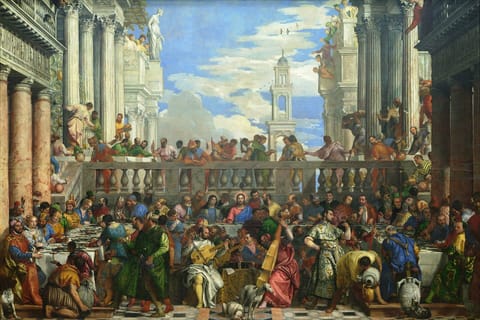
Christians gather at another table as well. At Holy Communion they receive the same bread beside people they did not choose and might not vote with. Paul writes, “Because there is one loaf of bread, we, who are many, are one body” (1 Corinthians 10:17). Even where not everyone at a family meal believes, a Christian can remember that each person present is someone Christ loves (see Holy Communion).
Politics matters, because laws and leaders affect the poor, the stranger, and the earth God loves, and the mainline churches, through documents such as the ELCA’s 2025 social statement on faith and civic life, encourage members to take part in public life (see Faith, politics, and the common good). Scripture also puts politics in its place: “Don’t put your trust in princes” (Psalm 146:3). Because your hope rests in Christ, you can afford to listen to your brother with patience. For concerns about faith fused with national identity, see Christian nationalism.
Jesus said, “Blessed are the peacemakers, for they shall be called children of God” (Matthew 5:9). A prayer first published anonymously in France in 1912, and long attributed to Francis of Assisi, gives words for the drive to dinner: “Lord, make me an instrument of your peace; where there is hatred, let me sow love.” May Christ, who made a tax collector and a zealot into brothers, make peace at your table too.
Common questions
Should Christians avoid talking about politics with family?
Faith shapes how Christians care for the poor, the stranger, and the common good, and relatives can learn a great deal from one another. Gregory of Nazianzus taught that serious subjects belong to the right occasion, the right people, and the right limits. A holiday meal with tired relatives is often the wrong occasion, and a long walk with one person may be the right one.
What does the Bible say about arguing with family?
Proverbs says, “Better is a dry morsel with quietness, than a house full of feasting with strife” (Proverbs 17:1). James asks Christians to be “swift to hear, slow to speak, and slow to anger” (James 1:19), and Ephesians 4:31–32 calls believers to put away bitterness and to be “kind to one another, tender hearted, forgiving each other.”
What if a relative’s political views hurt someone I love?
You may speak up for a person who is being demeaned, calmly and briefly, because Christ’s love reaches the vulnerable first. Paul calls Christians to speak “truth in love” (Ephesians 4:15). You may also change the subject or leave early, since Romans 12:18 limits your duty to what is up to you.
How can I pray for a family divided by politics?
Pray for each person by name before you gather, and ask God to guard your own words, as the psalmist prayed: “Set a watch, LORD, before my mouth” (Psalm 141:3). Jesus blessed the peacemakers and called them children of God (Matthew 5:9), and the prayer attributed to Francis of Assisi, “Lord, make me an instrument of your peace,” fits the drive to dinner.
Sources
- Romans 12:9–21 (WEB)
- James 1:19–20 (WEB)
- Matthew 10:2–4 (WEB)
- Ephesians 4:1–3, 15, 31–32 (WEB)
- Gregory of Nazianzus, Oration 27 (First Theological Oration), 2–3 (New Advent)
- Agathon of Scetis (Wikipedia)
- Gary Manning Jr., “Simon the Zealot Was Not a Zealot” (Biola University, 2025)
- Women of the ELCA, “In the best light” (Small Catechism, Evangelical Lutheran Worship, p. 1161)
- Presbyterian Church (U.S.A.), Book of Order, F-3.0105 Mutual Forbearance
- John Wesley, Sermon 39: Catholic Spirit (CCEL)
- The Book of Common Prayer (1979), Holy Baptism: The Baptismal Covenant
- Evangelical Lutheran Church in America, social statement on civic life and faith (2025)
- Prayer of Saint Francis (Wikipedia)