Faith, politics, and the common good
Christians are called to take part in public life for the good of their neighbors. Jeremiah told God’s people to “seek the peace of the city,” Paul asked for prayers “for kings and all who are in high places,” and Micah summed up God’s will as justice, mercy, and humility. The mainline churches encourage their members to vote by conscience and to speak with civility, and their election resources are nonpartisan.
Seek the peace of the city where I have caused you to be carried away captive, and pray to the LORD for it; for in its peace you will have peace.
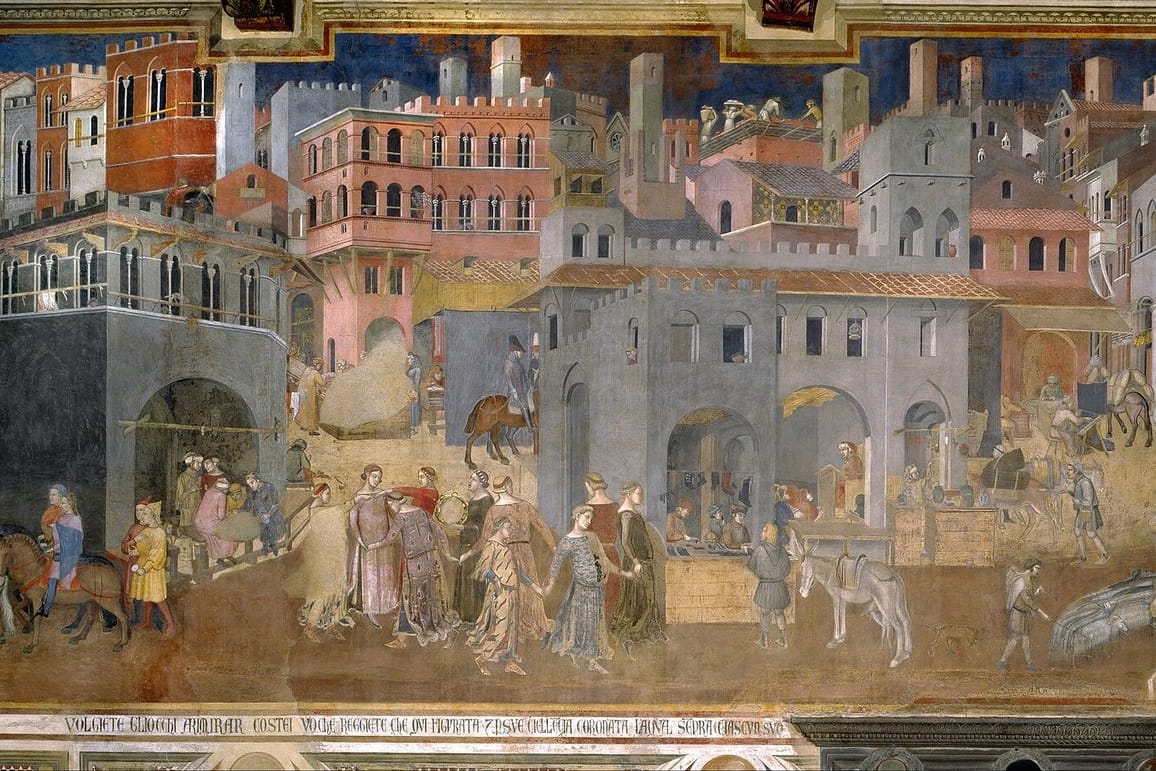
Christians are called to take part in public life for the good of their neighbors, and Scripture gives them both the reason and the manner. Perhaps an election season has you anxious, or politics has strained your family table, or you wonder whether faith belongs anywhere near a ballot. The Bible speaks to each of these with a steady hope: God cares about the life of the city, and the people of God are sent to seek its good.
Should Christians be involved in politics?
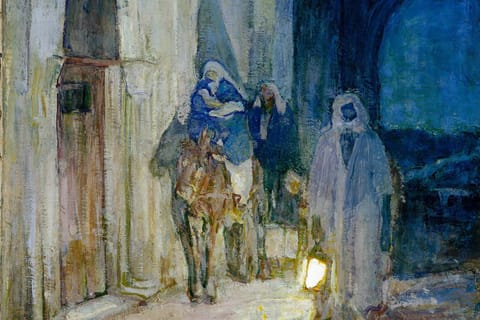
When the people of Judah were carried into exile in Babylon, the prophet Jeremiah sent them a letter. He told them to build houses, plant gardens, raise families, and care for the city of their captors:
Seek the peace of the city where I have caused you to be carried away captive, and pray to the LORD for it; for in its peace you will have peace.
The Hebrew word for peace there, shalom, means wholeness and well-being, the flourishing of a whole community. Christians have long read Jeremiah’s letter as a charter for their own life in the world. They belong to God first, and they are sent to work and pray for the common good wherever they live.
The prophets of Israel spoke to kings and courts about justice. Amos cried, “Let justice roll on like rivers, and righteousness like a mighty stream” (Amos 5:24). Proverbs tells rulers to “open your mouth for the mute” and to “serve justice to the poor and needy” (Proverbs 31:8–9). Micah summed up what God asks of everyone: “to act justly, to love mercy, and to walk humbly with your God” (Micah 6:8; see what Micah 6:8 means).
What does “give to Caesar what is Caesar’s” mean?
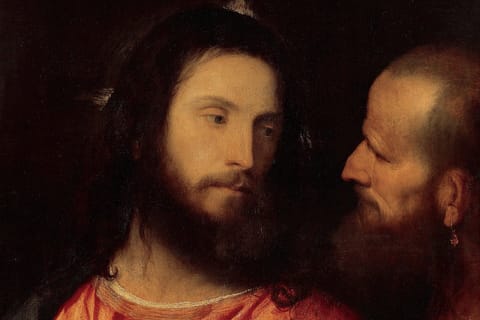
Some of Jesus’s opponents tried to trap him with a question about the Roman tax. If he said to pay it, he would anger those who hated Roman rule; if he said not to pay it, he could be accused of rebellion. Jesus asked for a coin, asked whose image was on it, and answered:
Give therefore to Caesar the things that are Caesar’s, and to God the things that are God’s.
Jesus affirmed that citizens owe real duties to the state, such as taxes. He also set a limit on those duties, because some things belong to God alone. Many readers since the early church have noticed that the coin bore Caesar’s image, while human beings bear the image of God (Genesis 1:27). A Christian can give the state its due and still give his or her whole self to God. When love of country is fused with faith in God, it becomes something else (see Christian nationalism).
What does Romans 13 teach about government?
Paul wrote to the Christians in Rome, “Let every soul be in subjection to the higher authorities, for there is no authority except from God” (Romans 13:1). Read fairly, the passage teaches that government has a real, God-given task: to restrain evil, protect the good, and keep order. Paul asks Christians to pay taxes and give respect where it is due. He wrote these words under the Roman Empire, to a small church with no political power.
Paul also places government inside a larger law. A few verses later he writes, “Owe no one anything, except to love one another,” and he concludes, “Love therefore is the fulfillment of the law” (Romans 13:8–10; see the greatest commandment). Scripture holds this together with other passages. When the authorities ordered the apostles to stop preaching, Peter answered, “We must obey God rather than men” (Acts 5:29).
In 1934, when the state in Germany demanded the church’s loyalty, Christians gathered at Barmen confessed Jesus Christ as “the one Word of God” whom the church must hear and obey “in life and in death.” The Theological Declaration of Barmen is part of the Presbyterian Church (U.S.A.)’s Book of Confessions. Augustine, writing as Rome declined, taught that Christians live in the earthly city as pilgrims, who make use of its peace and pray for it while their hearts are set on the city of God (City of God 19.17).
How should a Christian decide how to vote?
The mainline churches encourage their members to vote and to bring their faith with them, and they leave the choice among candidates to each person’s conscience. A conscience is formed over time by Scripture, prayer, worship, the teaching of the church, and patient conversation with people who see things differently. Questions worth asking include who will be helped and who will be hurt, how the poor and the stranger will fare, and whether a policy honors the dignity of every person (see what the Bible says about the poor).
Christians who share those questions often reach different answers, and faithful people can be found in every party. The psalmist offers a warning for every side: “Don’t put your trust in princes” (Psalm 146:3). No candidate or platform is the kingdom of God.
What do the mainline churches teach about civic life?
The mainline churches each encourage civic participation without partisanship. The ELCA Church Council adopted the social message Government and Civic Engagement in the United States: Discipleship in a Democracy in June 2020. The United Methodist Social Principles state that “the strength of a political system depends upon the full and willing participation of its citizens,” and they call the church to “exert a strong ethical influence upon the state.”
The Episcopal Church’s election resources for 2024, part of a parish election challenge it ran with the ELCA and the United Methodist Church, state: “All election engagement work must be non-partisan.” The director of the PC(USA)’s Office of Public Witness in Washington has explained that the church’s leaders focus on issues and do not endorse or denounce politicians or parties. Each of these churches keeps an office that speaks to lawmakers about concerns such as poverty, refugees, and religious freedom, and each leaves the voting booth to the conscience of its members.
How can Christians disagree about politics with love?
The letter of James gives advice that fits every election season: “Let every man be swift to hear, slow to speak, and slow to anger” (James 1:19). Paul asks Christians to speak “truth in love” (Ephesians 4:15) and to let their speech “always be with grace” (Colossians 4:6). On Sunday morning, people who voted differently come to the same table for Holy Communion, and the Lord who feeds them is the same Lord (see what Communion is).
The church has also prayed for its rulers from the beginning, including rulers who were hostile to it:
I exhort therefore, first of all, that petitions, prayers, intercessions, and givings of thanks be made for all men, for kings and all who are in high places, that we may lead a tranquil and quiet life in all godliness and reverence.
Praying for a leader you did not vote for may be one of the hardest and most Christian things you do this year. It places that leader, and your own fears, into the hands of God. Then you can return to the work Jeremiah gave the exiles, seeking the peace of the city where God has placed you, trusting that in its peace you will find your own.
Common questions
Should Christians vote?
The mainline churches encourage their members to vote as an act of love for their neighbors. The United Methodist Social Principles say that the strength of a political system depends on the full and willing participation of its citizens. Voting is one way Christians seek the peace of the city, as Jeremiah told the exiles in Babylon to do.
Do mainline churches tell members how to vote?
The mainline churches do not endorse candidates or parties. They speak on issues such as poverty, refugees, and religious freedom, and they leave the choice among candidates to the conscience of each member. Their voter resources focus on registration, prayer, and informed participation.
Can a Christian belong to any political party?
Faithful Christians belong to many parties and to none, and Scripture does not name a party for believers. Every party is a human institution, and Psalm 146 warns, “Don’t put your trust in princes.” Christians can belong to a party while keeping their first loyalty for God.
Should Christians pray for leaders they disagree with?
Yes. In 1 Timothy 2:1–2 the church is asked to pray “for kings and all who are in high places,” and the rulers of that day were often hostile to Christians. Jesus taught his followers to pray even for those who mistreat them (Matthew 5:44). Praying for a leader asks God to grant them wisdom and to guide them toward justice.
Sources
- Jeremiah 29:7 (WEB)
- Matthew 22:15–22 (WEB)
- Romans 13:1–10 (WEB)
- 1 Timothy 2:1–2 (WEB)
- Micah 6:8 (WEB)
- Acts 5:29 (WEB)
- ELCA social message, Government and Civic Engagement in the United States: Discipleship in a Democracy (2020)
- Is The United Methodist Church involved in politics? (Ask The UMC)
- Vote Faithfully Election Engagement (The Episcopal Church)
- Why are Presbyterians sticking their noses in politics? (Presbyterian News Service, 2020)
- The Theological Declaration of Barmen (1934), in the PC(USA) Book of Confessions
- Augustine, The City of God, Book XIX (New Advent)