Music, movies, and games
Christians can listen to secular music, watch movies, and play video games. The Bible gives no list of forbidden songs or films; Paul taught that such matters belong to Christian freedom, guided by love and conscience (Romans 14; 1 Corinthians 10:23–31). Martin Luther set one of his hymns to a secular folk tune, and Paul quoted pagan poets. The test, from Philippians 4:8, is whether what you take in is true, honorable, and good for you and your neighbor.
Whatever things are true, whatever things are honorable, whatever things are just, whatever things are pure, whatever things are lovely, whatever things are of good report: if there is any virtue and if there is anything worthy of praise, think about these things.
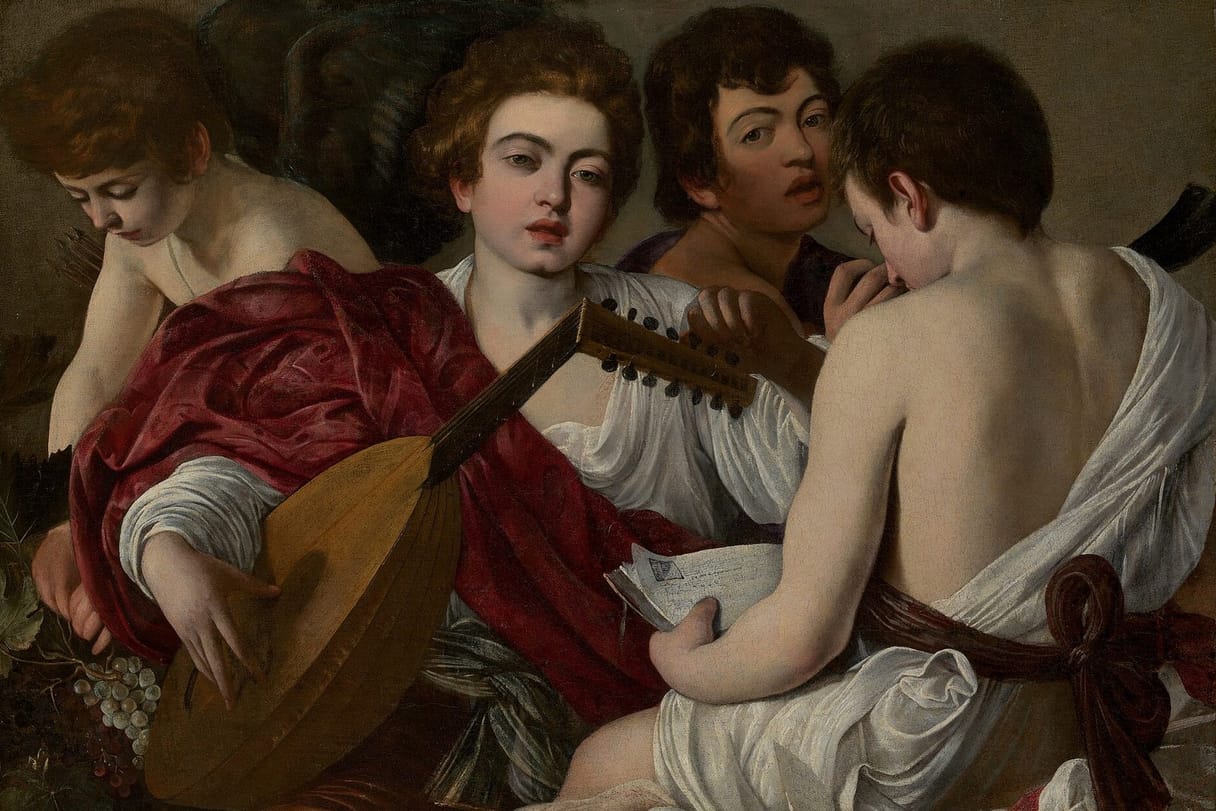
Christians can listen to secular music, watch movies, and play games. If you grew up being told that only Christian music was safe, or you feel a twinge of guilt when a favorite song comes on, you can take heart. The Bible gives no list of forbidden songs or films, and the church has borrowed from the world’s music for centuries. The question that matters is how a song or a story shapes your love for God and for the people around you.
None of the major mainline churches, such as the Evangelical Lutheran Church in America (ELCA), the Presbyterian Church (U.S.A.), the United Methodist Church, or the Episcopal Church, publishes a list of forbidden songs, films, or games. Lutheran and Anglican teachers have long used the Greek word adiaphora, “things indifferent,” for practices that Scripture neither commands nor forbids, which each Christian decides in good conscience. Martin Luther began his 1520 treatise On the Freedom of a Christian with a paradox: “A Christian man is the most free lord of all, subject to none. A Christian man is most dutiful servant of all, and subject to everyone.” Christians are free to enjoy secular songs, films, and games, and Luther’s paradox shows what that freedom is for: it is meant to serve love.
What does Philippians 4:8 mean for music and movies?
Christians who ask about secular music often have this verse in mind:
Finally, brothers, whatever things are true, whatever things are honorable, whatever things are just, whatever things are pure, whatever things are lovely, whatever things are of good report: if there is any virtue and if there is anything worthy of praise, think about these things.
Paul’s list never says “whatever things are Christian.” Several of its words, such as “virtue” and “worthy of praise,” were common terms in the Greek moral philosophy of Paul’s day, so the verse points to goodness wherever it is found. A song about heartbreak can be true. A film about war can be honorable and just. A well-made game can be lovely.
The verse also sets a real standard. Some Christians cite Psalm 101, where the king promises, “I will set no vile thing before my eyes” (Psalm 101:3), and they are right that some entertainment is vile: work that celebrates cruelty, treats people as objects, or mocks the suffering of the weak. Their care for what enters the heart is wise. Discernment means learning to tell the difference, with God’s help.
What does the Bible say about Christian freedom?
The early churches argued about food offered to idols and about holy days, and Paul answered with a principle that covers many questions the Bible never mentions. He wrote, “I know and am persuaded in the Lord Jesus that nothing is unclean of itself” (Romans 14:14), and he told Christians on both sides, “Let each man be fully assured in his own mind” (Romans 14:5).
Paul also set limits on that freedom:
“All things are lawful for me,” but not all things are profitable. “All things are lawful for me,” but not all things build up. Let no one seek his own, but each one his neighbor’s good.
He ended the discussion with a rule wide enough for a concert or a movie night: “Whether therefore you eat or drink, or whatever you do, do all to the glory of God” (1 Corinthians 10:31). Similar questions of Christian freedom come up with Halloween and yoga.
Did Paul and the early church use secular culture?
Paul quoted pagan Greek poets. Preaching in Athens, he cited the poet Aratus: “As some of your own poets have said, ‘For we are also his offspring.’” (Acts 17:28). In 1 Corinthians he quoted a line usually traced to the comic playwright Menander: “Evil companionships corrupt good morals” (1 Corinthians 15:33).
In the fourth century, Basil the Great, bishop of Caesarea in what is now Turkey, wrote an address to young Christians about reading the pagan poets. He told them to read “just as bees know how to extract honey from flowers,” taking what is good and useful and leaving the rest. That advice still fits a playlist or a streaming queue.
Has the church borrowed from secular music?
Christian worship has borrowed secular tunes more than once. Martin Luther’s Christmas hymn “Vom Himmel hoch” (“From heaven above to earth I come”) was first printed in 1535 with the melody of a secular song, “Ich kumm aus frembden Landen her.” In 1539 the hymn appeared with a new tune, probably composed by Luther himself.
The melody of “O Sacred Head, Now Wounded,” sung in many churches during Holy Week, began as a love song. Hans Leo Hassler published it in 1601 as “Mein G’müt ist mir verwirret” (“My mind is confused”), and Johann Sebastian Bach used it again and again in his St. Matthew Passion. Bach also wrote secular cantatas, including a comic one about a young woman who loves coffee. In England, Ralph Vaughan Williams, musical editor of The English Hymnal (1906), adapted the folk tune now called Kingsfold for the hymn “I heard the voice of Jesus say.”
The church has also paid for some of the world’s greatest art. Pope Julius II commissioned Michelangelo to paint the ceiling of the Sistine Chapel, which he completed in 1512.
How can a Christian practice discernment?
Paul’s instruction to the Thessalonians fits every kind of entertainment:
Test all things, and hold firmly that which is good.
A few questions can help you test a song, a film, or a game. Start by asking what it celebrates. A story can show sin truthfully without glorifying it, and the Bible itself tells stories of murder, rape, and war without approving them.
Then notice what it does to you. Some music leaves you more loving and more alive; some leaves you more anxious, cynical, or contemptuous of other people. You know your own heart, and you can bring what you notice to God in prayer. A Christian recovering from addiction, or struggling with pornography, may need to avoid things that other Christians can enjoy freely, and making that choice is wise.
It also helps to ask how much time a pastime takes, since good things become a problem when they crowd out sleep, work, prayer, or people you love. And think about who is with you. Paul asked Christians to make sure their freedom does not become a stumbling block to others (Romans 14:13), and parents choose differently for young children than for themselves. For questions about profanity in lyrics, see Is cursing a sin?, and for gambling-like features in games, see Is gambling a sin?
Every beautiful song, whoever wrote it, comes finally from the God who gave human beings voices, ears, and the longing to make something lovely. “Every good gift and every perfect gift is from above, coming down from the Father of lights” (James 1:17). When a piece of music moves you, you can turn that joy into thanks, and let it carry you toward the praise the last psalm asks of all creation: “Let everything that has breath praise the LORD!” (Psalm 150:6).
Common questions
Can Christians play video games?
Christians can play video games, and many games are good stories, good puzzles, or good ways to spend time with friends. The questions to ask are the same as for any pastime: how much time it takes, whether it trains you to enjoy cruelty toward others, and whether its paid features push you toward gambling-like spending. A game that crowds out sleep, work, or people you love has become a problem whatever its content.
Can Christians watch horror movies?
Many Christians enjoy horror films, and some of the best deal seriously with evil, fear, guilt, and courage. Christ is stronger than any evil a story can show. If horror leaves you anxious, unable to sleep, or numb to other people’s suffering, it is wise to stop watching it.
Is rap, rock, or metal music sinful?
Every style of music can carry something good and be offered to God. Christians have objected to many new styles of music over the centuries, and churches have later adopted several of them for worship. What matters is what a particular song says and what it does to the person listening.
Did Martin Luther use bar songs for hymns?
There is no good evidence for the popular claim that Luther set his hymns to drinking songs, but he did borrow at least one secular tune. His Christmas hymn “Vom Himmel hoch” was first printed in 1535 with the melody of a secular song, and in 1539 it appeared with a new tune, probably Luther’s own. The saying “Why should the devil have all the best tunes?” is often credited to Luther or John Wesley, but its earliest printed source, from 1773, attributes it to the preacher George Whitefield.
Sources
- Philippians 4:8 (WEB)
- Romans 14:1–23 (WEB)
- 1 Corinthians 10:23–31 (WEB)
- Acts 17:28 (WEB)
- 1 Corinthians 15:33 (WEB)
- Martin Luther, On the Freedom of a Christian (Wikipedia)
- Basil of Caesarea, Address to Young Men on Greek Literature, trans. F. M. Padelford (ToposText)
- Vom Himmel hoch, da komm ich her (Wikipedia)
- O Sacred Head, Now Wounded (Wikipedia)
- The English Hymnal (Wikipedia)
- Kingsfold (Wikipedia)
- The devil has all the best tunes (The Phrase Finder)