Rest, burnout, and the gift of Sabbath
The Bible gives rest as both a gift and a command. God rested on the seventh day, and the Ten Commandments call God’s people to keep the Sabbath holy, with rest for servants, foreigners, and even animals (Exodus 20:8–11; Deuteronomy 5:12–15). Jesus told his tired disciples, “Come away into a deserted place, and rest awhile” (Mark 6:31), and he invites everyone who is weary to come to him for rest (Matthew 11:28).
Come to me, all you who labor and are heavily burdened, and I will give you rest.
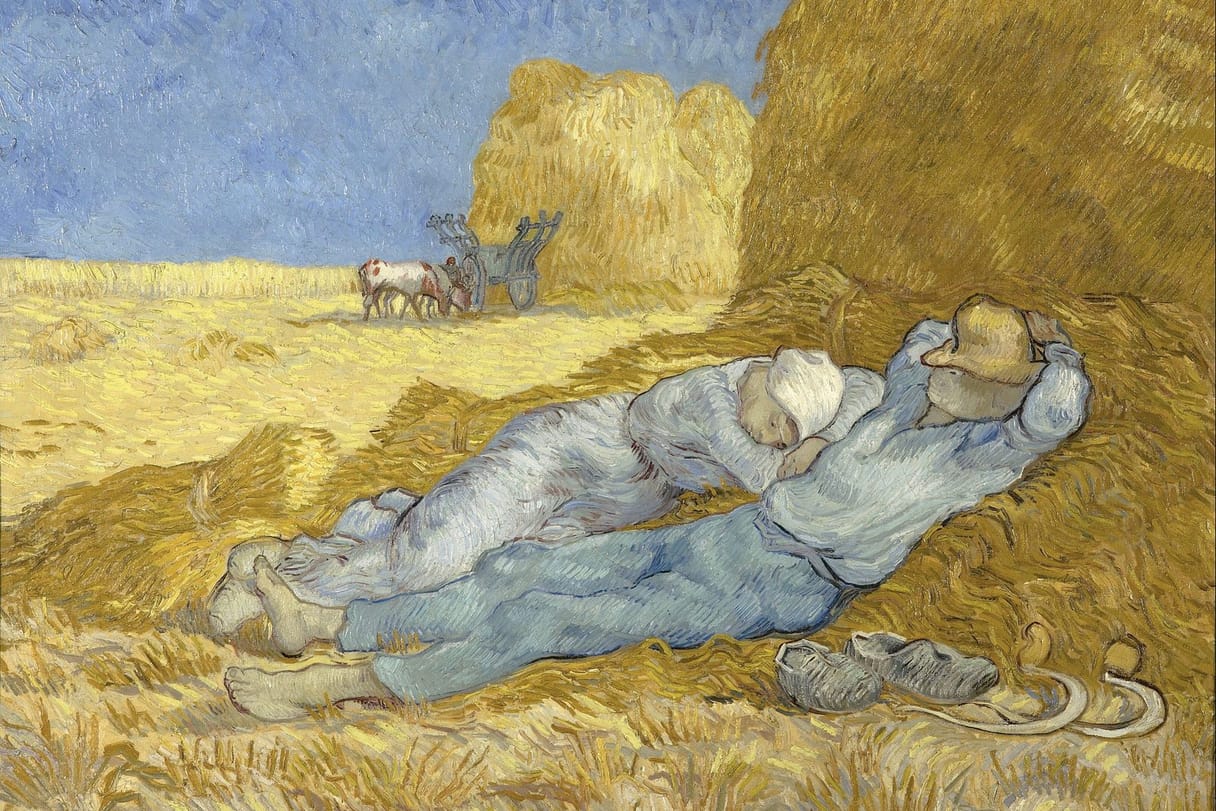
You may be tired in a way that a weekend no longer fixes. Work you once loved may feel heavy, and tasks that used to come easily may now take everything you have. The World Health Organization describes burnout as a syndrome “resulting from chronic workplace stress that has not been successfully managed,” marked by exhaustion, a growing distance or cynicism toward one’s job, and a sense of getting less done. Parents, caregivers, and pastors describe a similar weariness. Scripture speaks to the weary with a gift as old as creation, a day of rest.
What does the Bible say about rest?
The Bible’s first week ends with God resting:
On the seventh day God finished his work which he had done; and he rested on the seventh day from all his work which he had done. God blessed the seventh day, and made it holy, because he rested in it from all his work of creation which he had done.
God does not need rest the way tired people do, and the story tells of God resting so that human beings would learn to rest. The first thing in the Bible that God makes holy is a day, a span of time set apart for delight in what God has made.
The psalms speak tenderly about rest. One warns against anxious overwork and gives a promise to every exhausted person:
It is vain for you to rise up early, to stay up late, eating the bread of toil, for he gives sleep to his loved ones.
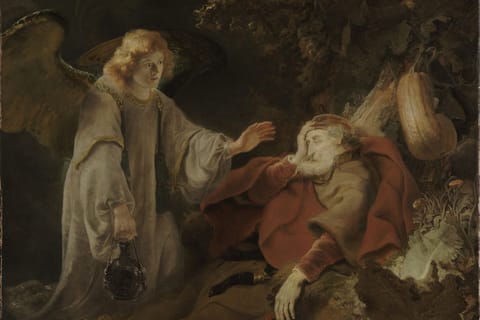
When the prophet Elijah collapsed under a juniper tree, worn out and wishing to die, God did not lecture him. An angel woke him to eat and drink, let him sleep again, and fed him a second time (1 Kings 19:5–7). Sleep and food came before any new task.
Why did God command the Sabbath?
The fourth commandment begins, “Remember the Sabbath day, to keep it holy” (Exodus 20:8). In Exodus the reason is creation: “in six days the LORD made heaven and earth … and rested the seventh day” (Exodus 20:11). When Deuteronomy repeats the commandment, it gives a second reason:
You shall remember that you were a servant in the land of Egypt, and the LORD your God brought you out of there by a mighty hand and by an outstretched arm. Therefore the LORD your God commanded you to keep the Sabbath day.
Biblical scholars think the two forms of the commandment come from different stages of Israel’s tradition, and together they say something beautiful. Rest honors the Creator, and rest is freedom. In Egypt the Israelites made bricks for Pharaoh without end, and God’s people were never to be treated that way again. The Sabbath covers the whole household, sons and daughters, servants, foreigners, and animals, “that your male servant and your female servant may rest as well as you” (Deuteronomy 5:14).
The Reformer John Calvin saw the same justice in the commandment. One purpose of the Sabbath, he wrote, was that “servants, and those who lived under the authority of others, should be indulged with a day of rest” (Institutes 2.8.28). A day of rest declares that no human being is only a tool for getting work done.
What did Jesus say about rest?
Jesus cared for his friends’ exhaustion. When the apostles came back from their first mission, crowds pressed in so closely that they had no time to eat:
The apostles gathered themselves together to Jesus, and they told him all things, whatever they had done, and whatever they had taught. He said to them, “Come away into a deserted place, and rest awhile.” For there were many coming and going, and they had no leisure so much as to eat.
Jesus taught that “The Sabbath was made for man” (Mark 2:27). He healed on the Sabbath, and when he freed a woman who had been bent over for eighteen years, he asked whether she should not “be freed from this bondage on the Sabbath day” (Luke 13:16). For Jesus the Sabbath was a day of release, healing, and life.
His invitation reaches everyone who is worn out:
Come to me, all you who labor and are heavily burdened, and I will give you rest. Take my yoke upon you and learn from me, for I am gentle and humble in heart; and you will find rest for your souls. For my yoke is easy, and my burden is light.
How do Jews and Christians keep the Sabbath today?
Jewish families welcome the Sabbath at sundown on Friday with candles, blessings over wine and bread, and a festive meal, and they end it on Saturday night with a short ceremony of farewell called Havdalah. The great modern book on the subject is The Sabbath (1951) by Abraham Joshua Heschel, a Polish-born rabbi who taught at the Jewish Theological Seminary in New York. Heschel observed that a technical civilization spends its energy conquering space, and that the Sabbath teaches people to sanctify time. “The seventh day is a palace in time which we build,” he wrote.
Most Christians keep Sunday, the day of the resurrection, as the Lord’s Day (see The Lord’s Day and the Sabbath). Paul left believers free about the observance of days (Romans 14:5–6), and the churches have kept the heart of the commandment. The Heidelberg Catechism, one of the confessions in the PC(USA)’s Book of Confessions, teaches that keeping the Sabbath means gathering for worship on the day of rest, and, every day of one’s life, resting from evil works so that God’s Spirit may work within, and so beginning in this life “the eternal Sabbath.” The Letter to the Hebrews gives the same hope: “There remains therefore a Sabbath rest for the people of God” (Hebrews 4:9).
How can I keep a Sabbath when I am burned out?
Like fasting, the Sabbath is a discipline of setting something aside to make room for God (see Fasting). You can start where you are, and a few practices help many people:
- Choose a time and guard it. Twenty-four hours is the traditional span. If a whole day is impossible right now, begin with an afternoon each week.
- Stop the work that never ends. Set aside paid work, errands, and email, and put your phone in a drawer.
- Worship with others. Gathering with a congregation reminds you that the world rests in God’s hands.
- Do what restores you. Take a walk, nap, cook slowly, play with children, read for pleasure, or listen to music.
- Mark the beginning and the end. Many Christians have learned from Jewish practice to light a candle and say a prayer as their Sabbath begins.
- Pray at the edges of each day. Morning and evening prayer make small Sabbaths in every day (see How to pray).
If you care for small children, an aging parent, or a sick spouse, rest may depend on others stepping in. The commandment gave rest to the whole household, so families and congregations can trade care so that each person gets time off.
Burnout sometimes needs more than a day off. When Moses tried to settle every dispute in Israel by himself, his father-in-law Jethro warned him, “You will surely wear away” (Exodus 18:18), and Moses shared the work with trustworthy helpers. You may need to change how your work is shared, or to talk with a doctor or counselor, especially if exhaustion has turned into depression or anxiety (see Anxiety, depression, and faith).
Rest is an act of trust that God holds the world while you sleep. Augustine began his Confessions with a prayer that gathers up every Sabbath: “You move us to delight in praising You; for You have made us for Yourself, and our hearts are restless until they rest in You.”
Common questions
Do Christians have to keep the Sabbath?
Most Christians keep Sunday, the day of Christ’s resurrection, as their day of worship and rest, while Seventh-day Adventists and some other Christians keep Saturday. Paul left believers free on the question of days: “Let each man be fully assured in his own mind” (Romans 14:5). The gift behind the commandment remains for everyone, a regular day to stop working, worship God, and rest.
What day is the Sabbath?
In Judaism the Sabbath runs from sundown on Friday to nightfall on Saturday, the seventh day of the week. Christians from the earliest centuries gathered on Sunday, the first day of the week, to celebrate the resurrection, and many treat Sunday as their day of rest.
What does the Bible say about burnout?
The Bible describes burnout without using the word. When Moses tried to judge every case in Israel himself, his father-in-law Jethro told him, “You will surely wear away … for the thing is too heavy for you” (Exodus 18:18), and Moses shared the work with others. The prophet Elijah, exhausted and despairing, was given sleep and food by an angel before God asked anything more of him (1 Kings 19:5–8).
Is it a sin to work on Sunday?
Many Christians work on Sundays, especially nurses, police officers, and others whose work keeps people safe, and Jesus himself healed on the Sabbath. The commandment’s gift is a regular rhythm of rest and worship, which people who work on Sundays can keep on another day. Many congregations offer services on Saturday evenings or weeknights.
Sources
- Genesis 2:1–3 (WEB)
- Exodus 20:8–11 (WEB)
- Deuteronomy 5:12–15 (WEB)
- Mark 6:30–32 (WEB)
- Matthew 11:28–30 (WEB)
- Exodus 18:13–24 (WEB)
- World Health Organization, Burn-out an “occupational phenomenon”: International Classification of Diseases (2019)
- John Calvin, Institutes of the Christian Religion 2.8.28 (CCEL)
- Heidelberg Catechism, Lord’s Day 38, Question 103
- Abraham Joshua Heschel, The Sabbath (1951), discussed by Hebrew College
- Augustine, Confessions, Book 1 (New Advent)
_-_Google_Art_Project.jpg)