Prisons, mercy, and the hope of restoration
The Bible calls Christians to remember people in prison as if they shared their chains (Hebrews 13:3), and Jesus counts a visit to a prisoner as a visit to himself: “I was in prison and you came to me” (Matthew 25:36). Scripture takes wrongdoing seriously and hears the cry of victims, and its hope for offenders is repentance and restoration. The mainline churches support restorative justice, humane prisons, prison ministry, and the welcome of people coming home.
Remember those who are in bonds, as bound with them, and those who are ill-treated, since you are also in the body.
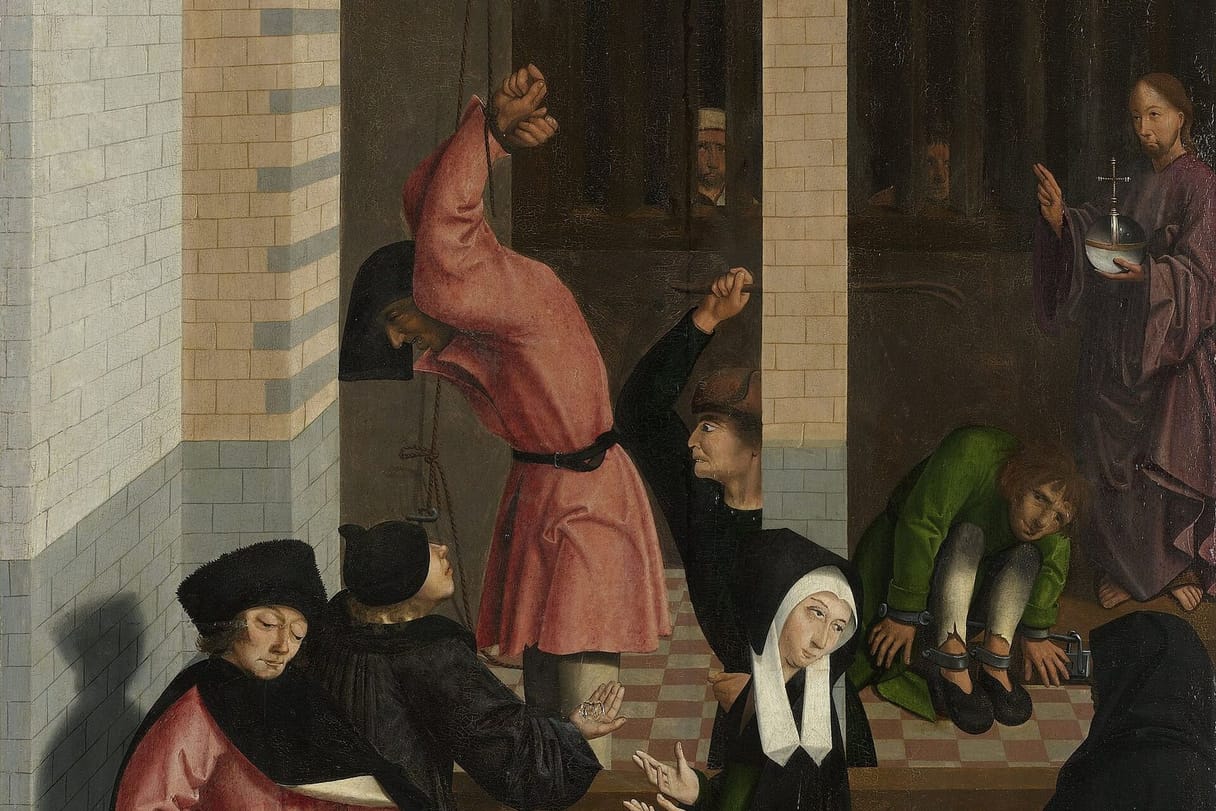
Jesus said that a visit to a prisoner is a visit to him. In his parable of the judgment of the nations, the king tells the righteous, “I was in prison and you came to me” (Matthew 25:36), and he explains that whatever they did for the least of his family, “you did it to me” (Matthew 25:40). Scripture takes wrongdoing seriously and hears the cry of everyone who has been wronged. It also holds out to every offender the hope of repentance and a new life, and it asks the church to keep company with people in prison.
This question may be close to home for you. You may love someone who is incarcerated, or you may have been in prison yourself, or you may carry the wound of a crime done to you or your family. The God of the Bible sees each of you.
What did Jesus say about prisoners?
Jesus began his public ministry in the synagogue at Nazareth by reading from the scroll of Isaiah. He announced that the Spirit had anointed him “to proclaim release to the captives” (Luke 4:18), words that echo the prophet’s promise of “liberty to the captives and release to those who are bound” (Isaiah 61:1). In their first setting these words spoke of exiles and debtors, and Christians have always heard in them God’s compassion for everyone in chains.
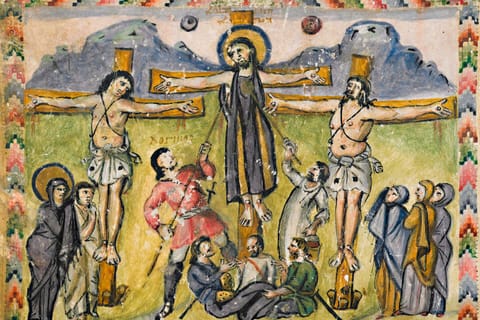
Jesus also knew prison from the inside. He was arrested at night, held under guard, tried, and crucified between two criminals. One of them asked, “Lord, remember me when you come into your Kingdom,” and Jesus answered, “Assuredly I tell you, today you will be with me in Paradise” (Luke 23:42–43). In Luke’s Gospel, Jesus speaks his promise of paradise to a condemned man.
What does the Bible say about remembering prisoners?
The Letter to the Hebrews gives one of the clearest commands:
Remember those who are in bonds, as bound with them, and those who are ill-treated, since you are also in the body.
The letter asks believers to imagine themselves in the cell. Many of the Bible’s faithful people knew that place. Joseph was jailed in Egypt on a false accusation, “But the LORD was with Joseph, and showed kindness to him” (Genesis 39:21). Jeremiah was lowered into a cistern where “there was no water, but mire” (Jeremiah 38:6). When Peter was in prison, “constant prayer was made by the assembly to God for him” (Acts 12:5), and at midnight in a Philippian jail, “Paul and Silas were praying and singing hymns to God, and the prisoners were listening to them” (Acts 16:25). Paul ended one letter, “Remember my chains” (Colossians 4:18).
The Psalms promise that God listens. “The LORD frees the prisoners” (Psalm 146:7), and the LORD looked down from heaven “to hear the groans of the prisoner” (Psalm 102:20).
Does the Bible support punishing crime?
Scripture treats justice for victims as a holy duty. Paul calls the governing authority “a servant of God to you for good” that “doesn’t bear the sword in vain” (Romans 13:4), and the Psalms are full of the cries of people who were robbed, beaten, and betrayed. Christians who emphasize firm punishment are honoring that concern, and the churches share it.
The law of Moses, though, does not use imprisonment as a punishment. People were held in custody only while a case awaited decision (Leviticus 24:12). For theft, the usual remedy was restitution to the victim, up to four or five times what was taken (Exodus 22:1). The law aimed to make the victim whole and to bring the offender back into the community. For the gravest punishment of all, see What does the Bible say about the death penalty?
What is restorative justice?
Restorative justice is an approach to crime that asks what damage was done and how it can be repaired. A 2002 resolution of the Presbyterian Church (U.S.A.)’s General Assembly describes it as “addressing the hurts and the needs of the victim, the offender, and the community.” The United Methodist Social Principles add that “restorative justice seeks to prioritize the victim and the victim’s family.” In practice it can mean mediated meetings between victims and offenders who are willing, restitution, community service, and programs that help offenders face what they have done.
The New Testament describes the same hope. “Let him who stole steal no more; but rather let him labor, producing with his hands something that is good, that he may have something to give to him who has need” (Ephesians 4:28). Zacchaeus, the tax collector who repaid fourfold, is the Gospel’s picture of a wrongdoer made new; see Repair and reconciliation. Paul’s promise holds for people in prison too: “if anyone is in Christ, he is a new creation” (2 Corinthians 5:17).
What do the mainline churches teach about prisons and mass incarceration?
The Methodist movement began with prison visiting. At Oxford, John and Charles Wesley and their friends regularly visited prisoners, and the United Methodist Social Principles remember that “John Wesley campaigned tirelessly for improved conditions for prisoners.” Today those principles hold that offenders “must be held accountable for criminal actions,” and they commit United Methodists “to fair and proportional sentencing and to the humane treatment of those who are imprisoned.” They support “programs in prisons designed to promote rehabilitation and restoration,” state that prisons should not be “for-profit enterprises,” and urge Christians to “combat the stigma often attached to people who have been in prison.”
In 2013 the ELCA’s Churchwide Assembly adopted the social statement The Church and Criminal Justice: Hearing the Cries. Its title names its posture of listening to the people the justice system touches, and it finds that current policies, including “the emphasis on mass incarceration, impose significant costs on all involved in the system.” The PC(USA)’s 2002 resolution affirms restorative justice as the guiding image for the church’s engagement with the justice system. All of the mainline churches also oppose the death penalty; see the mainline churches on the death penalty.
Christians of good faith disagree about particular sentencing laws and how best to keep communities safe. The churches’ statements leave those policies to the conscience of citizens while asking that every person in the system, victim and offender alike, be treated as someone God loves.
How can Christians help people in prison and their families?
Prison chaplains lead worship, offer the sacraments, and listen to people whom few others visit. Congregations can support them and take part: by visiting, writing letters, sending books, and praying by name for people inside. The families of prisoners need care too, especially children with a parent behind bars. When people come home, a church can help with housing, work, and the simple welcome of a seat at coffee hour.
Victims need the church as well, and their wounds deserve patience and justice; forgiveness never requires staying in danger or keeping silent. See Do I have to forgive someone who hurt me?
The church has prayed for prisoners from its first days. The psalmist’s prayer still fits: “Let the sighing of the prisoner come before you” (Psalm 79:11). Whoever you are, inside the walls or outside them, Christ has promised to be found there, and his mercy is wide enough for both the wounded and the one who did the wounding.
Common questions
What does Hebrews 13:3 mean?
Hebrews 13:3 says, “Remember those who are in bonds, as bound with them.” The letter asks Christians to care for prisoners as if they were in prison themselves, the way members of one body feel each other’s pain. In the early church many prisoners were believers jailed for their faith, and Christians have long applied the verse to everyone behind bars.
Does the Bible say to visit prisoners?
Jesus names visiting prisoners among the acts of mercy by which the nations will be judged. In Matthew 25:36 the king says, “I was in prison and you came to me,” and he explains that whatever was done for the least of his brothers and sisters was done for him. Visiting people in prison has been one of the church’s works of mercy ever since.
Who was in prison in the Bible?
Many of the Bible’s faithful people spent time in prison. Joseph was jailed in Egypt on a false charge, Jeremiah was thrown into a muddy cistern, John the Baptist was imprisoned by Herod, and Peter, Paul, and Silas were all jailed for preaching. Paul wrote several of his letters, including Philippians and Philemon, from prison.
What is restorative justice?
Restorative justice is an approach to crime that focuses on repairing the damage done. It brings together the needs of the victim, the responsibility of the offender, and the healing of the community. The Presbyterian Church (U.S.A.) and the United Methodist Church have both commended it, and the United Methodist Social Principles say it “seeks to prioritize the victim and the victim’s family.”
Sources
- Matthew 25:31–46 (WEB)
- Hebrews 13:3 (WEB)
- Luke 4:16–21 (WEB)
- Luke 23:39–43 (WEB)
- Exodus 22:1–4 (WEB)
- Psalm 79:11 and 146:7 (WEB)
- ELCA social statement, The Church and Criminal Justice: Hearing the Cries (2013)
- United Methodist Social Principles: The Political Community
- PC(USA), Resolution on Restorative Justice (2002)