Repair and reconciliation
Christian repentance has always included repair. The law of Moses required a wrongdoer to repay in full and add a fifth (Numbers 5:7), and Zacchaeus promised Jesus to repay anyone he had cheated four times over (Luke 19:8). Several mainline churches have apologized for their part in slavery, and some dioceses and seminaries have created reparations funds, as part of the ministry of reconciliation that Paul says God has given the church (2 Corinthians 5:18).
Behold, Lord, half of my goods I give to the poor. If I have wrongfully exacted anything of anyone, I restore four times as much.
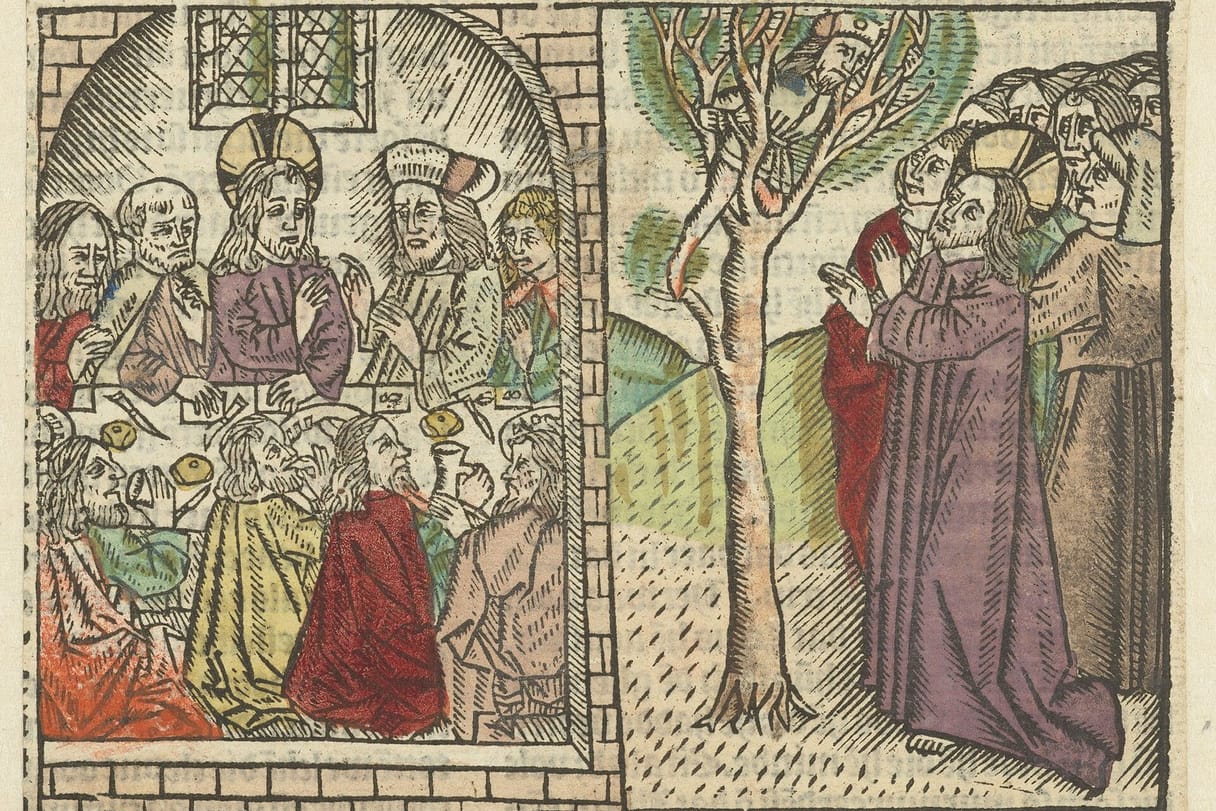
Christian repentance has always reached past words into repair. When the tax collector Zacchaeus welcomed Jesus into his house, he promised to give half of what he owned to the poor and to repay four times over anyone he had cheated, and Jesus answered, “Today, salvation has come to this house” (Luke 19:9). Many mainline churches now read their own history in the light of that story. They have confessed their part in slavery and racism and, in some places, set aside money for repair.
You may come to this question uneasy, because the word “reparations” stirs argument or because the history touches your own family. Scripture speaks of confession and repair as part of the life of grace, and it calls reconciliation God’s own work, entrusted to the church.
What does the Bible say about restitution?
The law of Moses made repair part of repentance. A person who had wronged a neighbor was to confess the sin, “make restitution for his guilt in full, add to it the fifth part of it, and give it to him in respect of whom he has been guilty” (Numbers 5:7). Leviticus applies the same rule to anything “gotten by oppression” (Leviticus 6:4–5). Only after the neighbor had been repaid did the guilty person bring an offering to the altar.
Jesus kept the same order:
If therefore you are offering your gift at the altar, and there remember that your brother has anything against you, leave your gift there before the altar, and go your way. First be reconciled to your brother, and then come and offer your gift.
The Torah also cared for people leaving slavery. When a Hebrew servant went free in the seventh year, the master was commanded, “you shall not let him go empty. You shall furnish him liberally out of your flock, out of your threshing floor, and out of your wine press” (Deuteronomy 15:13–14). The reason given is memory: “You shall remember that you were a slave in the land of Egypt” (Deuteronomy 15:15). In Israel, freedom was meant to begin with provisions in hand.
What does Zacchaeus teach about repentance?
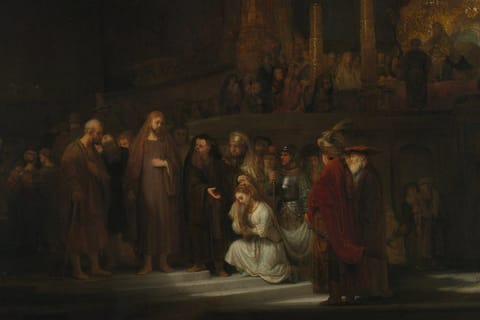
Luke tells the story in Jericho. Zacchaeus “was a chief tax collector, and he was rich” (Luke 19:2), and when Jesus chose his house, the crowd complained that he had gone to stay “with a man who is a sinner” (Luke 19:7). Jesus called him down from the sycamore tree before Zacchaeus had promised anything. The welcome came first, and the repair followed:
Zacchaeus stood and said to the Lord, “Behold, Lord, half of my goods I give to the poor. If I have wrongfully exacted anything of anyone, I restore four times as much.” Jesus said to him, “Today, salvation has come to this house, because he also is a son of Abraham.
Zacchaeus chose the strictest measure in the law. Numbers asked for the full amount plus a fifth. Exodus required fourfold repayment for a sheep that had been stolen and then killed or sold (Exodus 22:1). Zacchaeus held himself to the thief’s penalty, and he did it gladly, because Jesus had already come to his house. John the Baptist called this kind of change “fruit worthy of repentance” (Matthew 3:8). For more on the welcome that comes first, see Will God forgive me?
Can Christians repent for the sins of earlier generations?
Many Christians raise a fair question here. Ezekiel teaches, “The son shall not bear the iniquity of the father” (Ezekiel 18:20), and God does not count children guilty of their parents’ crimes.
Scripture also shows God’s people confessing the sins of those who came before them. After the exile, the people of Israel “stood and confessed their sins and the iniquities of their fathers” (Nehemiah 9:2), and Daniel prayed for mercy “for our sins and for the iniquities of our fathers” (Daniel 9:16). Confession of this kind accepts responsibility for a shared history whose effects continue. A church that still worships in buildings raised by enslaved people has received something from that history.
Jewish tradition remembered that unpaid labor leaves a debt. The Talmud tells of Egyptians who sued the Jews before Alexander the Great for the gold and silver Israel carried out of Egypt. A sage named Gebiha ben Pesisa answered with a counterclaim from the Torah: “Pay us for the toil of six hundred thousand men whom ye enslaved for four hundred thirty years” (Babylonian Talmud, Sanhedrin 91a). The prophet Jeremiah had already pronounced woe on anyone “who uses his neighbor’s service without wages” (Jeremiah 22:13). For how the church came to see slavery as sin, see Does the Bible support slavery?
What does reconciliation mean in the Bible?
Paul describes reconciliation as God’s own work, which God has handed on to the church:
But all things are of God, who reconciled us to himself through Jesus Christ, and gave to us the ministry of reconciliation; namely, that God was in Christ reconciling the world to himself, not reckoning to them their trespasses, and having committed to us the word of reconciliation.
Christ, Paul writes elsewhere, “broke down the middle wall of separation” between peoples (Ephesians 2:14). Reconciliation between divided peoples usually asks for truth, repentance, and repair where repair can be made, so that trust has room to grow. An apology without action can feel thin to the people who receive it. When the Evangelical Lutheran Church in America presented its 2019 apology for slavery to its national assembly, Lamont Wells, president of the African Descent Lutheran Association, answered, “We cannot receive this apology simply as a cheap indulgence to clear the conscience of our oppressors.” For the Bible’s wider teaching on race, see Racism and the Bible.
What have the mainline churches done to repair racial wrongs?
Each of the larger mainline churches has formally confessed its part in slavery or committed itself to repair. In 2006 the Episcopal Church’s General Convention declared that slavery “was and is a sin” and expressed “most profound regret” for the church’s support of it (Resolution A123). In 2004 the United Methodist General Conference voted to support a study of reparations for African Americans. In 2019 the Church Council of the ELCA adopted a “Declaration of the ELCA to People of African Descent,” apologizing for Lutherans’ complicity in slavery. In 2022 the 225th General Assembly of the Presbyterian Church (U.S.A.) voted 373 to 19 to offer “an Apology to African Americans for the Sin of Slavery and Its Legacy,” and it asked for resources on “reparative justice, including reparations.”
Some dioceses and schools have set aside money for repair. In 2019 Virginia Theological Seminary, an Episcopal seminary whose early buildings were built by enslaved people, created a $1.7 million reparations endowment. Part of its income goes to descendants of the enslaved people who worked there. The seminary’s dean, Ian Markham, said that “along with repentance for past sins, there is also a need for action.” The Episcopal Diocese of New York began a $1.1 million reparations initiative in 2019, and in September 2020 the Episcopal Diocese of Maryland voted to create a $1 million reparations fund.
Why do Christians disagree about reparations?
Christians who share the same faith reach different conclusions about reparations, especially as public policy. Some worry that payments would assign guilt to people who did no wrong, that money cannot reach wounds this deep, or that it would be hard to decide fairly who gives and who receives. Others answer that the effects of slavery and segregation outlived the people who caused them, and that repair is how a community takes responsibility for what it has inherited. Questions of public policy are left to the conscience of citizens.
Inside the church, a congregation can begin where Zacchaeus began. It can receive Christ’s welcome, tell the truth about its own history, and ask the people who were wronged what repair would mean to them. For the prophet’s summary of what the Lord requires, see Micah 6:8; for the churches’ repentance toward Native peoples, see the Doctrine of Discovery.
Zacchaeus repaid his neighbors because Jesus had already welcomed him, and the joy of that welcome made him generous. The same grace invites the church to let its repentance bear fruit, so that the prophet Amos’s hope may come true: “let justice roll on like rivers, and righteousness like a mighty stream” (Amos 5:24).
Common questions
Do churches support reparations?
Several mainline churches have taken steps toward repair. The United Methodist General Conference voted in 2004 to support a study of reparations for African Americans, and the PC(USA)’s 2022 General Assembly asked for resources on “reparative justice, including reparations.” Some Episcopal dioceses and Virginia Theological Seminary have created reparations funds. Christians still disagree about reparations as public policy.
What is restitution in the Bible?
Restitution means repaying what was wrongly taken, with something added. Numbers 5:7 tells a person who has wronged a neighbor to confess the sin, repay the full amount, and add a fifth. Jesus taught the same order when he told his followers to be reconciled with a brother or sister before bringing a gift to the altar (Matthew 5:23–24).
What did Zacchaeus promise Jesus?
Zacchaeus, a rich chief tax collector in Jericho, promised to give half of his possessions to the poor and to repay four times over anyone he had cheated (Luke 19:8). Jesus answered, “Today, salvation has come to this house.” A fourfold repayment matched the law’s penalty for a stolen sheep in Exodus 22:1, far more than the ordinary rule of the full amount plus a fifth.
Which churches have apologized for slavery?
Among the mainline churches, the Episcopal Church’s General Convention apologized for the church’s support of slavery in 2006, the ELCA’s Church Council adopted a declaration of apology to people of African descent in 2019, and the PC(USA)’s General Assembly approved an apology for the sin of slavery and its legacy in 2022. Some dioceses, such as the Episcopal Diocese of Maryland, have also studied their own congregations’ ties to slavery.
Sources
- Luke 19:1–10 (WEB)
- Numbers 5:6–7 (WEB)
- Leviticus 6:4–5 (WEB)
- Exodus 22:1 (WEB)
- Deuteronomy 15:12–15 (WEB)
- 2 Corinthians 5:17–19 (WEB)
- Babylonian Talmud, Sanhedrin 91a (Soncino translation)
- Episcopal General Convention 2006, Resolution A123
- United Methodist Church supports reparations for African Americans (UM News, 2004)
- Assembly recap: Diversity strategy adopted, slavery apology presented (Living Lutheran, 2019)
- Reading of first act of repentance (Presbyterian Church (U.S.A.), 2022)
- $1.7 million for slavery reparations fund puts Virginia Theological Seminary at forefront of debate (Episcopal News Service, 2019)
- More US churches are committing to racism-linked reparations (Associated Press, 2020)