Immigrants and refugees in the Bible
The Bible commands God’s people to love immigrants. Leviticus 19:34 says the foreigner living among you “shall be to you as the native-born” and that “you shall love the alien as yourself, for you were aliens in the land of Egypt.” The Torah requires one law for citizen and foreigner, the prophets condemn oppressing the foreigner, the infant Jesus fled to Egypt as a refugee, and Jesus says, “I was a stranger and you took me in.”
The alien who resides with you shall be to you as the native-born among you; you shall love the alien as yourself, for you were aliens in the land of Egypt: I am the Lord your God.
Leviticus 19:34, NRSVUE
You may have crossed a border yourself, or you may love someone who has, or you may be trying to think as a Christian about the newcomers in your town. Whichever is true, the Bible speaks to you warmly and often. It commands God’s people to love the foreigner as themselves, because God loves the foreigner, and because God’s own people once lived as strangers in Egypt.
The Hebrew word behind most of the Bible’s verses about immigrants is ger (a resident alien, a foreigner who has settled among another people). English Bibles translate it “alien,” “stranger,” “foreigner,” or “sojourner.” The Talmud says the Torah warns against mistreating the ger in thirty-six places, or by some counts forty-six (Babylonian Talmud, Bava Metzia 59b). The rabbis there read ger as a convert to Judaism, but their count shows how often the theme recurs.
What does the Old Testament say about foreigners?
The central command comes in the Holiness Code of Leviticus, in the same chapter as “love your neighbor as yourself” (Leviticus 19:18):
“When an alien resides with you in your land, you shall not oppress the alien. The alien who resides with you shall be to you as the native-born among you; you shall love the alien as yourself, for you were aliens in the land of Egypt: I am the Lord your God.
Leviticus 19:33–34, NRSVUE
Exodus gives the same command twice. “You shall not wrong an alien or oppress him, for you were aliens in the land of Egypt” (Exodus 22:21). The second time it appeals to memory and to the heart: “you know the heart of an alien, since you were aliens in the land of Egypt” (Exodus 23:9).
Deuteronomy grounds the command in God’s own character:
For the Lord your God is God of gods and Lord of lords, the great God, mighty and awesome, who is not partial and takes no bribe, who executes justice for the orphan and the widow, and who loves the strangers, providing them food and clothing. You shall also love the stranger, for you were strangers in the land of Egypt.
Deuteronomy 10:17–19, NRSVUE
The law also gave foreigners equal standing in court. “One law shall be to him who is born at home, and to the stranger who lives as a foreigner among you” (Exodus 12:49). Judges were told to judge righteously “between a man and his brother, and the foreigner who is living with him” (Deuteronomy 1:16).
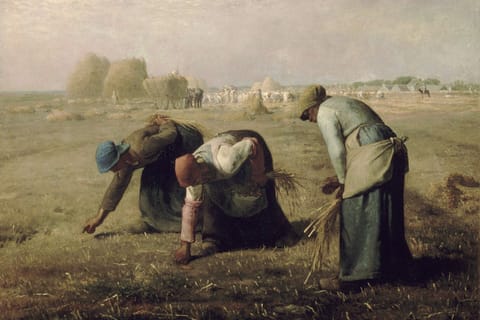
The Torah built care for foreigners into the economy. Farmers had to leave the edges of their fields and the fallen grapes “for the poor and for the foreigner” (Leviticus 19:9–10). Every third year a tithe of the harvest went to feed the Levite, “the foreigner living among you, the fatherless, and the widow” (Deuteronomy 14:28–29).
The prophets held Israel to these laws. Jeremiah told the people that God would dwell with them only “if you don’t oppress the foreigner, the fatherless, and the widow” (Jeremiah 7:6). Malachi lists those “who deprive the foreigner of justice” among the people God will judge (Malachi 3:5). The psalmist sings, “The LORD preserves the foreigners” (Psalm 146:9).
Why does the Bible keep reminding Israel that they were strangers?
Israel’s story begins with migration, and God asked the people never to forget it. During a famine Abram “went down into Egypt to live as a foreigner there” (Genesis 12:10). When Israelites brought their first fruits to the sanctuary, they recited, “My father was a wandering Aramean. He went down into Egypt and lived there as a foreigner” (translated from the Hebrew1, Deuteronomy 26:5). Even in their own land, God told them, “you are strangers and live as foreigners with me” (Leviticus 25:23).
The Book of Ruth shows what welcome looks like in the life of one family. Ruth was a Moabite widow who followed her Israelite mother-in-law, Naomi, to Bethlehem with the famous vow, “Your people will be my people, and your God my God” (Ruth 1:16). She asked Boaz why he took notice of her, “since I am a foreigner” (Ruth 2:10). Ruth became the great-grandmother of King David (Ruth 4:17), and Matthew names her in the family line of Jesus (Matthew 1:5).
Was Jesus a refugee?
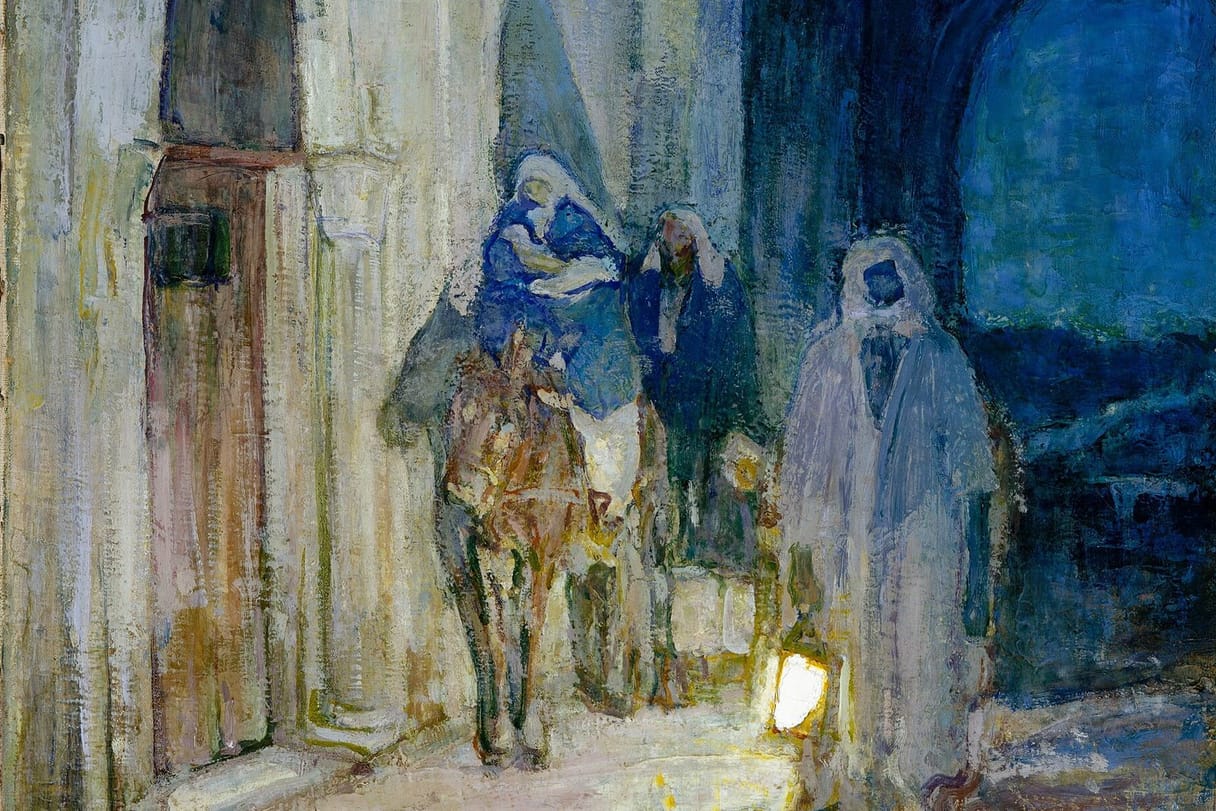
Yes, according to Matthew’s Gospel. Soon after Jesus was born, his family fled their homeland to escape a king who wanted to kill him:
Now after they had left, an angel of the Lord appeared to Joseph in a dream and said, “Get up, take the child and his mother, and flee to Egypt, and remain there until I tell you, for Herod is about to search for the child, to destroy him.” Then Joseph got up, took the child and his mother by night, and went to Egypt and remained there until the death of Herod.
Matthew 2:13–15, NRSVUE
Only Matthew tells the story of the flight to Egypt, and historians cannot confirm it from other sources. The church has always read it as part of the Gospel, and Christians have long seen in it the Son of God sharing the danger and homelessness of refugees. A mother and father carrying a child through the night to a foreign country are part of the Christmas story.
What did Jesus teach about welcoming strangers?
In his parable of the judgment of the nations, Jesus identifies himself with the stranger. The king says to the righteous, “I was a stranger and you took me in” (Matthew 25:35), and explains, “as you did it to one of the least of these my brothers and sisters, you did it to me” (translated from the Greek2, Matthew 25:40). In the parable of the Good Samaritan, the neighbor who keeps the great commandment is a foreigner from a despised people (see the greatest commandment).
The early church kept the command to welcome strangers. “Don’t forget to show hospitality to strangers, for in doing so, some have entertained angels without knowing it” (Hebrews 13:2). The letter is remembering Abraham, who ran to welcome three travelers at his tent and found that the Lord had visited him (Genesis 18:1–5). The New Testament even describes Christians themselves as “foreigners and pilgrims” in this world (1 Peter 2:11), and it tells Gentile believers, “you are no longer strangers and foreigners, but you are fellow citizens with the saints” (Ephesians 2:19).
Does the Bible say to obey the law on immigration?
Many Christians point to Romans 13, where Paul writes, “Let every soul be in subjection to the higher authorities” (Romans 13:1). Paul teaches that government has a real God-given duty to keep order and that Christians should pay taxes and give respect where it is due (Romans 13:7). Read fairly, the passage asks Christians to be good citizens. It does not tell anyone what a just immigration law should say.
The Bible also places limits on obedience to rulers. When the authorities ordered the apostles to stop preaching, Peter answered, “We must obey God rather than men” (Acts 5:29). And Paul follows his words about government with a reminder: “Love therefore is the fulfillment of the law” (Romans 13:10).
Christian teaching has held two duties together. Governments may keep order and regulate who enters, and newcomers, like everyone else, are asked to live peaceably where they settle. When Israel’s exiles were carried to Babylon, Jeremiah told them, “Seek the peace of the city where I have caused you to be carried away captive, and pray to the LORD for it” (Jeremiah 29:7).
What do the mainline churches teach?
The mainline churches have each turned these Scriptures into a call to welcome. The Evangelical Lutheran Church in America adopted a social message on immigration in 1998 that quotes Leviticus 19:34 and Hebrews 13:2 and asks Lutherans to see the newcomer as a neighbor (ELCA, Immigration). In 2022 the General Assembly of the Presbyterian Church (U.S.A.) declared the PC(USA) a “Sanctuary and Accompaniment Church” and encouraged its congregations and members “to support immigrants, refugees, asylum seekers.” The United Methodist Social Principles “affirm the dignity, worth and rights of migrants, immigrants and refugees” and urge Methodists “to welcome migrants, refugees, and immigrants into their congregations.”
The Episcopal Church’s General Convention set out Christian principles for responding to migration in 2018 (Resolution 2018-D009). The resolution remembers that “Mary, Joseph, and Jesus were refugees, as they were forced to flee into a foreign land to escape violence,” and it recognizes “the legitimate need to protect borders and address security threats to sovereign nations” while calling the church to show “hospitality and welcome as Christian values at the local level.”
Christians disagree, in good faith, about how many people a nation should admit and how its laws should be enforced. The Bible leaves those questions of policy to the conscience of citizens and the wisdom of rulers. It is clear about how the believer is to regard the immigrant, as a neighbor to be loved, treated with justice, and welcomed as Christ. For the same thread elsewhere in Scripture, see what the Bible says about racism and Micah 6:8.
If you are far from the land where you were born, God goes with you, as God went with Abraham, Ruth, and the Holy Family. Psalm 121, one of the “Songs of Ascents” that pilgrims are thought to have sung on the way up to Jerusalem, promises, “The LORD will keep your going out and your coming in, from this time forward, and forever more” (Psalm 121:8). And if you are the one at home, the stranger at your door may be the place where Christ comes to meet you.
Notes
-
Hebrew (Westminster Leningrad Codex): אֲרַמִּי֙ אֹבֵ֣ד אָבִ֔י וַיֵּ֣רֶד מִצְרַ֔יְמָה וַיָּ֥גָר שָׁ֖ם. Arammi oved avi means literally “an Aramean, wandering (or perishing), my father”; vayagor sham, “and he lived there as a foreigner,” comes from the same root as ger. ↩︎
-
Greek (SBL Greek New Testament): ἐφʼ ὅσον ἐποιήσατε ἑνὶ τούτων τῶν ἀδελφῶν μου τῶν ἐλαχίστων, ἐμοὶ ἐποιήσατε. Adelphoi, literally “brothers,” is the ordinary Greek word for siblings and for the members of a family or community, women as well as men. ↩︎
Common questions
Was Jesus a refugee?
Yes, according to Matthew’s Gospel. An angel warned Joseph that King Herod meant to kill the child, so Joseph took Jesus and Mary by night to Egypt, and they stayed there until Herod died (Matthew 2:13–15). Like refugees today, the Holy Family fled violence in their homeland and lived for a time as foreigners in another land.
Does the Bible say to obey the law on immigration?
The Bible tells Christians to respect governing authorities and pay what is due them (Romans 13:1–7), and it also says that when human commands conflict with God’s, “We must obey God rather than men” (Acts 5:29). Romans 13 does not describe what a just immigration law looks like. The same Bible that asks for respect toward rulers also commands love, fairness, and hospitality toward the foreigner.
Who is the stranger in the Bible?
The Hebrew word ger means a resident alien: a foreigner who lives among the people of Israel without the rights of birth that a native had. English Bibles translate it “alien,” “stranger,” “foreigner,” or “sojourner.” The Torah protects the ger alongside the widow and the orphan, because all three had no family land or clan to defend them.
Does the Bible allow nations to have borders?
Scripture does not forbid nations from having borders or laws about who may enter, and Paul says in Acts 17:26 that God determined “the boundaries of their dwellings.” Paul’s point in that sermon is that God made all peoples from one ancestor so that they would seek God. The Bible leaves policy to governments while insisting that the foreigner be treated with justice and love.
Sources
- Leviticus 19:33–34 (WEB)
- Exodus 22:21 and 23:9 (WEB)
- Deuteronomy 10:17–19 (WEB)
- Ruth 1–4 (WEB)
- Matthew 2:13–15 (WEB)
- Matthew 25:31–46 (WEB)
- Hebrews 13:2 (WEB)
- Romans 13:1–10 (WEB)
- Babylonian Talmud, Bava Metzia 59b (Sefaria)
- Episcopal Church General Convention, Resolution 2018-D009, Set Forth Christian Principles to Guide Responses to Human Migration
- Assembly declares PC(USA) to be a sanctuary and accompaniment church (Presbyterian Outlook, 2022)
- ELCA social message, Immigration (1998)
- United Methodist Social Principles: The Social Community and The Political Community
- Jeremiah 29:7 (WEB)