Marrying someone of another faith
A Christian can marry a non-Christian. The mainline churches do not forbid it, and their pastors often officiate at such weddings. Paul told Christians married to unbelievers to stay married (1 Corinthians 7:12–14). The verse about being “unequally yoked with unbelievers” (2 Corinthians 6:14) does not mention marriage; its subject is partnership with idol worship. What matters most is mutual respect, open conversation about faith and children, and love.
For the unbelieving husband is made holy through his wife, and the unbelieving wife is made holy through the brother.
1 Corinthians 7:14, NRSVUE
A Christian can marry someone of another faith, or of no faith, and pastors in the mainline churches often marry such couples. If you are asking, you may already love someone and be wondering how that love belongs within your life with God. Scripture takes marriage seriously, and it tells of households of mixed faith where God was at work, such as the home where Timothy learned his faith from his mother and grandmother. It invites you to go into such a marriage with your eyes open and your heart at prayer.
A shared faith is a great gift in a marriage. A couple who do not share one will need to talk openly and often about worship, holidays, and how they will raise their children, and those conversations can become a source of deep respect between them.
What does “unequally yoked” mean?
The phrase comes from the King James Version of 2 Corinthians 6:14: “Be ye not unequally yoked together with unbelievers.” In the verses that follow, Paul sets righteousness against iniquity, light against darkness, Christ against Belial (a name for the devil), and a believer against an unbeliever (2 Corinthians 6:14–16).
The image of a yoke recalls the Law of Moses: “You shall not plow with an ox and a donkey together” (Deuteronomy 22:10). Paul’s passage does not mention marriage. Its subject is “a temple of God” and “idols,” and it warns the church in Corinth, a city full of pagan temples, against partnership with idol worship.
Many Christians apply the verse to marriage as a piece of wisdom, and their concern deserves a respectful hearing. Two people who share a faith can pray, worship, and raise children together in ways that a household of two faiths may find harder. Still, the verse does not forbid marrying someone of another faith, and when Paul wrote about marriage directly, he said something different.
What did Paul say to Christians married to unbelievers?
In his first letter to the Corinthians, Paul answered Christians who wondered whether they should leave spouses who had not become believers:
If any brother has a wife who is an unbeliever and she consents to live with him, he should not divorce her. And if any woman has a husband who is an unbeliever and he consents to live with her, she should not divorce the husband. For the unbelieving husband is made holy through his wife, and the unbelieving wife is made holy through the brother.
1 Corinthians 7:12–14, NRSVUE
Paul says that the children of such marriages “are holy” (1 Corinthians 7:14). In Paul’s eyes, a home with one believer in it is a home where God is already at work. The First Letter of Peter likewise speaks to Christian wives whose husbands “don’t obey the Word” and hopes the husbands may be won over by their wives’ conduct (1 Peter 3:1–2).
Paul’s own coworker Timothy grew up in a mixed household. Acts says Timothy’s mother was a Jewish believer and “his father was a Greek” (Acts 16:1), and Second Timothy says his faith “lived first in your grandmother Lois and your mother Eunice” (2 Timothy 1:5). Faith passed from one generation to the next in that home through the love of a mother and a grandmother.
Christians who counsel marrying within the faith often point to Paul’s advice that a Christian widow was free to remarry “only in the Lord” (1 Corinthians 7:39). Some read that phrase as a rule to marry only another believer. Others read it as a call to marry in a Christian way, with prayer and faithfulness. Either way, the phrase invites a Christian to marry prayerfully, in a way that honors Christ.
What does the Old Testament say about marrying outside the faith?
The Law of Moses forbade Israelites to intermarry with the Canaanite nations, “For that would turn away your sons from following me, that they may serve other gods” (Deuteronomy 7:3–4). After the exile, a leader of Judah proposed to Ezra a covenant “to put away all the wives and those who are born of them” (Ezra 10:2–3), and Paul’s later instruction not to divorce an unbelieving spouse points the other way.
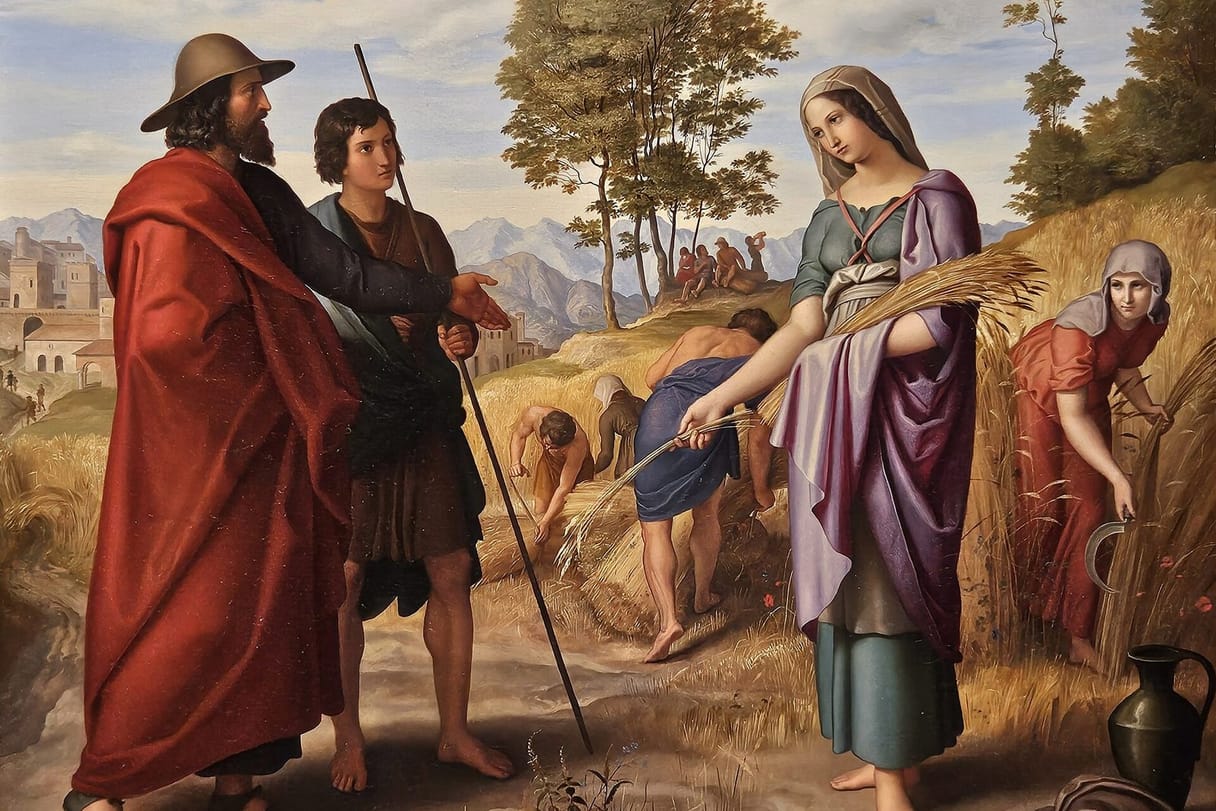
The same Scriptures tell other stories. Moses married Zipporah (Exodus 2:21), the daughter of Jethro, “the priest of Midian” (Exodus 3:1), and later married a Cushite woman (Numbers 12:1). Ruth, a woman from Moab, married Boaz and became the great-grandmother of King David (Ruth 4:13–17), and Matthew names her in the family tree of Jesus (Matthew 1:5). The Bible’s concern in its marriage laws was faithfulness to God and the danger of idolatry, and its stories show God’s blessing reaching across the lines between peoples.
What do the mainline churches teach?
The ELCA, the PC(USA), the United Methodist Church, and the Episcopal Church do not forbid a Christian to marry someone of another faith, and they leave the decision about a particular wedding largely to the pastor. The United Methodist Church’s worship resources, for example, allow a pastor to adapt the marriage service for a couple who are not both ready to make its Christian promises, within the limits of the church’s rules. Some of these churches ask only that at least one of the two partners be baptized.
Before the wedding, the pastor will usually meet with the couple. A non-Christian partner can expect a frank and friendly conversation about worship and about how any children will be raised, so that both partners can say truthfully what they are promising.
How can an interfaith couple build a strong marriage?
Talk early and openly about what each of you believes, and about what you do not. Decide together how you will mark holy days, whether and where you will worship, and how you will raise children, including whether they will be baptized. Respect your partner’s conscience, and do not pressure them to convert. Pray for your spouse, and let your love be the clearest witness to your faith.
A Christian married to someone of another faith can entrust their spouse to God’s love with confidence. Many Christians, following teachers such as Gregory of Nyssa and Isaac the Syrian, hope for the salvation of all people, trusting that God’s love reaches further than human categories; see Do non-Christians go to hell? and Is Jesus the only way to God?
Every marriage, whether or not the two share a creed, is held together day by day by small mercies: patience at the end of a long day, forgiveness after a hard word, kindness that keeps showing up. Paul’s words to the Colossians describe that life, and they can become a prayer for any couple: “Put on therefore, as God’s chosen ones, holy and beloved, a heart of compassion, kindness, lowliness, humility, and perseverance; bearing with one another, and forgiving each other … Above all these things, walk in love, which is the bond of perfection” (Colossians 3:12–14).
Common questions
Is it a sin to marry an atheist?
Christians are free to marry atheists. Paul told Christians who were married to unbelievers to stay married if their spouses were willing, and he said the unbelieving spouse is made holy through the believer (1 Corinthians 7:12–14). A Christian and an atheist can build a faithful, loving marriage if each respects the other’s conscience and they agree openly about how to raise children.
Will I go to hell if I marry an unbeliever?
Your life with God rests on God’s grace, and that grace goes with you into your marriage and can hold you both. Like every marriage, yours will need prayer, open conversation, and wise counsel.
Can a non-Christian get married in a church?
Often, yes, when the other partner is a Christian. Mainline churches leave the decision about a particular wedding largely to the pastor, and some ask only that at least one partner be baptized. The pastor will usually meet with the couple beforehand to talk about the meaning of marriage, worship, and how any children will be raised.
Should I ask my partner to convert before we marry?
You should not pressure anyone to convert. Faith has to be freely given, and a conversion made only to please a fiancé rarely lasts. Talk openly about what each of you believes, pray, and let your partner come to their own convictions in their own time.
Sources
- 2 Corinthians 6:14–16 (WEB)
- 2 Corinthians 6:14 (KJV)
- 1 Corinthians 7:12–16, 39 (WEB)
- 1 Peter 3:1–2 (WEB)
- Acts 16:1 and 2 Timothy 1:5 (WEB)
- Deuteronomy 7:3–4 (WEB)
- Ruth 1:16; 4:13–17 (WEB)
- Colossians 3:12–14 (WEB)
- Constitution and Canons of the Episcopal Church (2024), Canon I.18
- On whether to offer an interfaith wedding (United Methodist Discipleship Ministries)