Doubt and deconstruction
Deconstruction is the word many Christians now use for re-examining the faith they were taught, often after leaving a fundamentalist or evangelical church. Doubt has a place in Christian faith: Thomas, Job, and the psalmists all doubted, and Mother Teresa described decades of spiritual darkness in her letters. Mainline churches, including the ELCA, the Presbyterian Church (U.S.A.), the United Methodist Church, and the Episcopal Church, make room for a faith that asks hard questions.
I believe. Help my unbelief!
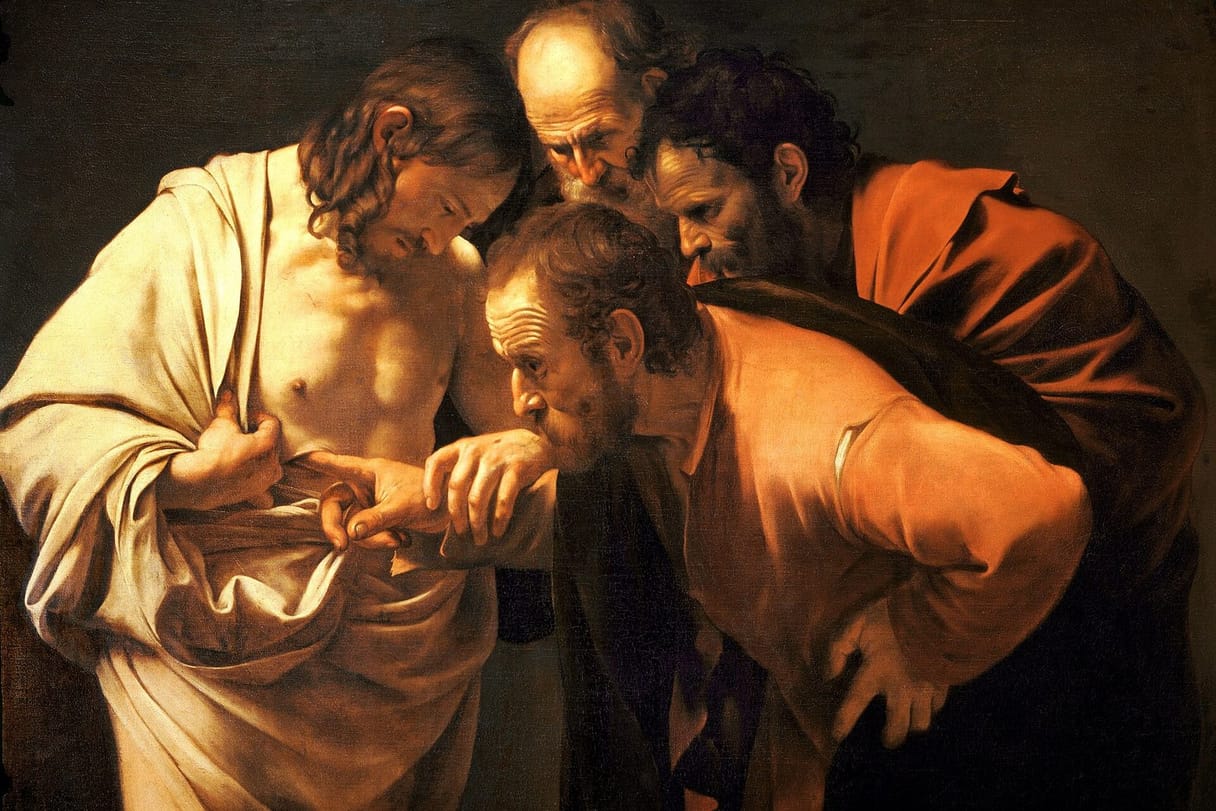
Doubt is part of Christian faith, and the mainline churches make room for it. If the faith you were taught is coming apart, you are not the first, and God goes with you through it. Some of the most faithful people in Scripture argued with God or could not believe what they were told, and God stayed with them.
The mainline churches treat hard questions as part of faith. The United Methodist Church’s Book of Discipline says that “by reason we ask questions of faith and seek to understand God’s action and will.” Anglicans since Richard Hooker in the sixteenth century have read Scripture with the help of tradition and reason. The Westminster Confession, part of the Presbyterian Church (U.S.A.)’s Book of Confessions, declares that “God alone is Lord of the conscience,” and the PC(USA)’s Book of Order repeats those words among its historic principles. People who are rethinking the faith they were taught can do that rethinking inside the church, and many do.
What does “deconstruction” mean?
In religious use, deconstruction is the process of re-examining and questioning the beliefs you were raised with. The word is borrowed loosely from the French philosopher Jacques Derrida, and it spread among American evangelicals in the late 2010s. Most people who say they are deconstructing grew up in fundamentalist or evangelical churches.
Many people first came to know Christ in those churches, and they often keep a deep love for Scripture, prayer, and the people who raised them in the faith. What they question is usually a set of particular teachings, such as a young earth, a Bible without errors of any kind, eternal torment for everyone who is not a Christian, a ban on women preaching, or the belief that being gay is a sin. Some people who question these teachings leave Christianity. Others rebuild their faith, often in a different church, and some call that rebuilding “reconstruction.”
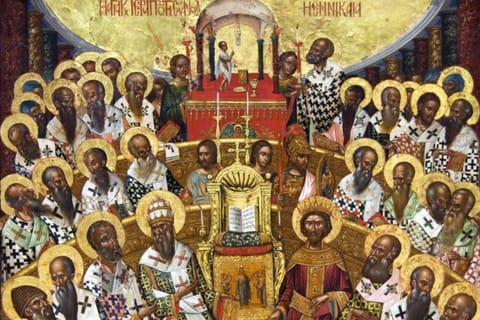
None of those teachings appears in the Nicene Creed, which Christians have confessed since the fourth century. The creed says nothing about the age of the earth, who may preach, or whether the Bible contains errors. Many people find relief in learning that the faith of the creeds is older and roomier than the one they were handed, and that they can keep the heart of what they learned as children.
Is it a sin to doubt God?
Scripture records doubt among the people closest to Jesus. When the risen Jesus met his eleven disciples on a mountain in Galilee, Matthew says, “they bowed down to him; but some doubted” (Matthew 28:17). Jesus then sent all eleven to make disciples of every nation, the doubters with the rest.
Thomas refused to believe that Jesus had risen until he could touch the wounds. A week later Jesus came back and offered Thomas exactly what he had asked for:
Then he said to Thomas, “Reach here your finger, and see my hands. Reach here your hand, and put it into my side. Don’t be unbelieving, but believing.” Thomas answered him, “My Lord and my God!”
In Mark’s Gospel, the father of a sick boy brought his doubt straight to Jesus, and Jesus healed the boy:
Immediately the father of the child cried out with tears, “I believe. Help my unbelief!”
The short Letter of Jude tells Christians how to treat people who doubt:
And have mercy on some, who are doubting.
For more on bringing your questions to God, see Is it wrong to question God?
What do the Psalms and Job say about doubt?
Laments, prayers that complain to God, are the most common kind of psalm. Psalm 13 opens, “How long, LORD? Will you forget me forever?” (Psalm 13:1). Psalm 88 never reaches a hopeful turn, and its last line is “You have put lover and friend far from me, and my friends into darkness” (Psalm 88:18). Christians have prayed Psalm 88 with the rest of the Psalter for centuries, so a prayer that ends in darkness has always had a place in the church’s worship.
In the Book of Job, Job’s friends defend God with tidy explanations of his suffering, while Job argues with God for chapter after chapter. At the end of the book, God takes Job’s side:
The LORD said to Eliphaz the Temanite, “My wrath is kindled against you, and against your two friends; for you have not spoken of me the thing that is right, as my servant Job has.
Did Mother Teresa doubt God?
Even saints have walked through long darkness. Mother Teresa of Calcutta, the nun who founded the Missionaries of Charity to serve the dying poor, spent most of her years among the poor without any felt sense of God’s presence. Her private letters, published in 2007 as Mother Teresa: Come Be My Light, show that the darkness began around 1949 or 1950, soon after she started her work in the slums of Calcutta, and lasted, with one brief respite, until her death in 1997.
“In my heart there is no faith—no love—no trust,” she wrote in one letter. In 1961 she told the Jesuit priest Joseph Neuner, “I have come to love the darkness.” She kept praying, receiving Communion, and serving the dying through all those years. Spiritual writers call such a season a “dark night,” after the sixteenth-century Spanish friar John of the Cross, who taught that God can be at work in a soul precisely when God feels absent.
Can you rethink your faith without losing it?
The Evangelical Lutheran Church in America (ELCA), the Presbyterian Church (U.S.A.), the United Methodist Church, and the Episcopal Church confess the historic creeds and celebrate baptism and Holy Communion. The same churches accept evolution and the findings of modern biblical scholarship, ordain women, and permit their clergy to marry same-sex couples. Most of their theologians hope that people of other religions can be saved through Christ (see Salvation and people of other faiths).
Many people who arrive in these churches after leaving a fundamentalist or evangelical church find that the questions that drove them out have been asked openly for generations by these churches’ own scholars and bishops. They can say the creed, receive Communion, and keep studying Scripture without pretending to believe what they no longer believe. For more on how these churches differ from evangelical ones, see What is mainline Protestantism?
Should I leave a church that hurt me?
You may leave a church that abuses its authority, and leaving such a church is different from leaving God. A wound from one congregation does not have to close you off from every church. Jesus condemned religious leaders who “bind heavy burdens that are grievous to be borne, and lay them on men’s shoulders” (Matthew 23:4). Through the prophet Ezekiel, God condemned Israel’s shepherds because “you have ruled over them with force and with rigor” (Ezekiel 34:4).
Warning signs include leaders who cannot be questioned, public shaming, control over members’ money, friendships, or dating, and the covering up of abuse. If a church leader abused you, you can report it to the police and to the leader’s denomination. A counselor who has worked with people leaving controlling churches can help you sort out what you were taught from what is true.
Jesus’ own invitation describes a different kind of faith:
Take my yoke upon you and learn from me, for I am gentle and humble in heart; and you will find rest for your souls. For my yoke is easy, and my burden is light.
How do I find a healthy church?
Christian faith is lived with other people, and the Letter to the Hebrews urges believers to keep meeting together:
Let’s consider how to provoke one another to love and good works, not forsaking our own assembling together, as the custom of some is, but exhorting one another.
A healthy congregation welcomes questions from the pulpit and in classes. Its clergy answer to someone else, such as a bishop, a presbytery, or a church council, and it has clear policies for protecting children and vulnerable adults. Visit several churches, and ask the priest or pastor to meet you for coffee so you can tell them what you are carrying. You can start with the guide to mainline churches, and if you have stepped away from church for a while, see Is it a sin to not go to church?
You can keep praying while you ask your questions. The psalmists prayed in the dark, and one of their prayers fits anyone who is searching:
Oh, send out your light and your truth. Let them lead me. Let them bring me to your holy hill, to your tents.
Notes
-
Greek (SBL Greek New Testament): καὶ οὓς μὲν ἐλεᾶτε διακρινομένους. Diakrinomenous comes from a verb that can mean “to doubt” or “to make a distinction.” Most modern translations read it here as “those who doubt” or “those who are wavering”; the WEB follows the older reading, “making a distinction.” ↩︎
Common questions
Is deconstruction the same as losing your faith?
Deconstruction means questioning what you were taught, and people come out of it in different places. Some leave Christianity, and many others rebuild a faith centered on the creeds, letting go of teachings the creeds never contained. Some people call that rebuilding reconstruction.
Can I take Communion if I have doubts?
The ELCA, the Presbyterian Church (U.S.A.), and the Episcopal Church invite all baptized Christians to receive Holy Communion, the United Methodist Church invites all who love Christ, and none of them tests anyone’s certainty at the altar rail. Many people find that receiving the bread and wine sustains them on days when they cannot sense God at all. If you are not baptized, you can ask the pastor or priest about baptism.
What should I do if my family thinks I am falling away from God?
Tell them openly what you are questioning and what you still hold, and ask them to pray for you as you pray for them. Paul told Christians to accept those who are weak in faith without quarreling over opinions (Romans 14:1), and that counsel runs in both directions. You do not have to win every argument at the dinner table to keep loving your family.
Is it all right to take a break from church?
A short rest from church can be wise after a church has hurt you. When the prophet Elijah collapsed in despair, God sent an angel who told him to eat and sleep before going any further (1 Kings 19:4–8). Most people find in time that they need other Christians, and a healthy congregation can be a place to keep asking questions.
Sources
- Matthew 28:16–17 (WEB)
- John 20:24–29 (WEB)
- Mark 9:24 (WEB)
- Jude 1:22 (WEB)
- Psalm 88 (WEB)
- Psalm 43:3 (WEB)
- Job 42:7 (WEB)
- Matthew 11:28–30 (WEB)
- Hebrews 10:24–25 (WEB)
- United Methodist Church, Book of Discipline ¶105: Our Theological Task
- Presbyterian Church (U.S.A.), Lord of the Conscience (on Westminster Confession 6.109)
- Presbyterian Church (U.S.A.), Rooted foundations: Polity’s basic operating principles, part two
- Mother Teresa’s long dark night (America, September 2007)
- Mother Teresa a saint despite spiritual darkness (Fox News)
- Faith deconstruction (Wikipedia)


.jpg)