The Doctrine of Discovery and Indigenous peoples
The Doctrine of Discovery was the claim, rooted in fifteenth-century papal bulls and later royal charters, that Christian rulers could take possession of lands belonging to non-Christian peoples. The U.S. Supreme Court drew on it in Johnson v. M’Intosh (1823). The Episcopal Church, the United Methodist Church, the ELCA, and the PC(USA) have repudiated it as contrary to the gospel, because God made every nation “from one blood” (Acts 17:26).
He made from one blood every nation of men to dwell on all the surface of the earth, having determined appointed seasons and the boundaries of their dwellings
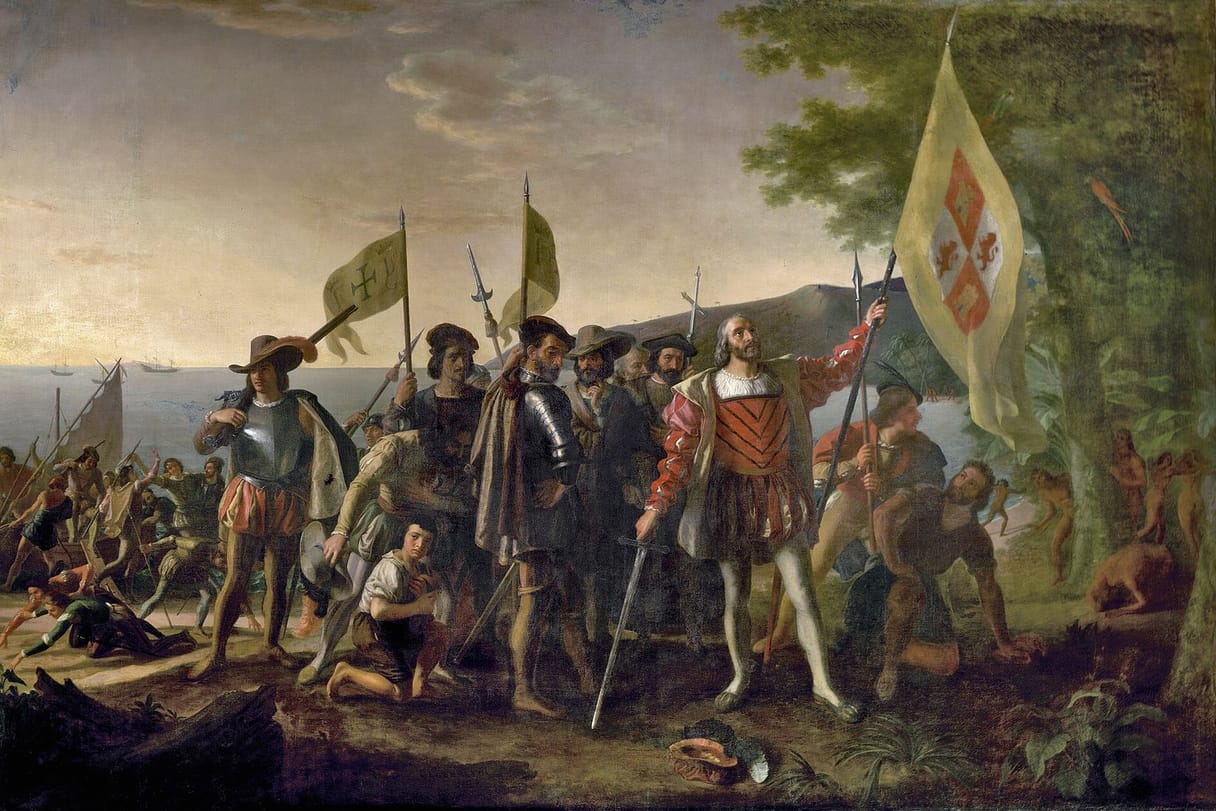
The Doctrine of Discovery was the claim that a Christian ruler who “discovered” lands held by non-Christian peoples could take possession of them. It began in papal decrees of the fifteenth century, passed into the charters of European monarchs, and entered American law. The mainline churches have repudiated it as contrary to the gospel, and they have committed themselves to telling the truth about its history and to reconciliation with Native peoples.
The question may reach you in different ways. You may be Native and carry this history in your family, or descended from settlers and newly aware of it, or both. Scripture speaks to each of you with the same hope: that God, who made every people, wills that they live together in justice and peace.
What was the Doctrine of Discovery?
In the fifteenth century, as Portuguese and Spanish ships reached the coasts of Africa and then the Americas, popes issued decrees called bulls that gave Christian monarchs authority over the lands they reached. In 1452 Pope Nicholas V issued Dum diversas, and later decrees, including Romanus pontifex (1455) and Inter caetera (1493), extended the claims. Inter caetera, issued by Pope Alexander VI after the first voyage of Columbus, granted the Spanish crown the lands to the west of a line in the Atlantic Ocean that no Christian prince already held.
English monarchs used the same reasoning. The Episcopal Church’s 2009 resolution on the doctrine traces it in the English-speaking world to King Henry VII in 1496, the year he commissioned the explorer John Cabot, and it describes the doctrine as the belief that Christian sovereigns could “assert dominion and title over non-Christian lands.” Some European settlers also compared themselves to Israel entering Canaan and read the conquest stories of Joshua as a charter for their own wars. For how Christians read those stories today, see Violence in the Old Testament.
How did the Doctrine of Discovery shape American law?
In 1823 the U.S. Supreme Court decided Johnson v. M’Intosh, a dispute over land that one side claimed through purchases from the Illinois and Piankeshaw nations in the 1770s and the other through a grant from the United States. The Court held that discovery “gave title to the government by whose subjects or by whose authority it was made.” Native nations kept a right to occupy their land, and only the government could buy it from them. The decision has never been overturned, and the Supreme Court referred to the doctrine as recently as 2005, in City of Sherrill v. Oneida Indian Nation.
The doctrine shaped how the law regarded the first peoples of the continent and their land. Native scholars, among them Steven Newcomb, have urged the churches to examine its religious roots; Newcomb calls it “a claim of a right of Christian domination.” The churches have listened.
What does the Bible say about land and peoples?
Scripture teaches that every nation comes from God and belongs to God. Paul told the philosophers of Athens:
The God who made the world and all things in it, he, being Lord of heaven and earth, doesn’t dwell in temples made with hands. He isn’t served by men’s hands, as though he needed anything, seeing he himself gives to all life and breath and all things. He made from one blood every nation of men to dwell on all the surface of the earth, having determined appointed seasons and the boundaries of their dwellings, that they should seek the Lord, if perhaps they might reach out for him and find him, though he is not far from each one of us.
In Paul’s sermon, God gives each people its dwelling so that they may seek God. Every nation bears the image of God in its people (Genesis 1:27), and no nation receives another’s land as a prize for believing.
The Bible also teaches that land belongs first to God. “The earth is the LORD’s, with its fullness; the world, and those who dwell in it” (Psalm 24:1). God told Israel, “the land is mine; for you are strangers and live as foreigners with me” (Leviticus 25:23). People hold land as tenants of God, under God’s law of justice.
The prophets condemned the powerful who took land from those who could not defend it. When King Ahab wanted Naboth’s vineyard, Naboth refused to sell “the inheritance of my fathers” (1 Kings 21:3). Queen Jezebel arranged for Naboth to be falsely accused and stoned, and when Ahab went to claim the vineyard, God sent Elijah to meet him with a question: “Have you killed and also taken possession?” (1 Kings 21:19). Micah spoke for God against those who “covet fields and seize them” (Micah 2:2).
Why did the mainline churches repudiate the Doctrine of Discovery?
The churches came to see the doctrine as a misuse of the name of Christ to justify taking land and lives.
- The Episcopal Church (2009). The General Convention “repudiates and renounces the Doctrine of Discovery as fundamentally opposed to the Gospel of Jesus Christ,” and it asked the church to review its own policies with a view to “exposing the historical reality and impact” of the doctrine (Resolution D035).
- The United Methodist Church (2012). The General Conference repudiated the doctrine and called for a study of it.
- The United Church of Christ (2013). The General Synod approved a resolution repudiating the doctrine by an overwhelming vote.
- The Evangelical Lutheran Church in America (2016). The Churchwide Assembly resolved “to repudiate explicitly and clearly the European-derived doctrine of discovery” and to “acknowledge and repent from this church’s complicity in the evils of colonialism in the Americas.”
- The Presbyterian Church (U.S.A.) (2016). The 222nd General Assembly called the church to “confess its complicity and repudiate the Doctrine of Discovery,” and it asked for a study of the doctrine’s history.
Some Christians wonder what a statement about documents from five centuries ago can change, or worry that such statements judge earlier generations too harshly. The churches answer that repentance begins with telling the truth, and that the doctrine still shapes law and lives today. For the related work of repair after slavery, see Repair and reconciliation.
What does reconciliation with Native peoples look like?
The ELCA’s 2016 resolution gives one picture. The assembly resolved to offer “a statement of repentance and reconciliation to native nations,” encouraged the presiding bishop’s office to plan “an appropriate national ceremony of repentance and reconciliation with tribal leaders,” and asked for a plan to grow the church’s Native American Ministry Fund. It also chose accompaniment, walking alongside Native peoples as partners, over missionary efforts directed at them.
Many Native Americans are Christians, and many Native congregations belong to the mainline churches. Reconciliation includes listening to them, learning the history of the land where your own church stands, and supporting the ministries Native Christians lead. The Bible’s teaching on racism and its warnings against confusing faith with national power, discussed in Christian nationalism, point the same way.
The psalmist’s words can be prayed by every people who share the continent: “The earth is the LORD’s, with its fullness; the world, and those who dwell in it.” The land was never a prize for the strong. It is a gift held in trust from God, and the church’s repentance for the Doctrine of Discovery is one way of receiving that gift again, together with the peoples who first cared for it.
Common questions
What is the Doctrine of Discovery in simple terms?
It was the idea that a Christian nation that “discovered” land held by non-Christian peoples gained the right to claim it. The idea appeared in papal bulls of the fifteenth century, in English royal charters, and later in American law. It treated the Indigenous peoples of the Americas as having, at most, a right to live on land that others owned.
Which churches have repudiated the Doctrine of Discovery?
The Episcopal Church repudiated it in 2009, the United Methodist Church in 2012, the United Church of Christ in 2013, and both the Evangelical Lutheran Church in America and the Presbyterian Church (U.S.A.) in 2016. The World Council of Churches and several other bodies have issued similar statements.
What was Johnson v. M’Intosh?
Johnson v. M’Intosh was an 1823 U.S. Supreme Court case about who could buy land from Native nations. The Court held that discovery by European powers, inherited by the United States, gave the government title to the land, leaving Native nations a right of occupancy. Private buyers therefore could not purchase land directly from tribes.
Is the Doctrine of Discovery still used today?
Johnson v. M’Intosh has never been overturned, and the Supreme Court referred to the doctrine as recently as 2005, in City of Sherrill v. Oneida Indian Nation. That is one reason the churches have asked their members to learn its history and its continuing effects on Native nations.
Sources
- Acts 17:24–27 (WEB)
- Psalm 24:1 (WEB)
- Leviticus 25:23 (WEB)
- 1 Kings 21:1–19 (WEB)
- Episcopal General Convention 2009, Resolution D035, Repudiate the Doctrine of Discovery
- ELCA Churchwide Assembly 2016, Repudiation of the Doctrine of Discovery (CA16.02.04)
- Presbyterian Church (U.S.A.), Doctrine of Discovery
- General Synod delegates overwhelmingly approve resolution repudiating the Doctrine of Discovery (United Church of Christ, 2013)
- Denominations repent for Native American land grabs (Religion News Service, 2018)
- Johnson v. M’Intosh, 21 U.S. 543 (1823)


.jpg)