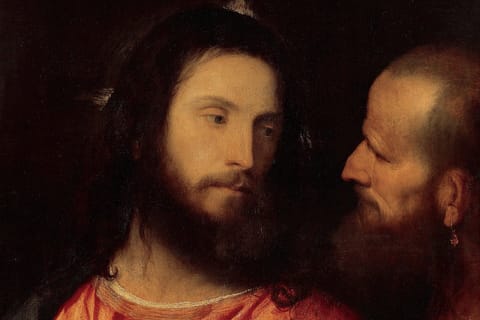
The social gospel and liberation theology
The social gospel and liberation theology are Christian movements that read the good news of Jesus as good news for the whole person and for whole societies. The social gospel, led by the Baptist pastor Walter Rauschenbusch in the early 1900s, called the churches to work for justice for workers and the poor. Liberation theology, which took shape in Latin America with Gustavo Gutiérrez’s A Theology of Liberation (1971), reads Scripture alongside the poor, as Jesus did in Luke 4:18.
The Spirit of the Lord is on me, because he has anointed me to preach good news to the poor.
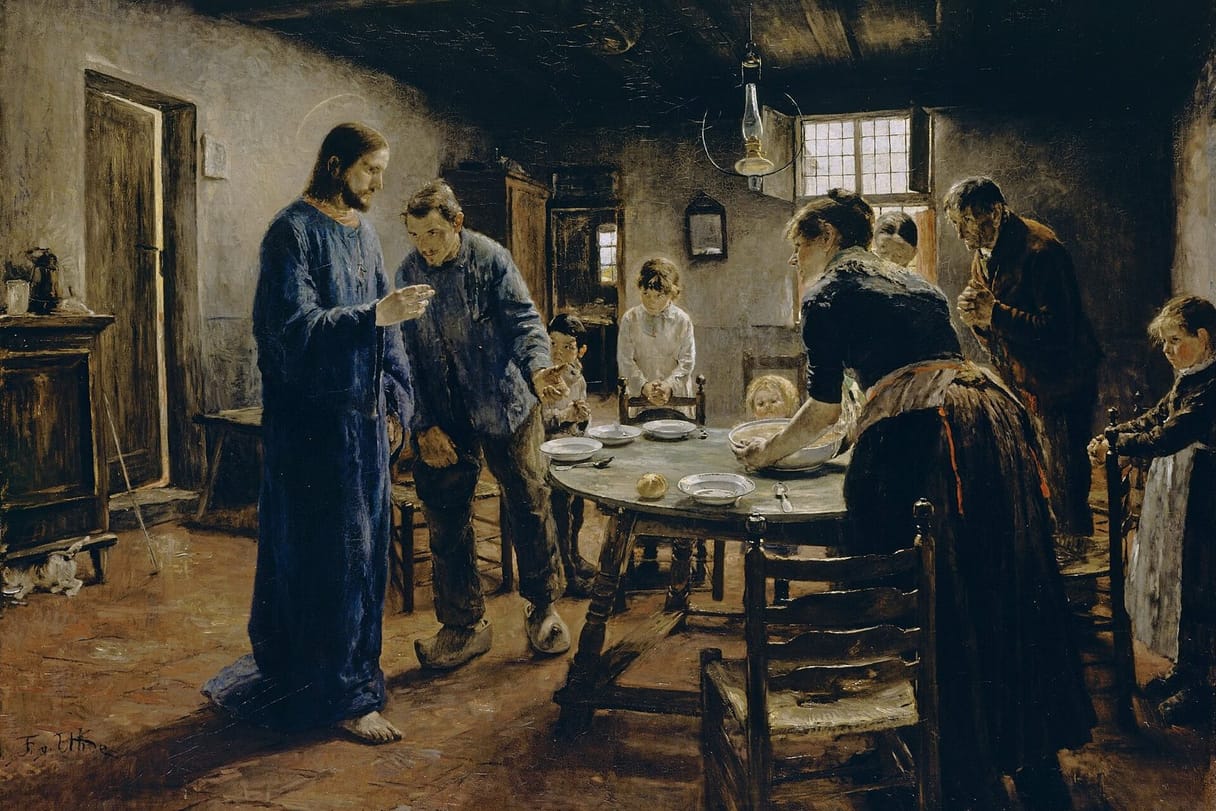
The social gospel and liberation theology are two Christian movements that read the good news of Jesus as good news for the whole person and for whole societies. Perhaps you heard one of these names in a sermon or a history class, or you have wondered whether your faith has anything to say about wages, hunger, and racism. Both movements begin where Jesus began his public ministry, in the synagogue at Nazareth, when he unrolled the scroll of Isaiah and read:
The Spirit of the Lord is on me, because he has anointed me to preach good news to the poor. He has sent me to heal the broken hearted, to proclaim release to the captives, recovering of sight to the blind, to deliver those who are crushed, and to proclaim the acceptable year of the Lord.
What is the social gospel?
The social gospel was a movement among American Protestants from the late 1800s to the early 1900s that called the churches to apply the teaching of Jesus to the injustices of industrial society. Its best-known voice was Walter Rauschenbusch (1861–1918), a Baptist minister. In 1886 he became pastor of the Second German Baptist Church in New York City, a congregation of German immigrants, and in 1897 he joined the faculty of Rochester Theological Seminary.
Rauschenbusch set out his vision in Christianity and the Social Crisis (1907) and followed it with Christianizing the Social Order (1912) and A Theology for the Social Gospel (1917). His central conviction was that the kingdom of God, which Jesus preached and taught his disciples to pray for, requires social as well as individual salvation: “Let your Kingdom come. Let your will be done on earth as it is in heaven” (Matthew 6:10). He also wrote a book of prayers, Prayers of the Social Awakening (1910), with prayers for children who work, immigrants, employers, and doctors and nurses.
What were the social creeds of the churches?
In 1908 the Methodist Episcopal Church, a forerunner of today’s United Methodist Church, adopted a Social Creed, the first time a Christian denomination had adopted such a short statement on public life. Its authors included Harry F. Ward, Frank Mason North, Herbert Welch, Worth M. Tippy, and Elbert R. Zaring. It called for the abolition of child labor, protection of workers from dangerous machinery and occupational disease, a living wage in every industry, and release from work “one day in seven.” It ended by naming the Golden Rule and the mind of Christ as the highest law of society.
In December 1908 the new Federal Council of Churches adopted its own version, and the creed became a shared statement of many Protestant churches. The Social Creed still stands in the United Methodist Book of Discipline, and United Methodist congregations are encouraged to use it in worship. It grew into the church’s Social Principles, first adopted in 1972 and revised in 2024.
What is liberation theology?
Liberation theology is a theological movement that took shape in Latin America in the late 1960s and early 1970s. Its classic text is A Theology of Liberation by Gustavo Gutiérrez, a priest from Lima, Peru, who served for many years in Rímac, a poor neighborhood of the city. The book appeared in Spanish in 1971 and in English in 1973. Gutiérrez died in Lima in October 2024 at the age of 96.
Gutiérrez taught that salvation is God’s gift for this life as well as the next, and that knowing God includes working to end poverty and injustice. He wrote that “we love God by loving our neighbor.” Liberation theologians read the Bible from the side of the poor, and they return often to the Exodus, where God says, “I have surely seen the affliction of my people who are in Egypt, and have heard their cry” (Exodus 3:7). Their phrase “the preferential option for the poor” means looking at the world through the eyes of the poor and taking their side, as the prophets did. Gutiérrez insisted that poverty itself is an evil to be protested and abolished. The movement spread from Latin America to Christians in Asia and Africa.
Some Christians have worried that liberation theology leans too heavily on Marxist analysis of society or turns the gospel into a political program. Its defenders answer that its roots are in the Exodus, the prophets, and the Gospels, and that it grew from prayer and from the church’s life among the poor.
What is Black theology?
In the United States, James H. Cone (1938–2018) began Black theology with Black Theology and Black Power (1969) and A Black Theology of Liberation (1970). Cone was an ordained elder of the African Methodist Episcopal Church and taught for decades at Union Theological Seminary in New York. He taught that the God of the Exodus and the crucified Christ stand with Black Americans in their suffering and in their struggle for freedom. In The Cross and the Lynching Tree he set the cross of Jesus beside the lynching tree of American history, so that each would shed light on the other.
What is womanist theology?
Womanist theology brings the faith of Black women into Christian theology. Its name comes from the word “womanist,” which the novelist Alice Walker is often credited with coining. Katie Geneva Cannon, who in 1974 became the first Black woman ordained in the United Presbyterian Church in the U.S.A., a forerunner of today’s PC(USA), was one of its pioneers. So was Delores Williams, a Presbyterian who taught at Union Theological Seminary. In Sisters in the Wilderness (1993) Williams read the story of Hagar, the enslaved Egyptian woman cast into the desert, as a story of Black women’s survival with God’s help. In Genesis, Hagar herself gives God a name: “You are a God who sees” (Genesis 16:13).
Why do these movements love Mary’s song?
The Gospel of Luke announces good news to the poor from its first chapter. When Mary visits her cousin Elizabeth, she sings of what God is doing through the child she carries:
He has put down princes from their thrones, and has exalted the lowly. He has filled the hungry with good things. He has sent the rich away empty.
Lutherans, Episcopalians, and many other Christians sing this song, the Magnificat, at evening prayer. The social gospel and liberation theology both ask Christians to believe its words about the lowly and the hungry and to live by them. For more of what Scripture says, see what the Bible says about the poor and Micah 6:8.
What do the mainline churches teach today?
The mainline churches carry the social gospel’s conviction that faith shows itself in justice and mercy (see what is mainline Protestantism?). Beside the United Methodist Social Creed, the Evangelical Lutheran Church in America’s 1999 social statement on economic life names its goal in its title, Sufficient, Sustainable Livelihood for All. The Presbyterian Church (U.S.A.) includes in its Book of Confessions the Belhar Confession, written in South Africa in 1986 during apartheid, which confesses that God is “in a special way the God of the destitute, the poor and the wronged.” Many mainline seminaries teach the work of Cone, Cannon, and Williams; for the Bible’s teaching on race, see what the Bible says about racism.
Martin Luther King Jr., a Baptist pastor, wrote in 1960 that Christianity and the Social Crisis “left an indelible imprint on my thinking,” and that “the gospel at its best deals with the whole man, not only his soul but his body, not only his spiritual well-being, but his material well-being.” King also judged that Rauschenbusch “had fallen victim to the 19th-century ‘cult of inevitable progress.’” Christians who share King’s hope for the poor still disagree, in good faith, about which economic policies serve the poor best. The churches leave those choices to the conscience of their members while keeping before them the poor whom God loves.
Rauschenbusch’s prayer “For the Kingdom of God” (1910) includes words any Christian can pray:
Make us determined to live by truth and not by lies, to found our common life on the eternal foundations of righteousness and love… Our Master, once more we make thy faith our prayer: “Thy kingdom come! Thy will be done on earth!”
Walter Rauschenbusch, Prayers of the Social Awakening
Common questions
What is the difference between the social gospel and liberation theology?
The social gospel arose among American Protestants around 1900 and spoke to the hardships of industrial workers, such as child labor, long hours, and low wages. Liberation theology took shape in Latin America around 1970 and begins from the faith and suffering of the poor, reading the Bible’s stories of God freeing the oppressed. Both hold that the kingdom of God touches social life as well as the individual soul.
Did Martin Luther King Jr. believe in the social gospel?
Martin Luther King Jr. wrote in 1960 that Walter Rauschenbusch’s Christianity and the Social Crisis “left an indelible imprint on my thinking.” In the same essay he wrote that “the gospel at its best deals with the whole man, not only his soul but his body.” King also thought Rauschenbusch had been too optimistic about human nature and progress.
What is the preferential option for the poor?
The preferential option for the poor is a phrase from liberation theology. It means that Christians and churches should look at the world from the side of the poor and work to end poverty, because God in Scripture hears the cry of the oppressed. Gustavo Gutiérrez explained that it treats poverty as an evil to be protested and overcome.
What is womanist theology?
Womanist theology is Christian theology written from the faith and experience of Black women. It takes its name from the word womanist, which the novelist Alice Walker is often credited with coining. Its pioneers include the Presbyterian scholars Katie Geneva Cannon and Delores Williams, whose book Sisters in the Wilderness (1993) read the story of Hagar as a story of Black women’s survival with God’s help.
Sources
- Luke 4:16–21 (WEB)
- Luke 1:46–55 (WEB)
- Exodus 3:7–8 (WEB)
- Genesis 16:13 (WEB)
- Walter Rauschenbusch (Encyclopaedia Britannica)
- Walter Rauschenbusch, Prayers of the Social Awakening (1910), “For the Kingdom of God” (Internet Archive)
- The UMC Social Principles: A historical manifesto for faith in action (UMC.org)
- Social Creed (Methodist) (Wikipedia)
- Gustavo Gutiérrez, father of liberation theology, dies at 96 (WLRN / Associated Press, 2024)
- James H. Cone, AME itinerant elder and founder of Black liberation theology, dies (The Christian Recorder, 2018)
- African American leaders: Rev. Dr. Katie Geneva Cannon (Presbyterian Historical Society)
- Womanist theologian Delores Williams dies at 88 (The Christian Century, 2022)
- Martin Luther King Jr., “Pilgrimage to Nonviolence,” Christian Century, April 13, 1960 (King Institute, Stanford)
- The Belhar Confession (Reformed Church in America)
- ELCA social statement, Sufficient, Sustainable Livelihood for All (1999)