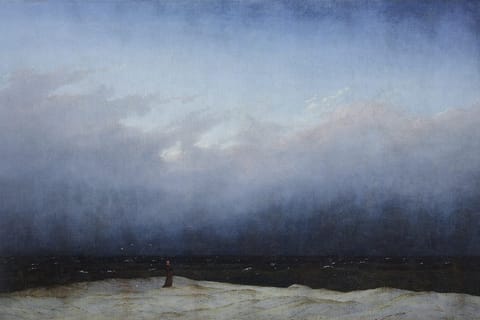
Depression and faith
Christians can and do experience depression, and it is an illness, never a verdict on your faith. The Bible gives voice to deep darkness in Psalm 88, in Job and Jeremiah, and in Jesus’ own cry from the cross. God stays near in the dark: “even the darkness doesn’t hide from you” (Psalm 139:12). Prayer, therapy, medication, and the care of the church belong together. If you are in crisis, call or text 988.
Even the darkness doesn’t hide from you, but the night shines as the day. The darkness is like light to you.
If depression has brought you to thoughts of ending your life, call or text 988 in the United States to reach the 988 Suicide & Crisis Lifeline, at any hour. Outside the United States, find a free helpline at findahelpline.com.
Christians can and do suffer from depression, and God remains with you in it. Depression can make everything heavy: getting out of bed, answering a message, opening the Bible. The illness can make prayer feel like speaking into an empty room, and then add guilt for feeling that way. In 2021 an estimated 21 million American adults, about one in twelve, had at least one episode of major depression, according to the National Institute of Mental Health. Depression is an illness, faithful people have walked through it in every age, and the God who made the night is present in it. For a wider look at anxiety and depression together, see Anxiety, depression, and faith.
Can a Christian be depressed?
The Bible is full of faithful people in deep darkness. A psalmist wrote, “My tears have been my food day and night” (Psalm 42:3). The prophet Jeremiah cried, “Cursed is the day in which I was born” (Jeremiah 20:14). Job said, “I am not at ease, neither am I quiet, neither do I have rest; but trouble comes” (Job 3:26). The prophet Elijah lay down under a tree and asked God to let him die (1 Kings 19:4).
God’s answer to Elijah was gentle and practical. An angel touched him and said, “Arise and eat!” (1 Kings 19:5), and he ate, slept, and was fed again before God spoke to him about anything else. Jesus himself told his friends in Gethsemane, “My soul is exceedingly sorrowful, even to death” (Mark 14:34). Darkness of spirit belongs to the human life Christ shared.
What does Psalm 88 teach about depression?
Psalm 88 is the darkest prayer in the Bible. It begins:
LORD, the God of my salvation, I have cried day and night before you. Let my prayer enter into your presence. Turn your ear to my cry. For my soul is full of troubles. My life draws near to Sheol.
Most psalms of lament turn toward praise before they end. Psalm 88 never turns. Its last line is “You have put lover and friend far from me, and my friends into darkness” (Psalm 88:18). God placed that unresolved prayer in Scripture, and the church has prayed it for many centuries. Psalm 88 teaches that you may pray from the bottom of the pit without pretending to feel better. Even so, the psalm’s first words call God “the God of my salvation.” Speaking to God from the dark is already an act of faith.
Where is God when I am in the dark?
Darkness cannot hide you from God. A psalmist who feared being swallowed by night wrote:
If I say, “Surely the darkness will overwhelm me. The light around me will be night,” even the darkness doesn’t hide from you, but the night shines as the day. The darkness is like light to you.
Christ has gone into the deepest dark himself. On the cross he prayed the first line of Psalm 22, “My God, my God, why have you forsaken me?” (Mark 15:34). The Apostles’ Creed confesses that he “descended to the dead,” and the Orthodox icon of the Resurrection shows him standing on the broken gates of death, pulling Adam and Eve up out of their tombs by the wrists. No darkness is so deep that Christ has not already entered it. John’s Gospel says, “The light shines in the darkness, and the darkness hasn’t overcome it” (John 1:5).
How can I pray when I feel nothing?
Let others carry you. Mark tells of a paralyzed man whose four friends carried him to Jesus and, when the crowd blocked the door, dug through the roof to lower him down. Mark says that “Jesus, seeing their faith,” spoke to the man (Mark 2:5). On days when you cannot believe, the church believes for you. You can stand in worship while others sing, let the congregation say the creed around you, and hold out your hands for Holy Communion even when you feel nothing. Christ gives himself to you all the same.
Short prayers are enough. “Out of the depths I have cried to you, LORD” (Psalm 130:1) is a whole prayer. Many depressed Christians have been steadied by the Jesus Prayer, “Lord Jesus Christ, Son of God, have mercy on me” (see Hesychasm and the Jesus Prayer). The prophet promised that God’s servant “won’t break a bruised reed. He won’t quench a dimly burning wick” (Isaiah 42:3). Christ handles a faint faith with great tenderness.
Christians sometimes call a season of spiritual darkness “the dark night of the soul.” Spiritual directors distinguish that experience from clinical depression, which needs medical care (see The dark night of the soul).
Have other Christians struggled with depression?
Many of the church’s great servants knew depression from the inside. Martin Luther passed through long seasons of despair, and in his letters he urged melancholy friends to flee solitude, to seek out company and conversation, and to let others cheer them. Charles Spurgeon, the great Baptist preacher of Victorian London, told his students, “Fits of depression come over the most of us,” and wrote of “knowing by most painful experience what deep depression of spirit means.”
The poet William Cowper suffered severe depression for most of his life and spent eighteen months in an asylum in his early thirties. His friend John Newton, the author of “Amazing Grace,” stayed by him, and the two wrote the Olney Hymns together. Cowper’s hymn “God moves in a mysterious way,” written near the time of a terrible breakdown in 1773, has comforted the church ever since: “The clouds ye so much dread / Are big with mercy, and shall break / In blessings on your head.”
Should Christians use therapy and medication for depression?
Prayer, therapy, and medication belong together, and seeking treatment is an act of faith and of care for the body God gave you. Elijah’s story is a good model: rest and food came first, and then God’s word. Talk to a doctor or a licensed counselor, and tell a pastor or a trusted friend what you are going through. The Evangelical Lutheran Church in America’s 2012 social message The Body of Christ and Mental Illness rejects the notion that mental illness is a sign of special sin and calls congregations to support people in treatment. In 2018 the General Assembly of the Presbyterian Church (U.S.A.) launched a Mental Health Initiative to reduce stigma and help congregations welcome people living with mental illness.
If you are thinking about suicide, call or text 988 now, or find a helpline in another country at findahelpline.com. You can also read Suicide and the mercy of God for words of hope. God’s love for you has not changed, even if you cannot feel it tonight; see God’s love for you.
Depression lies about the future, and Scripture tells the truth about it: morning comes. Until it does, you can wait with the psalmist, who prayed from the depths:
I wait for the LORD. My soul waits. I hope in his word. My soul longs for the Lord more than watchmen long for the morning, more than watchmen for the morning.
Common questions
Is depression a sign of weak faith?
Depression is an illness that affects mood, sleep, energy, appetite, and thought, and it comes to people of deep faith as well as to anyone else. Scripture records the despair of Elijah, Job, Jeremiah, and the psalmists, and Jesus himself said in Gethsemane, “My soul is exceedingly sorrowful, even to death.” The ELCA’s 2012 social message on mental illness rejects the idea that mental illness is a sign of special sin.
Can Christians take antidepressants?
Yes. Medicine is one of the ways God heals, and taking medication prescribed by a doctor is part of caring for the body God gave you. Many Christians find that medication, therapy, prayer, and the support of friends and a congregation work best together.
What Bible verses help with depression?
Many people find that the psalms of lament help most, because they speak from inside the darkness: Psalm 13, Psalm 42, Psalm 88, and Psalm 130. Psalm 139:11–12 promises that darkness cannot hide you from God, and Isaiah 42:3 says that God “won’t break a bruised reed.” Read them slowly, as prayers you can borrow.
What is the difference between depression and the dark night of the soul?
The “dark night of the soul” is a phrase from the sixteenth-century Spanish mystic John of the Cross for a season in which God seems absent during spiritual growth. Depression is a medical illness that affects the whole person and needs treatment. The two can overlap, so a person who feels spiritually dark should talk with both a doctor and a pastor or spiritual director.
Sources
- Psalm 88 (WEB)
- Psalm 139:11–12 (WEB)
- 1 Kings 19:4–8 (WEB)
- Jeremiah 20:14–18 (WEB)
- Mark 2:1–5 (WEB)
- Mark 15:34 (WEB)
- Psalm 130 (WEB)
- National Institute of Mental Health, Major Depression
- Luther’s counsel for those dealing with depression (1517.org)
- History of Hymns: “God Moves in a Mysterious Way” (Discipleship Ministries, United Methodist Church)
- Charles Spurgeon, “The Minister’s Fainting Fits,” Lectures to My Students
- ELCA, The Body of Christ and Mental Illness (2012)
- Presbyterians broaden mental health awareness (Presbyterian Outlook, 2019)
- 988 Suicide & Crisis Lifeline
- Find a Helpline