Healing from rapture anxiety
Rapture anxiety is the fear, often learned in childhood, of being left behind when Christ returns, and it can last for many years. Healing begins with the Bible’s own picture of Christ’s coming as good news for the people he loves: “There is no fear in love; but perfect love casts out fear” (1 John 4:18). Prayer, a patient church, and a counselor who respects your faith can all help.
Don’t be afraid, little flock, for it is your Father’s good pleasure to give you the Kingdom.
Rapture anxiety is the fear of being left behind when Christ returns, and for many people it began in childhood and lingers long after they have set aside the teaching that caused it. Perhaps you once came home to an empty house and called everyone you knew until someone answered. Perhaps your chest still tightens at a trumpet in a song or a sudden silence in the house at night. In the Gospels Jesus meets frightened people again and again, and he tells them, “Don’t be afraid” (Mark 6:50).
What is rapture anxiety?
Rapture anxiety is the name many people now give to a lasting dread of the rapture, the teaching that Christians will suddenly vanish from the earth before years of suffering called the tribulation. In 2022 CNN reported on adults raised in evangelical churches who still struggle with the fear. It quoted Darren Slade of the Global Center for Religious Research, who said of rapture anxiety, “This is a real thing. It’s a chronic problem.”
Many people can trace the fear to particular stories. The evangelical film A Thief in the Night, released in the early 1970s, was seen by many millions of people, and children made up a large part of its audience. The media scholar Heather Hendershot has written that evangelicals who grew up in the 1970s or early 1980s often remember the film as a source of childhood terror. The Left Behind novels and films carried the same scenario to the next generation.
A child who hears that Jesus might come at any moment and leave her behind has been handed a fear too heavy for any child to carry. If you still carry it as an adult, Christ is gentle with you.
Why did the 2025 RaptureTok prediction frighten so many people?
In September 2025 a South African pastor, Joshua Mhlakela, said that Jesus had appeared to him in a vision and that the rapture would take place on September 23, during Rosh Hashanah, the Jewish New Year. The prediction spread on TikTok under the hashtag #RaptureTok, and some people said they had quit their jobs or sold their belongings. Then the day passed.
If you grew up with rapture anxiety, a wave of videos like those can stir the old fear even after you have stopped believing the teaching. The feeling arrives faster than any argument.
Setting a date for the end has a long history. In the 1840s the followers of William Miller expected Christ to return on October 22, 1844, and when the day passed they called it the Great Disappointment. Many of the people who have set such dates loved Christ and longed for his coming. Jesus asked his followers to leave the calendar with God:
It isn’t for you to know times or seasons which the Father has set within his own authority.
Augustine of Hippo drew the lesson from those words in the fifth century: “In vain, then, do we attempt to compute definitely the years that may remain to this world” (The City of God 18.53).
Is the rapture in the Bible?
Paul’s words about believers being “caught up” to meet the Lord in 1 Thessalonians 4 were written to console a grieving church, and Paul ended the passage, “Therefore comfort one another with these words” (1 Thessalonians 4:18). The idea of a secret rapture years before Christ’s visible return was spread in the 1830s by John Nelson Darby. The Orthodox, Lutheran, Anglican, Reformed, and Methodist traditions teach one coming of Christ, as the creeds do. Christians who believe in a pre-tribulation rapture read the Bible with care and love Christ deeply, and many of them find comfort in the teaching. For the history and the key passages, see Is the rapture in the Bible?
What does Scripture say to someone who is afraid of the end?
The New Testament speaks of Christ’s coming as good news. The Letter to Titus calls it “the blessed hope” (Titus 2:13). Jesus described his return as a homecoming for his friends:
Don’t let your heart be troubled. Believe in God. Believe also in me. In my Father’s house are many homes. … I will come again and will receive you to myself; that where I am, you may be there also.
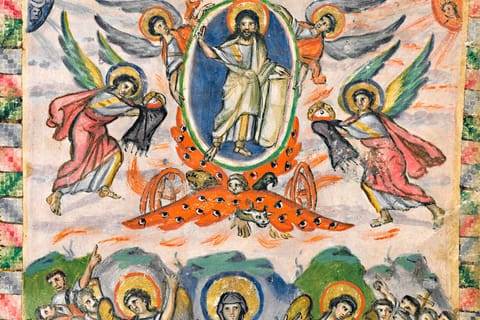
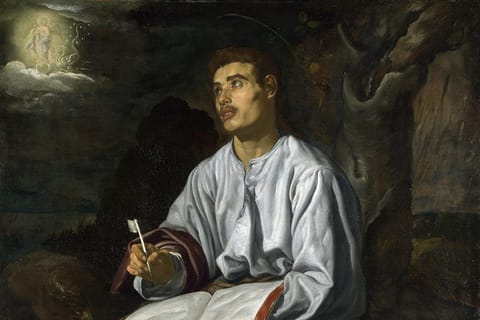
The one who is coming is Jesus, who promised, “He who comes to me I will in no way throw out” (John 6:37). The Book of Revelation, the book most often used to frighten people about the end, shows Christ at the center of heaven as “a Lamb standing, as though it had been slain” (Revelation 5:6). When John saw the risen Christ and fell at his feet in terror, Christ laid his right hand on him and said, “Don’t be afraid. I am the first and the last, and the Living one” (Revelation 1:17–18). For more on Revelation, see What is the Book of Revelation about?
The fear of being left behind is a fear of punishment, of being found unworthy and abandoned. The First Letter of John speaks to that fear directly:
There is no fear in love; but perfect love casts out fear, because fear has punishment.
Paul reminded the Christians in Rome, “For you didn’t receive the spirit of bondage again to fear, but you received the Spirit of adoption” (Romans 8:15). An adopted child belongs to the family, and a loving parent does not slip away in the night and leave a child behind.
What do the mainline churches teach about Christ’s return?
The ELCA, the PC(USA), the United Methodist Church, and the Episcopal Church confess in the Nicene Creed that Christ “will come again in glory to judge the living and the dead, and his kingdom will have no end.” None of them teaches a secret rapture. The United Methodist Church explains in its Ask The UMC series that talk of a rapture or a Great Tribulation “is not found in our doctrinal standards,” and that United Methodists put their focus on “living out the teachings of his first coming.”
The Heidelberg Catechism of 1563, part of the PC(USA)’s Book of Confessions, asks what comfort Christ’s return gives the believer. It answers that in every affliction a Christian may “await with head held high the very Judge from heaven who has already submitted himself to the judgment of God for me.” The judge at the end is the same Jesus who gave himself on the cross.
Each year the church keeps Advent, four weeks of waiting for Christ’s coming with candles, hymns, and joy (see What is Advent?). Advent teaches Christians to pray the words near the very end of the Bible, “Come, Lord Jesus!” (Revelation 22:20), with longing and gladness.
How do you heal from rapture anxiety?
Healing usually comes slowly. A fear learned early is held in the body as well as the mind, so it often returns before you can think. Be patient with yourself when it does.
Tell a friend, a pastor, or a spiritual director whom you trust. A fear spoken aloud usually loses some of its power. If the fear disturbs your sleep, brings on panic, or keeps returning, a counselor or therapist can help, especially one who understands religious upbringings and respects faith. Medicine, therapy, and prayer belong together, and asking for help is an act of care for the life God gave you (see Is anxiety a sin?).
Get to know the one who is coming. Read one of the Gospels slowly, perhaps Luke, and notice how Jesus treats frightened, ashamed, and overlooked people. The Christ of the Last Day is the Christ of those pages. When the fear rises, a short prayer can steady you: “Lord Jesus, I belong to you.” Find a congregation where Christ’s coming is preached as hope. If the fear has shaken your faith as a whole, you are in good company, and you can take your time with your questions (see Doubt and deconstruction).
The old fear often comes back at night, in an empty house. The psalmist’s evening prayer can be yours:
In peace I will both lay myself down and sleep, for you alone, LORD, make me live in safety.
The Christ who will come at the end has already promised to stay with you every night until then: “Behold, I am with you always, even to the end of the age” (Matthew 28:20).
Common questions
Is it wrong to be afraid of the end times?
Fear of the end is an ordinary human feeling, and God meets it with tenderness. When the apostle John saw the risen Christ and fell at his feet, Christ laid his hand on him and said, “Don’t be afraid” (Revelation 1:17). You can bring the fear to God in prayer exactly as it is.
Did the 2025 RaptureTok prediction come true?
The South African pastor Joshua Mhlakela said the rapture would take place on September 23, 2025, and the day passed like every other date that has been set for the end. Jesus told his disciples, “It isn’t for you to know times or seasons which the Father has set within his own authority” (Acts 1:7).
What is the difference between the rapture and the Second Coming?
In pre-tribulation teaching, the rapture is a secret removal of Christians that comes years before Christ’s visible return. The creeds and the historic churches speak of one coming of Christ “in glory to judge the living and the dead,” and they read Paul’s words about being “caught up” as part of that single, public coming.
Should I see a therapist for rapture anxiety?
If the fear disturbs your sleep, brings on panic, or keeps returning, a counselor or therapist can help a great deal. Look for one who understands religious upbringings and respects faith. Therapy, medicine when a doctor advises it, and prayer work well together.
How should I talk to children about Jesus’ return?
Speak of it the way the New Testament does, as the day when Jesus, who loves them, makes everything right. Paul wrote about Christ’s coming so that grieving Christians would “comfort one another with these words” (1 Thessalonians 4:18). Children should hear the promise as a comfort and a hope.
Sources
- Luke 12:32 (WEB)
- 1 John 4:18 (WEB)
- John 14:1–3 (WEB)
- Acts 1:7 (WEB)
- Revelation 1:17–18 (WEB)
- Psalm 4:8 (WEB)
- Pastor’s prophecy of Sept. 23 Rapture sparks frenzy on ‘RaptureTok’ (Gray News, September 23, 2025)
- AJ Willingham, CNN, on “rapture anxiety” (September 27, 2022, republished by KVIA)
- A Thief in the Night (film) (Wikipedia)
- Great Disappointment (Wikipedia)
- Augustine, The City of God, Book 18, chapter 53, trans. Marcus Dods
- What does the UMC teach about the second coming? (Ask The UMC, 2019)
- “He shall come to judge,” with Heidelberg Catechism Q. 52 (Presbyterian Church (U.S.A.), Theology and Worship)